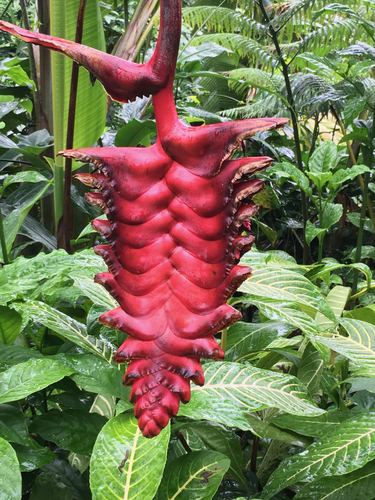
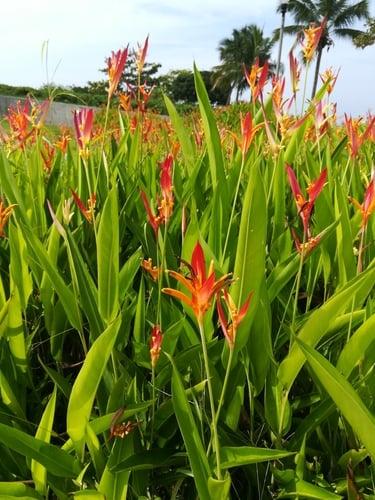
Heliconia pogonantha
Cufod.
Mune
iNaturalist· cc-by-nc
(c) Birding by Bus, some rights reserved (CC BY-NC), uploaded by Birding by Bus
iNaturalist· cc-by-nc
(c) gabo_utria, some rights reserved (CC BY-NC), uploaded by gabo_utria
iNaturalist· cc-by-nc
(c) Herb Wilson, some rights reserved (CC BY-NC), uploaded by Herb Wilson
Description
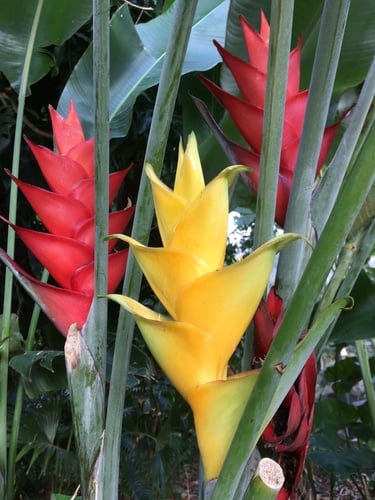
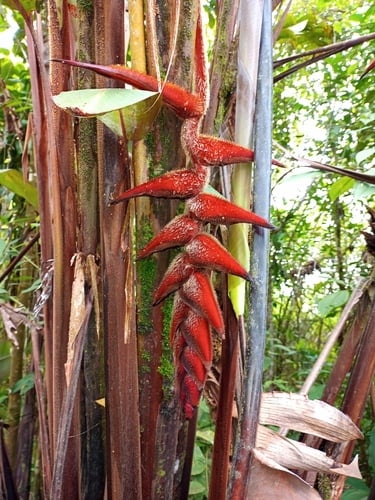
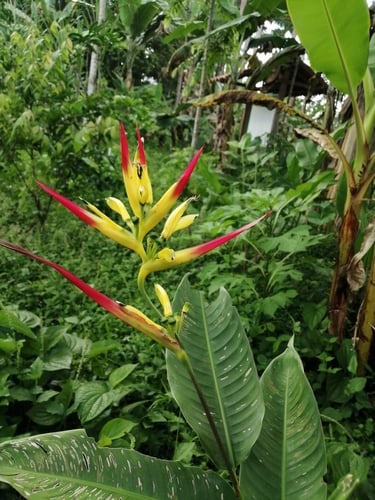
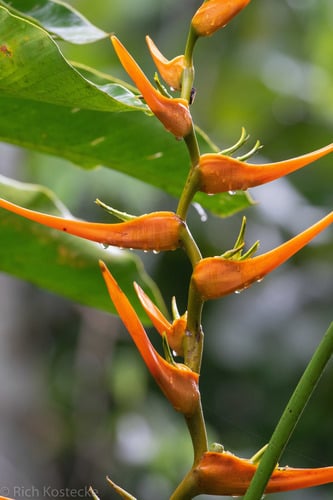
A herb. It grows 3.5-4.5 m tall. The leaf stalks are about 1 m long. The leaves are broadly oblong and rounded at the base. They are 1.5-2 m long by 50 cm wide. The flowers hang down. They are red and curved backwards. The fruit are 1 cm long and bluish.
Edible Uses
The leaves and shoots are eaten.
Distribution
It is a tropical plant. It grows in wet forest. Cairns Botanical Garden.
Where It Grows
Australia, Caribbean, Central America, Colombia, Costa Rica, Honduras, Nicaragua, Panama, South America,
Also Known As
Chichica, Molen, Platanilla
References (4)
- Castaneda, H., & Stepp, J. R., 2007, Ecosystems as Sources of Useful Plants for the Guaymi People of Costa Rica. Ethnobotany Journal. 5:249-257
- D'Ambrosio, U., & Puri, R. K., 2016, Foodways in transition: food plants, diet and local perceptions of change in a Costa Rican Ngäbe community. Journal of Ethnobiology and Ethnomedicine (2016) 12:3 p 24
- Kew Plants of the World On line
- Langlois, H. C., 2004, Ethnobotanical analysis of different successional stages as sources of wild edible plants for the Guaymi people in Costa Rica. M. Sc. thesis University of Florida.