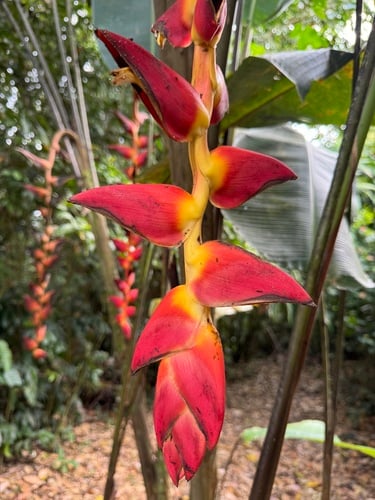
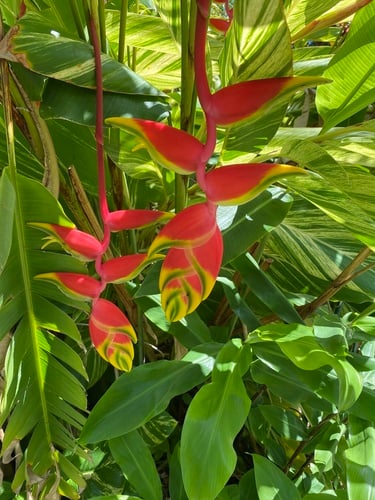
Heliconia psittacorum
Linn.f.
Parrot's plantain
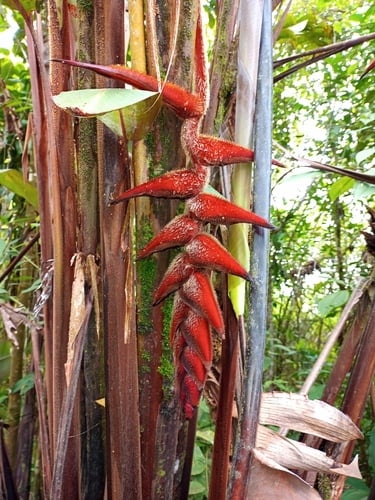
iNaturalist· cc-by-nc
(c) yulang01, some rights reserved (CC BY-NC), uploaded by yulang01
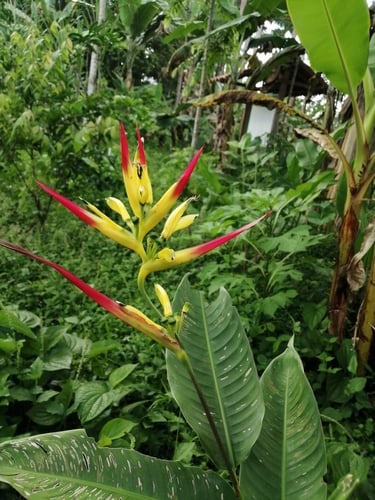
iNaturalist· cc-by-nc
(c) dannathaiz, some rights reserved (CC BY-NC)
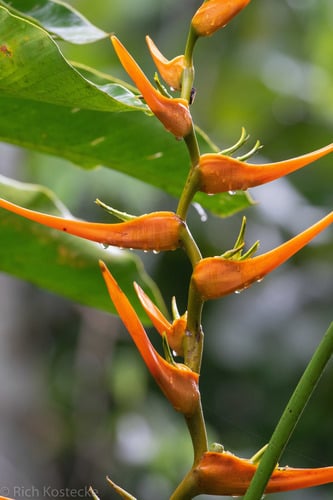
iNaturalist· cc-by-nc
(c) Bill Lucas, some rights reserved (CC BY-NC), uploaded by Bill Lucas
Summary
Source: WikipediaHeliconia psittacorum (parrot's beak, parakeet flower, parrot's flower, parrot's plantain, false bird-of-paradise) is a perennial herb native to the Caribbean and South America. It is considered native to French Guiana, Guyana, Suriname, Venezuela, Colombia, Bolivia, Brazil, Paraguay, Panama and Trinidad and Tobago. It is reportedly naturalized in Gambia, Thailand, Puerto Rico, Hispaniola, Jamaica and the Lesser Antilles. It is often cultivated as a tropical ornamental plant in regions outside its native range.
Description
A herb which has a rhizome or underground stem. It grows 1-2 m high. It can spread 50-80 cm wide. The leaves are banana like. The stems are slender. The leaves are 50 cm long and 10 cm wide. The edges of the leaves and the stalks are often red. The flowering stalk is erect. It is at the top of the plant. The flower stalk is 30 cm long. The flowers are orange to pale yellow.
Edible Uses
The shoots are eaten, and the rhizome is crushed and eaten raw.
Traditional Uses
The shoots are eaten. The rhizome is crushed and eaten raw.
This uses section is brief — help expand it
Distribution
A tropical plant. It grows partly in water. It does well in moist to wet and humid zones. It needs fertile, humus-rich soil. It can grow in full sun or light shade. It suits hardiness zones 10-12. In Cairns Botanical Garden.
Where It Grows
Antilles*, Asia, Australia, Bolivia, Brazil, Central America, Cook. Is., Dominican Republic, Fiji, French Guiana, Gambia, Guianas, Guyana, Hawaii, Indonesia, Jamaica, Leeward Is., Marquesas, Mexico, Myanmar, North America, Pacific, Panama, Paraguay, Puerto Rica, SE Asia, South America*, Suriname, Thailand, Trinidad-Tobago, USA, Venezuela, West Indies, Winward Is.,
Cultivation
Plants can be grown from seeds and division of the rhizome.
Synonyms
Also Known As
Kyettu-ywe-pan, Parakeet heliconia, Parrot beak, Periquitos, Parrot's flower, Supit udang
References (11)
- Cundall, P., (ed.), 2004, Gardening Australia: flora: the gardener's bible. ABC Books. p 687
- Gragson, T. L., 1997, The Use of Underground Plant Organs and Its Relation to Habitat Selection among the Pume Indians of Venezuela. Economic Botany, Vol. 51, No. 4, pp. 377-384
- Hedrick, U.P., 1919, (Ed.), Sturtevant's edible plants of the world. p 340
- Hibbert, M., 2002, The Aussie Plant Finder 2002, Florilegium. p 121
- Kermath, B. M., et al, 2014, Food Plants in the Americas: A survey of the domesticated, cultivated and wild plants used for Human food in North, Central and South America and the Caribbean. On line draft. p 411
Show all 11 references Hide references
- Kew Plants of the World Online
- Llamas, K.A., 2003, Tropical Flowering Plants. Timber Press. p 232
- Smith, A.C., 1979, Flora Vitiensis Nova, Lawaii, Kuai, Hawaii, Volume 1 p 188
- Staples, G.W. and Herbst, D.R., 2005, A tropical Garden Flora. Bishop Museum Press, Honolulu, Hawaii. p 665
- Suppl. pl. 158. 1782 ("1781")
- Sukarya, D. G., (Ed.) 2013, 3,500 Plant Species of the Botanic Gardens of Indonesia. LIPI p 1114