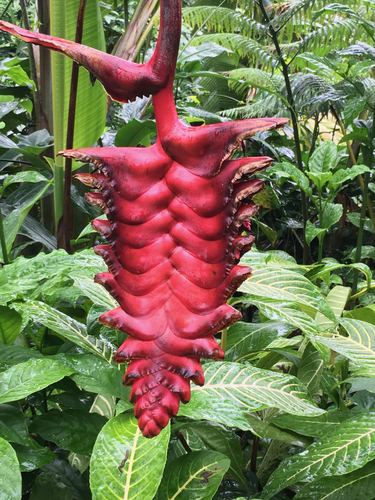
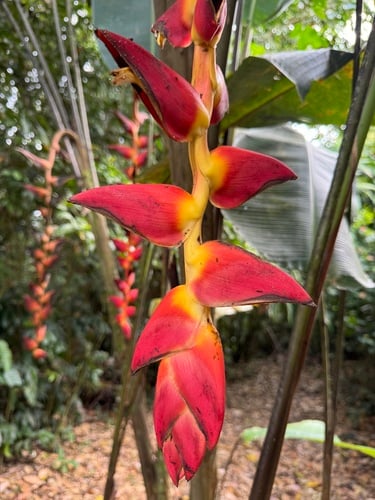
Heliconia hirsuta
L.f.
Sweet little heliconia
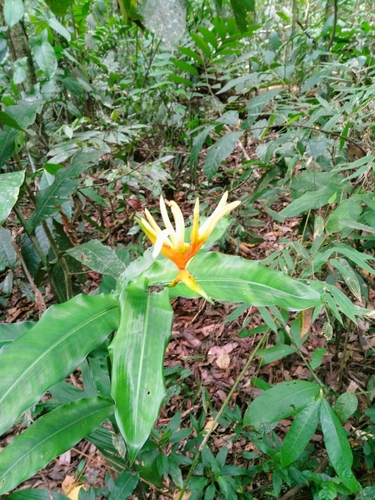
iNaturalist· cc-by-nc
(c) Luis, some rights reserved (CC BY-NC), uploaded by Luis
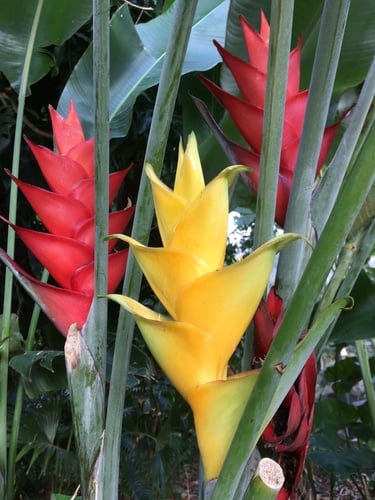
iNaturalist· cc-by-nc
(c) jicastillog, some rights reserved (CC BY-NC)
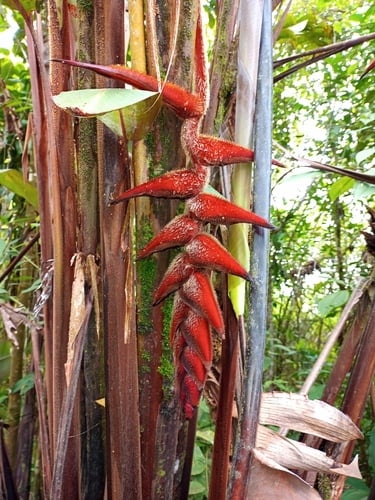
iNaturalist· cc-by-nc
(c) Diego Cueva, some rights reserved (CC BY-NC), uploaded by Diego Cueva
Summary
Source: WikipediaHeliconia hirsuta is a species of flowering plant in the family Heliconiaceae. This plant is an erect herb up to 2 m tall, and it is native to Central America, South America, and the Caribbean, from Belize to Trinidad to Argentina.
Description
A herb. It is erect and grows 1 m tall. The leaves are like banana leaves. The flowers are red. The fruit are fleshy and blue.
This description is brief — help expand it
Edible Uses
The roots are edible and can be fermented into an alcoholic drink. The leaves are also an edible portion.
Traditional Uses
The roots are edible and also fermented into an alcoholic drink.
This uses section is brief — help expand it
Distribution
It is a tropical and temperate plant. In Argentina it grows from sea level to 1,200 m above sea level.
Where It Grows
Amazon, Argentina, Asia, Belize, Brazil*, Central America, Colombia, Ecuador, French Guiana, Guyana, Honduras, Indonesia, Jamaica, Marquesas, Mexico, Nicaragua, Pacific, Panama, Paraguay, Peru, SE Asia, South America, Suriname, Trinidad-Tobago, Venezuela, Winward Is.,
Synonyms
Also Known As
Airo penoca, Bananeira-do-mato, Bananeirinha, Millua situlli, Pari riwa, Patuju
References (5)
- Mansfeld,
- Kermath, B. M., et al, 2014, Food Plants in the Americas: A survey of the domesticated, cultivated and wild plants used for Human food in North, Central and South America and the Caribbean. On line draft. p 410
- Kew Plants of the World Online
- Sukarya, D. G., (Ed.) 2013, 3,500 Plant Species of the Botanic Gardens of Indonesia. LIPI p 1113
- Torre, de la, L., et al, 2008, Enciclopedia de las Plantas Útiles del Ecuador. Herbario QCA. Pontificia Universidad Católica del Ecuador. p 378