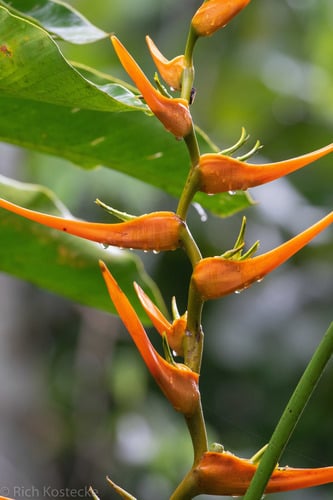
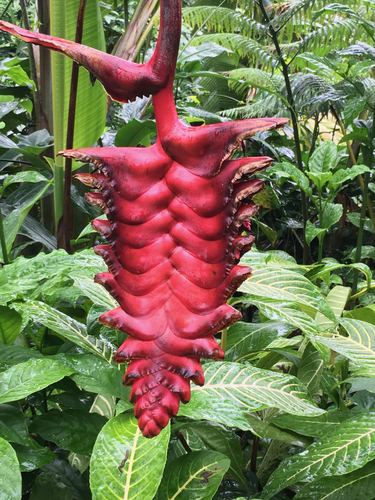
Heliconia bihai
(Linnaeus) Linnaeus
False plantain
iNaturalist· cc-by-nc
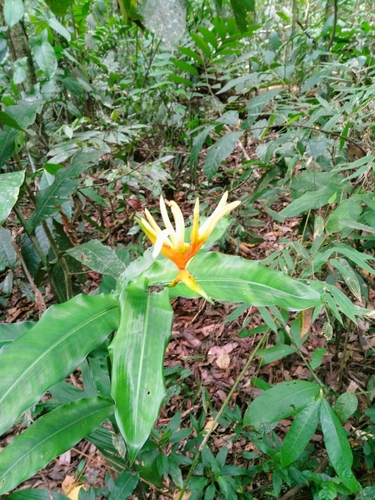
(c) Carlos Otávio Gussoni, some rights reserved (CC BY-NC), uploaded by Carlos Otávio Gussoni
iNaturalist· cc-by-nc
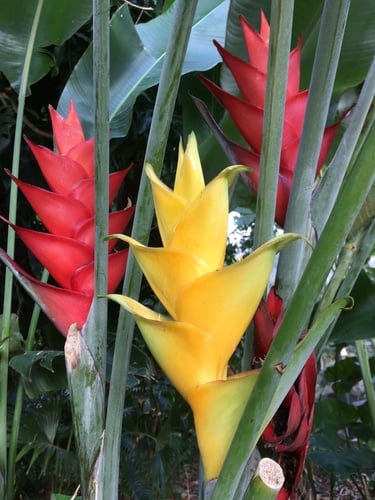
(c) Martin Reith, some rights reserved (CC BY-NC)
iNaturalist· cc-by
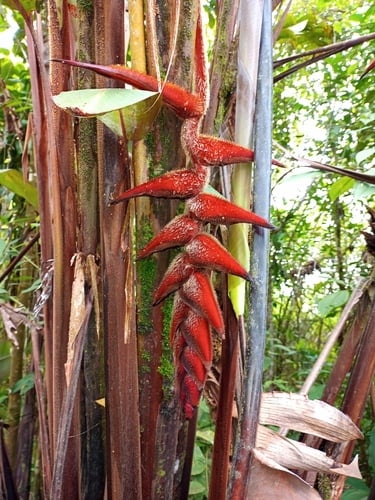
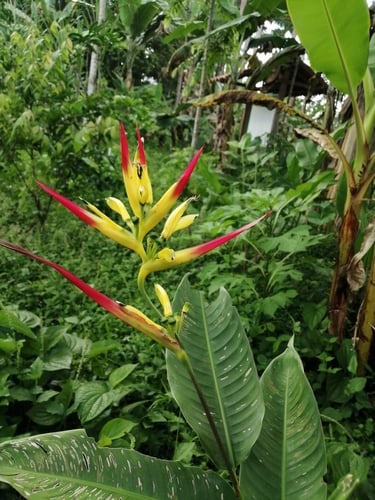
(c) aarongunnar, some rights reserved (CC BY), uploaded by aarongunnar
Summary
Source: WikipediaHeliconia bihai (red palulu) of the family Heliconiaceae is an erect herb typically growing taller than 1.5 m. It is native to northern South America and the West Indies. It is especially common in northern Brazil and the Guianas but also found in Hispaniola, Jamaica, the Lesser Antilles, Puerto Rico, Trinidad, Venezuela and Colombia. Other names by which the plant is commonly known include balisier and macawflower.
Description
A herb which forms rhizomes or underground stems. It can be 5 m tall. It has a clump of banana like stems. The leaves often have red veins. They can be 1.8 m long. The flowering stalk is upright and long. There can be 20 bracts. The bracts are bright red with green along the edge. The fruit are blue.
Edible Uses
The young shoots are eaten as a vegetable. The rhizomes are a source of starch and are eaten. The seeds are eaten.
Traditional Uses
The young shoots are eaten as a vegetable. The rhizomes are a source of starch. The seeds are eaten.
This uses section is brief — help expand it
Medicinal Uses
The roots are astringent and diuretic. An infusion of the leaves is used to ease expulsion of the foetus at childbirth.
Distribution
A tropical plant. It grows in tropical and subtropical places in America. It needs a fertile, humus rich soil. It suits plant hardiness zones 10-12. Cairns Botanical Gardens.
Where It Grows
Amazon, Antilles, Asia, Australia, Belize, Caribbean*, Central America, Dominican Republic*, Guatemala, Guiana, Guianas, Guyana, Haiti*, Hawaii, Marquesas, Mexico, Myanmar, North America, Pacific, Puerto Rico, SE Asia, Singapore, South America, Suriname, USA, Venezuela, West Indies*,
Cultivation
A plant of the humid tropics, it can also be grown in humid subtropical areas. Requires a moist, fertile, humus-rich soil and a semi-shady position. The flower sheaths are boat-shaped and often hold water. This often becomes a breeding ground for mosquitoes.
Propagation
Seed - Division of offsets.
Other Uses
The leaves are occasionally used for covering roofs. The fibre in the plant has been recommended for making paper. The plant is used to provide temporary protection to young cacao plants and also to provide mulch material.
Notes
There are about 200 Heliconia species. There is only one genus in the Heliconiaceae family. They grow in the tropics.
Synonyms
Also Known As
Jacquinii Heliconia, Lobster-claw, Macaw flower, Plantanillo, "Wild banana"
References (10)
- Burkill, I.H., 1966, A Dictionary of the Economic Products of the Malay Peninsula. Ministry of Agriculture and Cooperatives, Kuala Lumpur, Malaysia. Vol 1 (A-H) p 1152
- Cundall, P., (ed.), 2004, Gardening Australia: flora: the gardener's bible. ABC Books. p 687
- Facciola, S., 1998, Cornucopia 2: a Source Book of Edible Plants. Kampong Publications, p 121 (As Heliconia caribaea)
- Hedrick, U.P., 1919, (Ed.), Sturtevant's edible plants of the world. p 340
- Hermandez Bermejo, J.E., and Leon, J. (Eds.), 1994, Neglected Crops. 1492 from a different perspective. FAO Plant Production and Protection Series No 26. FAO, Rome. p 30
Show all 10 references Hide references
- Kermath, B. M., et al, 2014, Food Plants in the Americas: A survey of the domesticated, cultivated and wild plants used for Human food in North, Central and South America and the Caribbean. On line draft. p 409
- Llamas, K.A., 2003, Tropical Flowering Plants. Timber Press. p 229
- Mant. pl. 2:211. 1767
- Plants of Haiti Smithsonian Institute http://botany.si.edu/antilles/West Indies
- Staples, G.W. and Herbst, D.R., 2005, A tropical Garden Flora. Bishop Museum Press, Honolulu, Hawaii. p 662 (Drawing)