Brassica napus var. napus
L.
Rape, Canola, Tori
gbif· cc-by-nc
TU(B) - University of Tartu; Natural History Museum and Botanical Garden; Natural History Museum; Botanical Collections
gbif· cc-by-nc
EMY - Estonian University of Life Sciences
Description
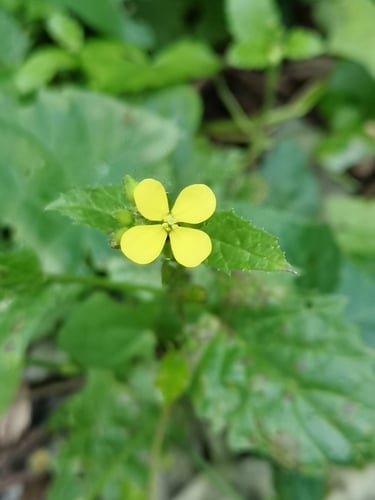
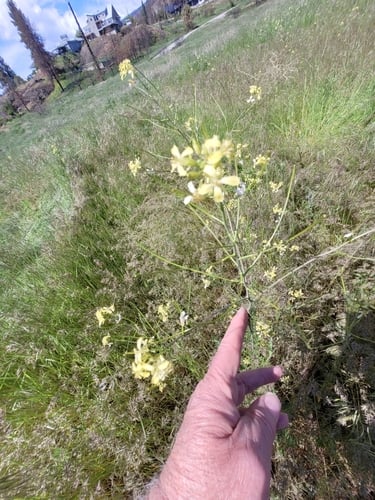
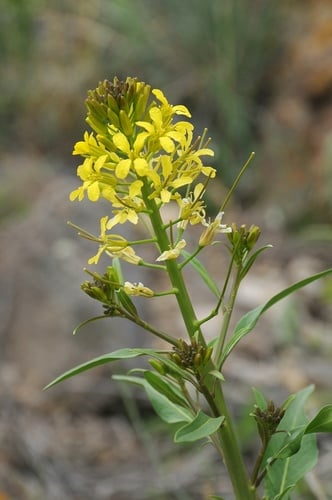
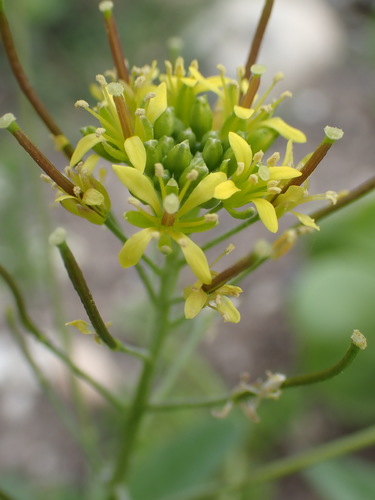
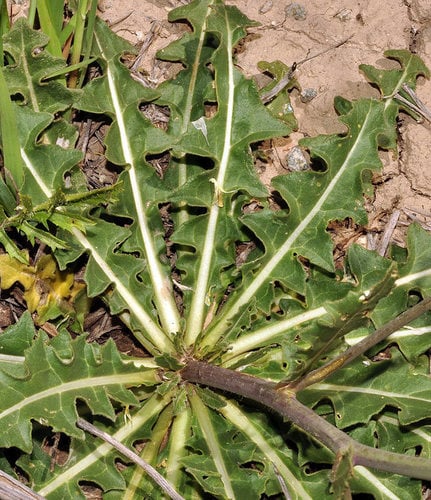
A cabbage family herb. The leaves clasp the stem. The flowers are stalked and yellow. The fruit is a pod. It is 5-6 cm long including the beak. There are about 20 seeds in a pod.
Edible Uses
Young leaves are cooked and eaten as a vegetable, and the seeds are processed into cooking oil.
Traditional Uses
Young leaves are cooked and eaten as a vegetable. The seeds are important for making cooking oil.
This uses section is brief — help expand it
Distribution
In Nepal it grows up to 2500 m altitude. It is resistant to drought and frost.
Where It Grows
Africa, Asia, Australia, Britain, Canada, China, Cuba, East Africa, Ethiopia, Europe*, Himalayas, India, Malawi, Moldova, Mozambique, Myanmar, Nepal, North America, Pakistan, SE Asia, Southern Africa, USA, West Indies, Zimbabwe,
Cultivation
Plants are grown from seed.
Other Information
It is a commercially cultivated vegetable.
Notes
There are about 30 Brassica species and many cultivated varieties.
Synonyms
References (17)
- Bodkin, F., 1991, Encyclopedia Botanica. Cornstalk publishing, p 168
- Brouk, B., 1975, Plants Consumed by Man. Academic Press, London. p 239
- Facciola, S., 1998, Cornucopia 2: a Source Book of Edible Plants. Kampong Publications, p 53
- Flora of Australia, Volume 8, Lecythidales to Batales, Australian Government Publishing Service, Canberra (1982) p 237
- Jardin, C., 1970, List of Foods Used In Africa, FAO Nutrition Information Document Series No 2.p 40
Show all 17 references Hide references
- Kays, S. J., and Dias, J. C. S., 1995, Common Names of Commercially Cultivated Vegetables of the World in 15 languages. Economic Botany, Vol. 49, No. 2, pp. 115-152
- Lazarides, M. & Hince, B., 1993, Handbook of Economic Plants of Australia, CSIRO. p 38
- McNaughton, I.H., 1979, Swedes and rapes, in Simmonds N.W.,(ed), Crop Plant Evolution. Longmans. London. p 53
- Manandhar, N.P., 2002, Plants and People of Nepal. Timber Press. Portland, Oregon. p 120
- Miguel, E., et al, 1989, A checklist of the cultivated plants of Cuba. Kulturpflanze 37. 1989, 211-357
- Plants for a Future database, The Field, Penpol, Lostwithiel, Cornwall, PL22 0NG, UK. http://www.scs.leeds.ac.uk/pfaf/
- Purseglove, J.W., 1968, Tropical Crops Dicotyledons, Longmans. p 92
- Small, E., 2009, Top 100 Food Plants. The world's most important culinary crops. NRC Research Press. p 460
- Toxopeus, H. & Mvere, B., 2004. Brassica napus L. [Internet] Record from Protabase. Grubben, G.J.H. & Denton, O.A. (Editors). PROTA (Plant Resources of Tropical Africa), Wageningen, Netherlands. < http://database.prota.org/search.htm>. Accessed 14 October 2009.
- van Wyk, B., 2005, Food Plants of the World. An illustrated guide. Timber press. p 97
- Williamson, J., 2005, Useful Plants of Malawi. 3rd. Edition. Mdadzi Book Trust. p 45
- Zhou Taiyan, Lu Lianli, Yang Guang, Ihsan A. Al-Shehbaz, BRASSICACEAE (CRUCIFERAE), Flora of China.