Brassica campestris var. sarson
L.; Prain
Indian colza, Sarson, Yellow sarson
gbif· cc-by
Royal Botanic Gardens, Kew
gbif· cc-by
Royal Botanic Gardens, Kew
gbif· cc-by
Royal Botanic Gardens, Kew
Description
A cabbage family herb. It is an annual herb. The leaves clasp the stem. The flowers are yellow. The fruit is a pod. It is 5-8 cm long. There are 30-80 seeds in a pod.
Edible Uses
The young leaves and shoots are cooked as a green vegetable, and the seed oil is used for cooking.
Traditional Uses
The young leaves and shoots are cooked as a green vegetable. The seed oil is used for cooking.
This uses section is brief — help expand it
Medicinal Uses
Cultivated varieties of B. rapa are consumed commonly as vegetables, such as turnip roots, napa cabbage, komatsuna, pak choi, and other leafy greens, particularly in East Asian, South Asian, and Mediterranean cuisines. The young leaves are a leaf vegetable eaten raw, while older leaves are typically cooked. The taproot and seeds can also be eaten raw, although the seeds contain an oil that can cause irritation for some people. Rapeseed oil from the plant is also used to make canola and colza oils. B. rapa is also commonly used as a rotational cover crop for vegetables due to its ability to prevent erosion and deter disease. Because of their fast life-cycle and genetic diversity, the B. rapa cultivar Wisconsin Fast Plants is widely used in genetics and plant biology education.
Distribution
It grows throughout Nepal to 1800 m altitude.
Where It Grows
Asia, Himalayas, India, Nepal, Sikkim,
Cultivation
Plants are grown from seed. Seeds take 5-6 days to germinate.
Production
First harvesting of leaves can occur after 25-30 days.
Notes
There are about 30 Brassica species and many cultivated varieties.
Nutrition
| Part | Moisture | kJ | kcal | Protein | Vit A | Vit C | Iron | Zinc |
|---|---|---|---|---|---|---|---|---|
| Leaves | 86.8 | 230 | 55 | 3.7 | — | 40 | 8.9 | — |
Synonyms
References (10)
- Agric. Ledger 5:24, t. 5-7. 1898
- Brouk, B., 1975, Plants Consumed by Man. Academic Press, London. p 240
- Dyani, S.K., & Sharma, R.V., 1987, Exploration of Socio-economic plant resources of Vyasi Valley in Tehri Garwhal. J. Econ. Tax. Bot. Vol. 9 No. 2 pp 299-310
- Facciola, S., 1998, Cornucopia 2: a Source Book of Edible Plants. Kampong Publications, p 56
- Manandhar, N.P., 2002, Plants and People of Nepal. Timber Press. Portland, Oregon. p 120
Show all 10 references Hide references
- Martin, F.W. & Ruberte, R.M., 1979, Edible Leaves of the Tropics. Antillian College Press, Mayaguez, Puerto Rico. p 187
- Purseglove, J.W., 1968, Tropical Crops Dicotyledons, Longmans. p 91
- Rawat, G.S., & Pangtey, Y.P.S., 1987, A Contribution to the Ethnobotany of Alpine Regions of Kumaon. J. Econ. Tax. Bot. Vol. 11 No. 1 pp 139-147
- Sharma, B.B., 2005, Growing fruits and vegetables. Publications Division. Ministry of Information and broadcasting. India. p 194
- Terra, G.J.A., 1973, Tropical Vegetables. Communication 54e Royal Tropical Institute, Amsterdam, p 31
More from Brassicaceae
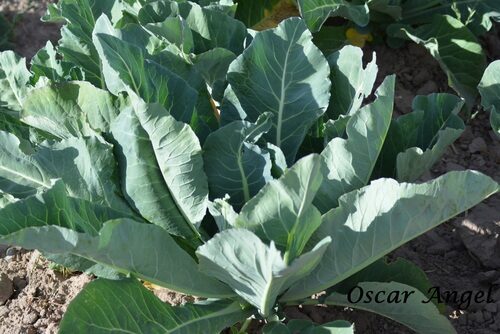
Brassica oleracea botrytis
Cauliflower
Brassica oleracea botrytis aparagoides
Nine Star Perennial Broccoli
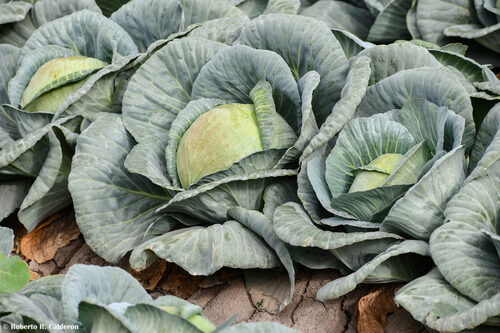
Brassica oleracea capitata
Cabbage,Ornamental Cabbage, Red Cabbage, Savoy Cabbage
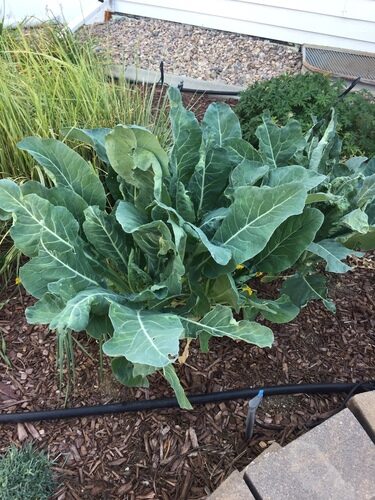
Brassica oleracea costata
Couve Tronchuda
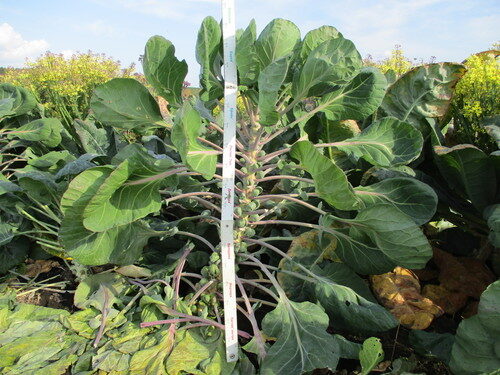
Brassica oleracea gemmifera
Brussels Sprouts
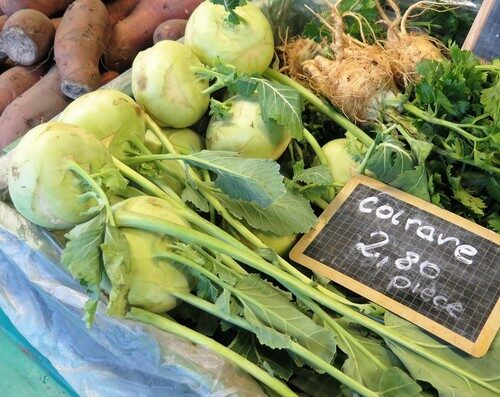
Brassica oleracea gongylodes
Kohl Rabi