Brassica carinata
A. Braun
Abyssinian cabbage, African cabbage
iNaturalist· cc-by-nc
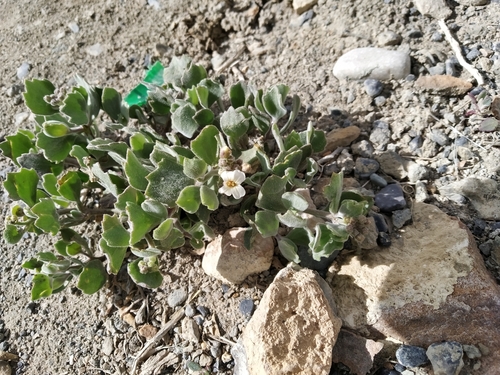
(c) Scamperdale, some rights reserved (CC BY-NC)
iNaturalist· cc-by-nc
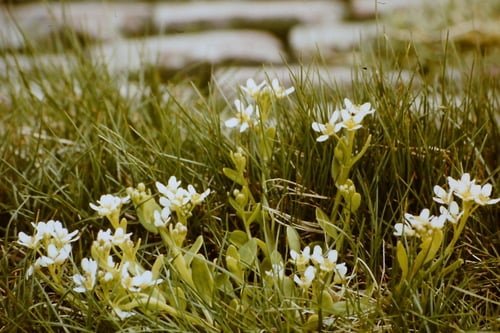
(c) Johan Devos, some rights reserved (CC BY-NC)
iNaturalist· cc-by-nc
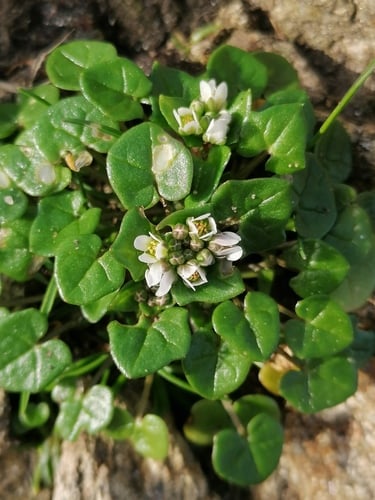
(c) Johan Devos, some rights reserved (CC BY-NC)
Summary
Source: WikipediaBrassica carinata is a species of flowering plant in the Brassicaceae family. It is referred to by the common names Ethiopian Kale, Ethiopian rape or Ethiopian mustard. It is believed to be a hybrid between Brassica nigra and Brassica oleracea. The flowers attract honey bees to collect pollen and nectar.
Description
A cabbage family herb. The leafy form grows for 3-4 years. It is 2 m tall. The stem is 2 cm across. The stem is usually without hairs but is waxy. It is grey green but with purple blotches. It has many branches which hang down. They are above 30 cm on the stalk. The leaves are light green and stalked. They vary a lot in shape. The leaves become smaller and with less lobes nearer the flower. The flower is yellow and occurs in branched flower stalks. The fruit are pods which are up to 65 mm long and 8 mm wide. They hang downwards. The seeds are 1-2.5 mm across and vary in shape and colour. They are reddish brown.
Edible Uses
Edible Parts: Flowers Leaves Oil Seed Stem Edible Uses: Condiment Oil Leaves and young stems - raw or cooked. Used when up to 30cm tall. A mild and pleasant cabbage flavour, the young growth can be cut finely and used in mixed salads, whilst older leaves are cooked like cabbage leaves. Immature flowering stems - cooked. Used like broccoli, they make a nice vegetable. An edible oil is obtained from the seed. Oil from the wild species is high in erucic acid, which is toxic, though there are some cultivars that contain very little erucic acid and can be used as food. The seed can also be crushed and used as a condiment.
Traditional Uses
The seeds are cooked whole. They are used to make a mustard. The young leaves are cooked. They are also used in salads. The flower buds and young shoots are eaten raw. The seed produces a good quality cooking oil. (It has a mustard taste unless refined)
Medicinal Uses
The seed is used in the treatment of stomach aches.
Known Hazards
The oil contained in the seed of this species is rich in erucic acid which is toxic. However, modern cultivars have been selected which are almost free of erucic acid.
Distribution
A tropical plant. It occurs in the highlands of Ethiopia and Kenya. It has been introduced to other countries. It will grow on most agricultural soils. It needs a cool climate (15-20°C) and requires a sunny position. It is mostly grown between 1500-2500 m altitude in tropical regions. It can grow with a rainfall of 200-500 mm but is usually sown at the beginning of the rains.
Where It Grows
Africa, Asia, Botswana, Cameroon, Central Africa, Congo DR, Côte d'Ivoire, East Africa, Eritrea, Ethiopia*, Haiti, India, Ivory Coast, Kenya, Madagascar, Malawi, Mozambique, Southern Africa, South Sudan, Sudan, Tanzania, Uganda, West Africa, West Indies, Zambia, Zimbabwe,
Cultivation
This species is very tolerant of a wide range of climatic conditions and can be grown from the temperate to tropical zones. In cool temperate it is only suitable as a leaf crop, but in other areas it can also be grown for its seed. It grows best in areas where annual daytime temperatures are within the range 10 - 25°c, but can tolerate 5 - 35°c. It prefers a mean annual rainfall in the range 1,000 - 1,500mm, but tolerates 800 - 1,700mm. Succeeds in full sun in a well-drained fertile preferably alkaline soil. Succeeds in any reasonable soil. Prefers a pH in the range 5.5 - 8, tolerating 5 - 8.5. Plants develop an extensive root system, larger than in other Brassica species. There is a difference in first flowering date between oil types and vegetable types; oil types start flowering about 10 weeks after germination, vegetable cultivars after about 12 weeks, depending on cultivar and growing conditions. Flowering of vegetable cultivars is delayed by regular harvesting of the leaves or young shoots. Plants grown in dry regions flower earlier and produce ripe seeds within 4 months from sowing. Vegetable crops grown with adequate moisture produce seeds in 5 - 6 months. An average leaf and shoot yield of 35 tonnes per hectare can be expected, but at research stations leaf yields of 50 - 55 tonnes have been reported. In India and Canada farmers may get seed yields of 1,200 - 1,800 kg per hectare in a good year. Some tall cultivars, when grown with adequate moisture, may develop new shoots after removal of the infructescences and become perennial, normally for one further season, but plants of up to 4 years old have been recorded. Most Brassica species are cross-pollinating, which contributes to the great diversity within species. Brassica carinata is an exception as it sets seed very efficiently through self-pollination without insects acting as pollinators. The plant does not need low temperatures for flower initiation, and seed production is therefore much easier in Africa than for most Brassica oleracea leaf cabbages except for Portuguese kale. There are some named varieties. 'Texsel' is especially good for temperate climates, it is fast growing even at relatively low temperatures. Research has produced a collection of lines with characteristics suitable for modern agriculture. Varieties are available, including different oil types, such as low erucic (0%) and very high erucic (+ 50%) content. This plant is unknown in the wild. It arose as a natural amphidiploid hybrid of female B. Nigra and male B. Oleracea.
Propagation
Seed - sow in situ in succession from March to early September. The seed can also be sown under cloches in February when it will yield a crop in May.
Other Uses
Oil An oil that is high in erucic acid can be obtained from the seed. Traditionally, it is used for oiling the baking plates of earthenware 'injera' stoves and also for illumination. The oil finds wide application in the production of water repellents, waxes, polyesters and lubricants. The seed oil is used to produce bio-diesel or special erucic acid derivatives. This plant is also part of a research to develop an aviation biofuel for jet engines. Agroforestry Uses: The plant can be grown as a green manure. Special Uses Carbon Farming
Production
Leaf yields can be 4800 kg per hectare. Much higher yields are possible with intensive production. Leaf harvest can occur after 47 days under best conditions.
Other Information
It is a commercially cultivated vegetable. It is common and important in the highlands of Ethiopia and Kenya. The leaves and seeds are sold in markets.
Notes
There are about 30 Brassica species and many cultivated varieties. It is an amphidiploid between Brassica nigra and Brassica oleracea cultivated for 4,000 years.
Nutrition
| Part | Moisture | kJ | kcal | Protein | Vit A | Vit C | Iron | Zinc |
|---|---|---|---|---|---|---|---|---|
| Leaves | 88 | 86.1 | — | 3.5 | — | 157 | 1.3 | 0.9 |
| Seeds | — | — | — | — | — | — | — | — |
| Flower buds | — | — | — | — | — | — | — | — |
Synonyms
Also Known As
Abyssinian mustard, Chembere dzagumana, Ethiopian mustard, Karate, Senafich, Tsunga, Yabesha gomen
References (33)
- Abukutsa-Onyango, Mary, 2007, The diversity of cultivated African leafy vegetables in three communities in western Kenya. AJFAND, Volume 7, No. 3
- Addis, G., et al, 2005, Ethnobotanical Study of Edible Wild Plants in Some Selected Districts of Ethiopia. Human Ecology, Vol. 33, No. 1, pp. 83-118
- AVRDC files
- Bircher, A. G. & Bircher, W. H., 2000, Encyclopedia of Fruit Trees and Edible Flowering Plants in Egypt and the Subtropics. AUC Press. p 64
- Ethiopia: Famine Food Field Guide. http://www.africa.upenn.edu/faminefood/category3.htm
Show all 33 references Hide references
- Facciola, S., 1998, Cornucopia 2: a Source Book of Edible Plants. Kampong Publications, p 52
- FAO, 1988, Traditional Food Plants, FAO Food and Nutrition Paper 42. FAO Rome p 117
- Flora 24:267. 1841
- Grubben, G. J. H. and Denton, O. A. (eds), 2004, Plant Resources of Tropical Africa 2. Vegetables. PROTA, Wageningen, Netherlands. p 119
- Hedrick, U.P., 1919, (Ed.), Sturtevant's edible plants of the world. p 120
- Hemingway, J.S., 1979, Mustards, in Simmonds N.W.,(ed), Crop Plant Evolution. Longmans. London. p 56
- Jardin, C., 1970, List of Foods Used In Africa, FAO Nutrition Information Document Series No 2.p 40, 60 (As Brassica integrifolia var. carinata)
- Kays, S. J., and Dias, J. C. S., 1995, Common Names of Commercially Cultivated Vegetables of the World in 15 languages. Economic Botany, Vol. 49, No. 2, pp. 115-152
- Latham, P., 2004, Useful Plants of Bas-Congo province. Latham & DFID p 54
- Latham, P. & Mbuta, A. K., 2014, Useful Plants of Bas-Congo Province, Democratic Republic of Congo. Volume 1. Salvation Army. p 82
- Maundu, P. et al, 1999, Traditional Food Plants of Kenya. National Museum of Kenya. p 79
- Molla, A., Ethiopian Plant Names. http://www.ethiopic.com/aplants.htm
- Mutie, F. M., et al, 2023, Important Medicinal and Food Taxa (Orders and Families) in Kenya, Based on Three Quantitative Approaches. Plants 2023, 12, 1145
- Ngugi, G., 2000, Case Study from Kenya on Indigenous Wild Vegetables. Paper 4 Workshop in Kenya 1999. p 33
- Oomen, H.A.P.C., & Grubben, G.J.H., 1978, Tropical Leaf Vegetables in Human Nutrition, Communication 69, Department of Agricultural research, RTI Amsterdam, p 66, 70, 78
- Pham-Hoang Ho, 1999, An Illustrated Flora of Vietnam. Nha Xuat Ban Tre. p 603 ? (As Brassica integrifolia var. carinata)
- Plants for a Future database, The Field, Penpol, Lostwithiel, Cornwall, PL22 0NG, UK. http://www.scs.leeds.ac.uk/pfaf/
- Ruiters-Welcome, A. K., 2019, Food plants of southern Africa. Ph.D. thesis. Univ. of Johannesburg p 39
- Seidemann J., 2005, World Spice Plants. Economic Usage, Botany, Taxonomy. Springer. p 69
- Shava, S., et al, 2009, Traditional food crops as a source of community resilience in Zimbabwe. International Journal of the African Renaissance 4(1)
- Weinberger, K., Msuya J., 2004, Indigenous Vegetables in Tanzania. Significance and Prospects. Technical Bulletin No. 31 AVRDC, Taiwan/FAO p 4
- USDA, ARS, National Genetic Resources Program. Germplasm Resources Information Network - (GRIN). [Online Database] National Germplasm Resources Laboratory, Beltsville, Maryland. Available: www.ars-grin.gov/cgi-bin/npgs/html/econ.pl (10 April 2000)
- van Wyk, B., 2005, Food Plants of the World. An illustrated guide. Timber press. p 98
- Welcome, A. K. & Van Wyk, B.-E., 2019, An inventory and analysis of the food plants of southern Africa. South African Journal of Botany 122 (2019) 136–179
- Wiersema, J. H. & Leon, B., 2013, World Economic Plants. A Standard Reference CRC Press. 2nd Ed. p 111
- Wikipedia
- World Checklist of Useful Plant Species 2020. Royal Botanic Gardens, Kew
- Zeven, A. C. & de West, J. M. J., 1982, Dictionary of cultivated plants and their regions of diversity. Wageningen. p 123