Albertisia delagoensis
(N. E. Br.) Forman
iNaturalist· cc-by-nc
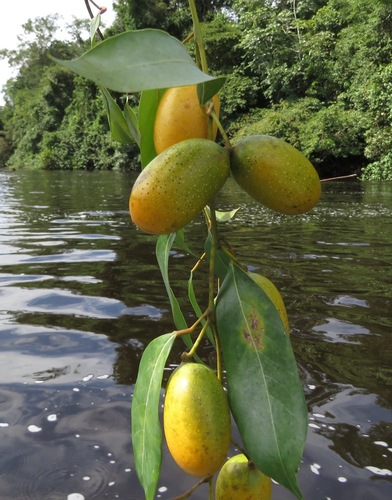
(c) Francois du Randt, some rights reserved (CC BY-NC), uploaded by Francois du Randt
iNaturalist· cc-by-nc
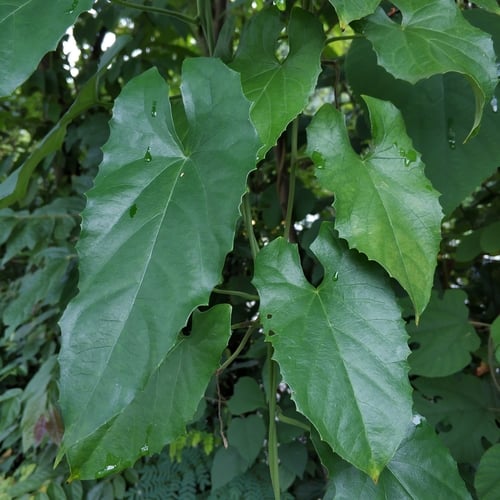
(c) Francois du Randt, some rights reserved (CC BY-NC), uploaded by Francois du Randt
Description
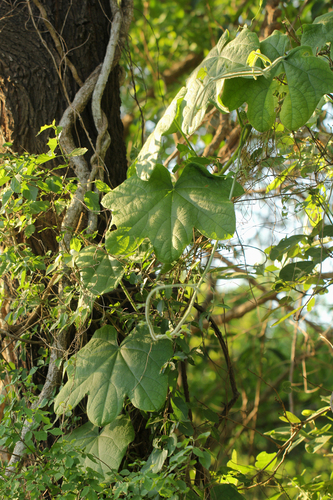
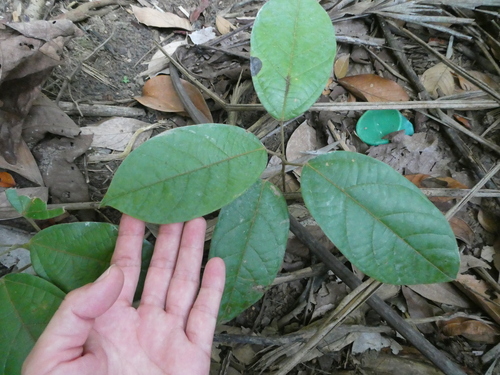
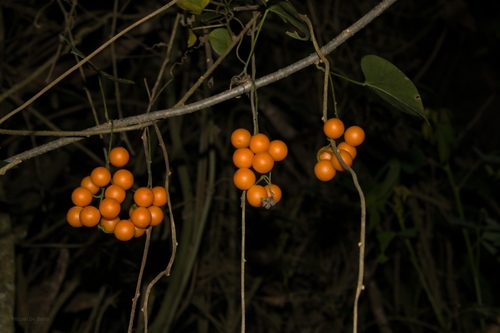
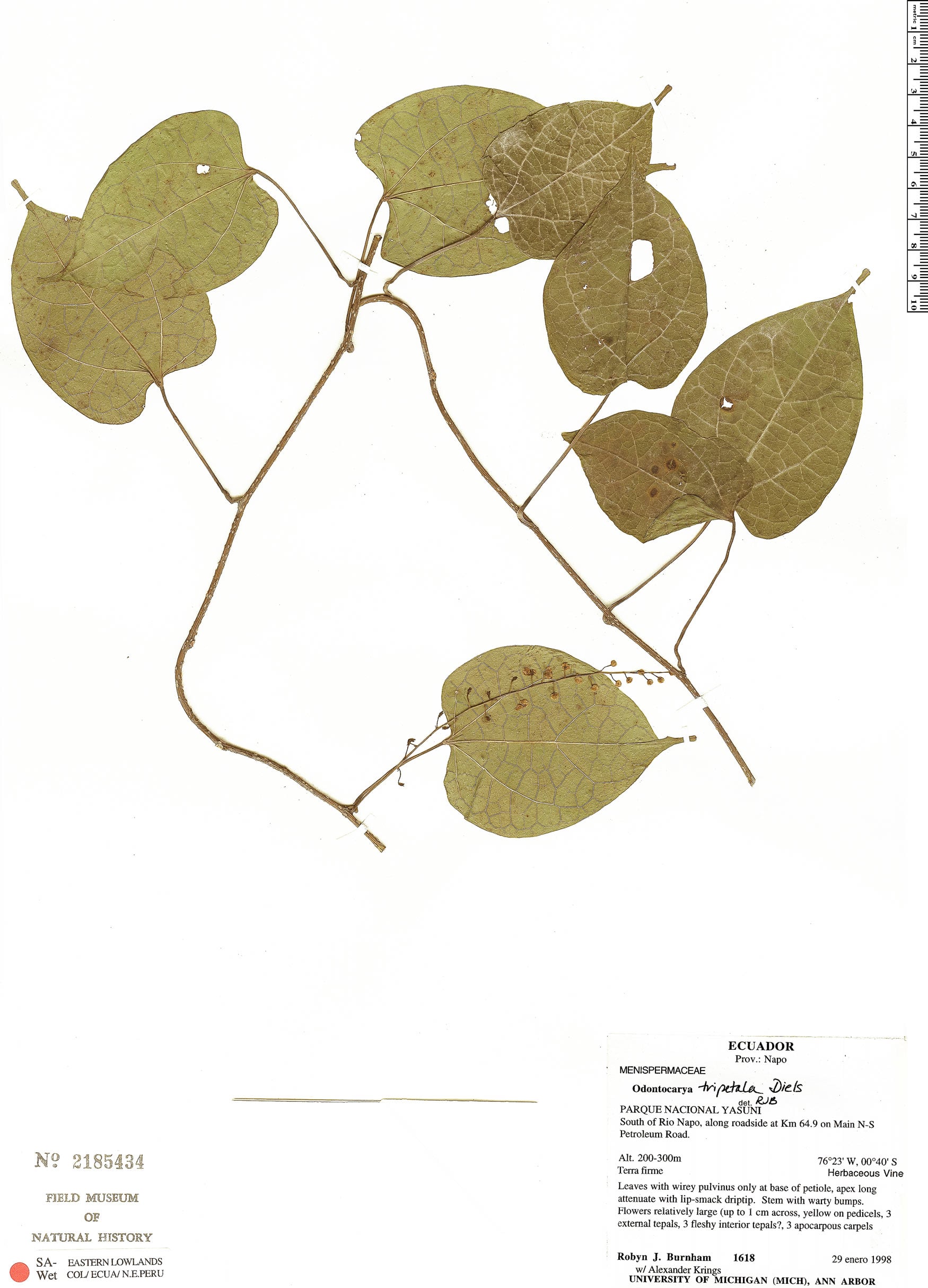
A creeper or shrub with a rhizome. The stems are long and woolly. They are twining. The leaves are simple and alternate. They are oblong and narrow to the base. They are dark green on the upper surface and more pale underneath. The edges can be slightly wavy. The male flowers can be in groups of 1-3 in the axils of the leaves and the female flowers occur singly. They are 5 mm long. The fruit are oval, fleshy and yellow to orange. They have short hairs and are flattened on one side.
Edible Uses
The ripe fruit are soaked in water and mashed to serve with other fruit, or used to make a drink.
Traditional Uses
The ripe fruit are soaked in water, mashed then served with other fruit. They are also used to make a drink.
This uses section is brief — help expand it
Medicinal Uses
The root is used to treat fevers. A root extract is taken to treat diarrhoea, vomiting, menstrual pain, chest problems, body pain caused by influenza, back pain and antenatal problems, and it is used as an anthelmintic, appetite stimulant and to improve sexual performance in men. The ash of burnt roots is applied to heal sores. A root and leaf extract is given orally to babies for cleansing the stomach. The stems and roots are rich sources of alkaloids: yield from the roots is 1 - 2.2 mg/g dry weight; from the stems 0.3 - 0.8 mg/g; and from the leaves 1.1 - 2.7 mg/g. The large amounts of alkaloids give the plant a bitter taste, which explains its use as an appetite stimulant. In trials, methanol extracts of the leaves and roots exhibited antiplasmodial activities of IC50 4.1 μg/ml and 1.6 μg/ml, respectively on chloroquine-resistant Plasmodium falciparum. The alkaloid cocsoline showed strong antiplasmodial activity (IC50 = 1 μM) in vitro; cycleanine showed selective antiplasmodial and antiprotozoal activities as well as spasmolytic activity in vitro, and also antimicrobial, anti-inflammatory and analgesic activities. Dicentrine exhibited antibacterial and antifungal activities in vitro. In-vitro tests showed a low cytotoxicity against the Graham cell line for leaf extracts.
Distribution
It is a subtropical plant. It grows in sandy areas.
Where It Grows
Africa, Mozambique, South Africa, Southern Africa,
Synonyms
Also Known As
Cudodo, Cumbato
References (6)
- Cunningham, 1985, (As Epinetrum delagoense)
- Fox, F. W. & Young, M. E. N., 1982, Food from the Veld. Delta Books. p 266 (As Epinetrum delagoense)
- Peters, C. R., O'Brien, E. M., and Drummond, R.B., 1992, Edible Wild plants of Sub-saharan Africa. Kew. p 147 (As Epinetrum delagoense)
- Plowes, N. J. & Taylor, F. W., 1997, The Processing of Indigenous Fruits and other Wildfoods of Southern Africa. in Smartt, L. & Haq. (Eds) Domestication, Production and Utilization of New Crops. ICUC p 191 (As Epinetrum delagoense)
- Ruiters-Welcome, A. K., 2019, Food plants of southern Africa. Ph.D. thesis. Univ. of Johannesburg p 78
Show all 6 references Hide references
- Welcome, A. K. & Van Wyk, B.-E., 2019, An inventory and analysis of the food plants of southern Africa. South African Journal of Botany 122 (2019) 136–179