Chondrodendron tomentosum
Ruiz. & Pav.
Wild grape, Curare
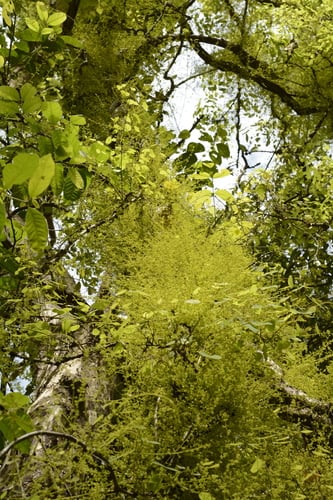
iNaturalist· cc-by-nc-sa
(c) Mateo Hernandez Schmidt, some rights reserved (CC BY-NC-SA), uploaded by Mateo Hernandez Schmidt
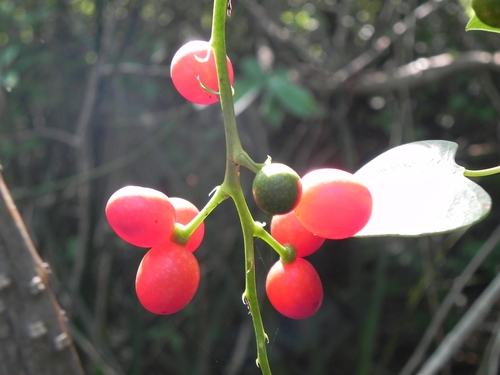
iNaturalist· cc-by-nc
(c) Apipa, some rights reserved (CC BY-NC)
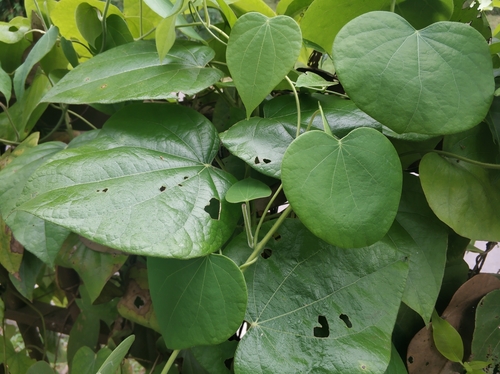
iNaturalist· cc-by-nc
(c) Apipa, some rights reserved (CC BY-NC)
Summary
Source: WikipediaChondrodendron tomentosum is one of six accepted species in the small genus Chondrodendron, belonging to the Moonseed family Menispermaceae. It is a large tropical liana native to Central and South America. It contains highly toxic alkaloids and is one of the sources of the arrow poison curare – specifically 'tube curare', the name of which is derived from the name of the medicinally valuable alkaloid tubocurarine.
Description
A large creeper. It can grow 30 m high and spread widely. The trunk is hairy. It can be 10 cm across. The leaves are oval or rounded. They can be heart shaped. They are alternate. They are 20 cm long. The leaves underneath and the leaf stalks are woolly. The flowers are separately male and female on separate plants. They are small and green-white. The fruit are fleshy and oval. They are 1-2 mm long.
Edible Uses
The fruit are eaten and have a bitter-sweet taste.
Traditional Uses
The fruit are eaten and have a bitter sweet taste. Caution: The roots are used for poisons. They contain curare that paralyses muscles. The poison has to get into the blood stream to work.
Medicinal Uses
Pareira has long been used by local people both to make a poison used in hunting and also as a healing herb. Perhaps the main action of this plant is its muscle relaxant effect, but the alkaloids responsible for this are not absorbed by the digestive tract and have to be administered intravenously. Therefore, when taken orally the plant is considered safe for herbal use. In general, herbal use of the plant is mainly restricted to S. America. The root is considered to be a bitter tonic, emmenagogue, diuretic, febrifuge and relaxant. A root decoction is used to treat oedema, kidney stones, persistent urinary tract infections, prostatitis, and testicular inflammation. Externally it is used as a poultice for treating bruises, contusions, poisonous snake bites. In homeopathy the plant is used for inflammation of the urinary tract and enlarged prostate. The root is a rich source of alkaloids. The main alkaloid responsible for the muscle-relaxant actions is called d-tubocurarine. It works by blocking the signals in the brain which tell the muscles to move - thereby rendering the whole body immobile to the point of becoming virtually paralyzed. It’s not a toxin - and the effects generally wear off in about 90 minutes. The alkaloid is used in conventional medicine as a general anaesthetic and muscle relaxant in various types of surgeries (during which breathing can be controlled with machines). D-tubocurarine is also used to treat tetanus (which causes uncontrollable muscle contractions throughout the body). And is also being evaluated for its role in blocking serotonin, reducing vomiting, alleviating drug withdrawal symptoms, and for its anti-anxiety effects. D-tubocurarine also stimulates the release of histamine which may cause lowered blood pressure due to relaxation of blood vessels.
Known Hazards
The roots contain curare, a potent muscle paralytic poison. The poison must enter the bloodstream to be effective.
Distribution
A tropical plant. It needs a temperature above 15-18°C. It grows in the top of the rainforest. It needs a moist, rich soils. It needs a sunny location. It is damaged by drought and frost.
Where It Grows
Amazon, Australia, Bolivia, Brazil*, Central America, Colombia, Ecuador, Panama, Peru, South America, West Indies,
Cultivation
Plants are grown by seeds or cuttings.
Notes
The stems and roots are used in medicine.
Also Known As
Anpi anku, Antinupa, Cuyovi o'fa, Grieswurzel, Ice vine, Machap, Ourari, Pariera brava, Pava waska, Soga de la pava, Tsima, Urari, Uva, Velvet leaf, Veneno de pavas, Worali
References (7)
- Brown, D., 2002, The Royal Horticultural Society encyclopedia of Herbs and their uses. DK Books. p 167
- Hedrick, U.P., 1919, (Ed.), Sturtevant's edible plants of the world. p 186
- Kermath, B. M., et al, 2014, Food Plants in the Americas: A survey of the domesticated, cultivated and wild plants used for Human food in North, Central and South America and the Caribbean. On line draft. p 221
- Roa, J. A. G. & Boada, D. S. G., 2018, Fundación para el Fortalecimiento de la Fruticultura y Plantas Alimenticias no Convencionales en Colombia.
- Syst. veg. fl. peruv. chil. 261. 1798
Show all 7 references Hide references
- Torre, de la, L., et al, 2008, Enciclopedia de las Plantas Útiles del Ecuador. Herbario QCA. Pontificia Universidad Católica del Ecuador. p 442
- Van den Eynden, V., et al, 2003, Wild Foods from South Ecuador. Economic Botany 57(4): 576-603