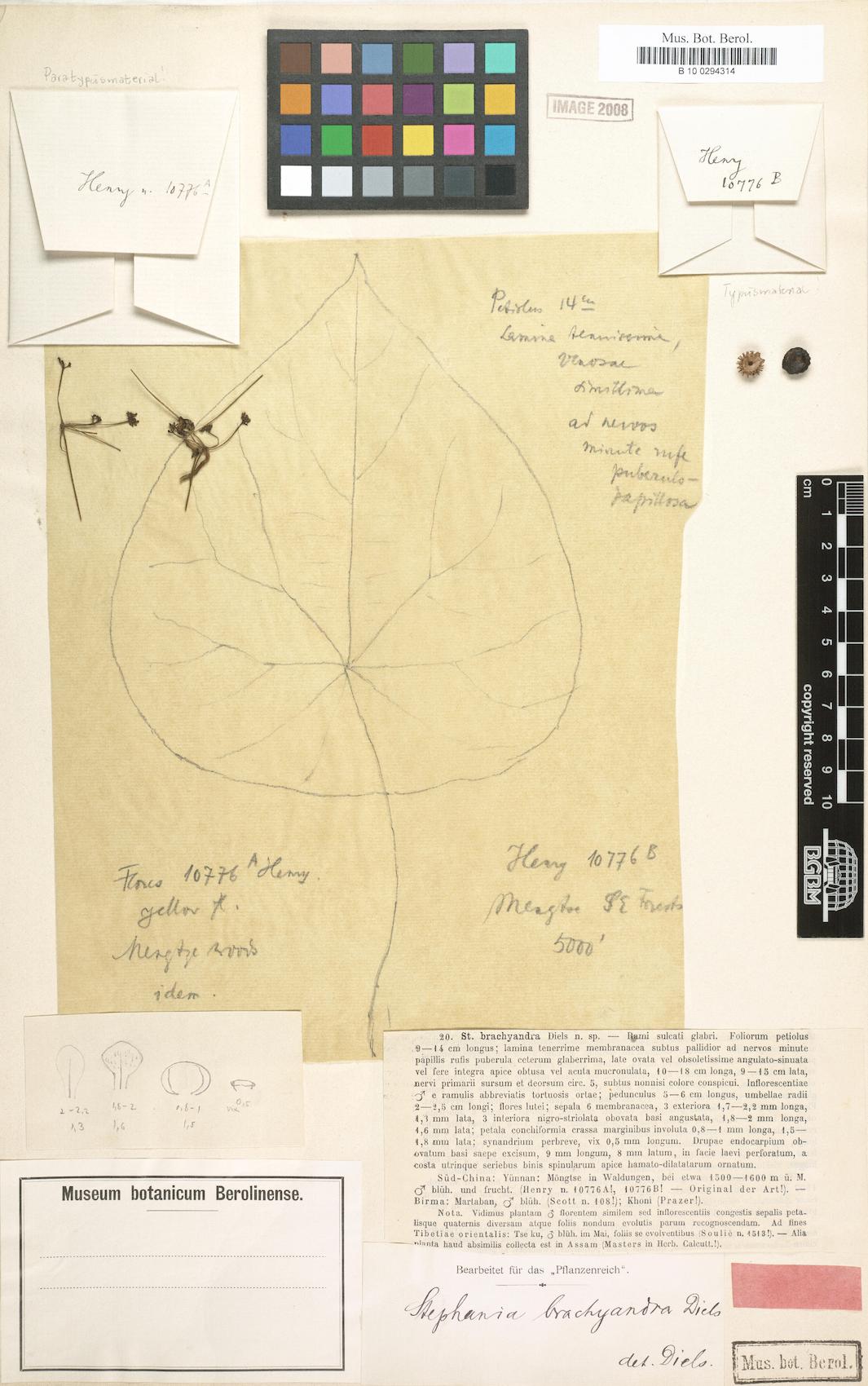
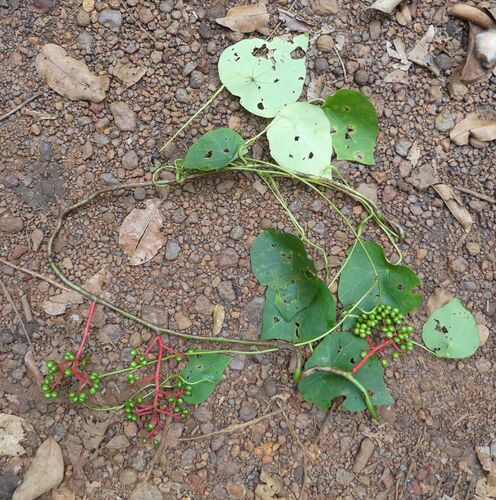
Chasmanthera welwitschii
Troupin
wikimedia· cc-by-sa
Wikimedia Commons - Bart Wursten
wikimedia· cc-by-sa
Wikimedia Commons - Bart Wursten
wikimedia· cc-by-sa
Wikimedia Commons - Bart Wursten
Description
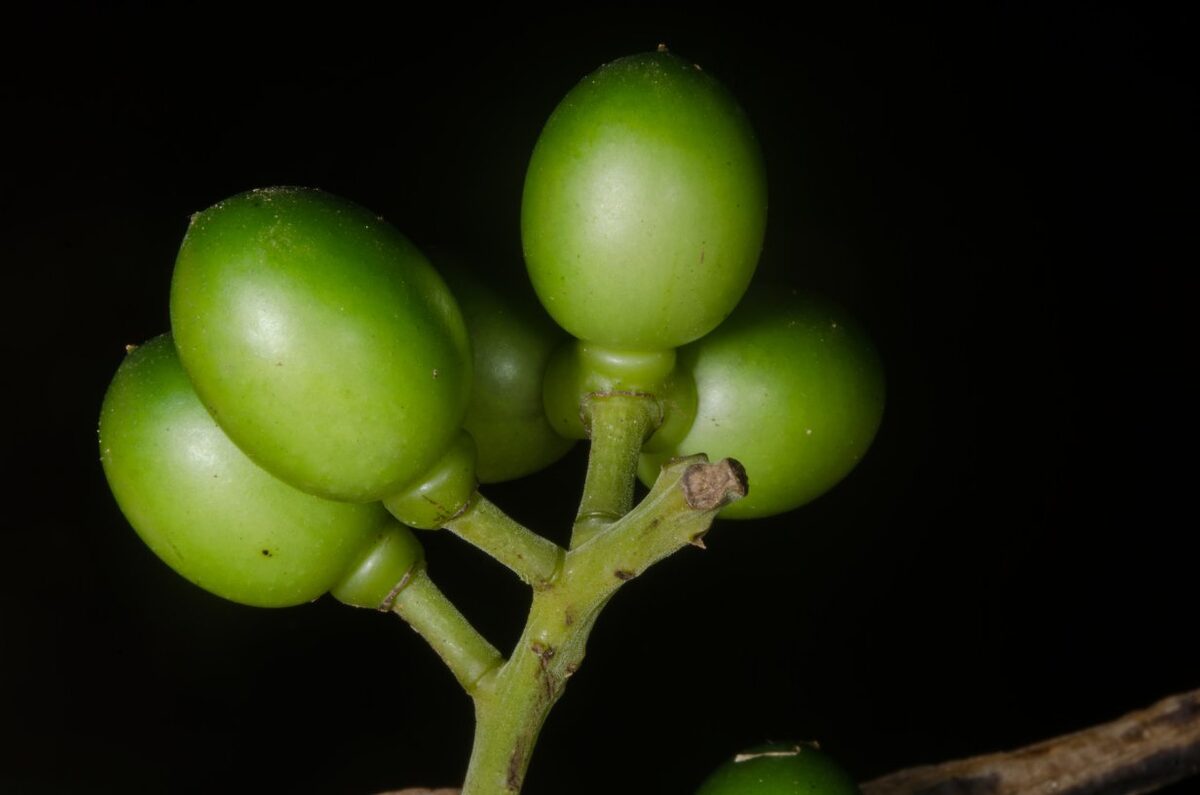
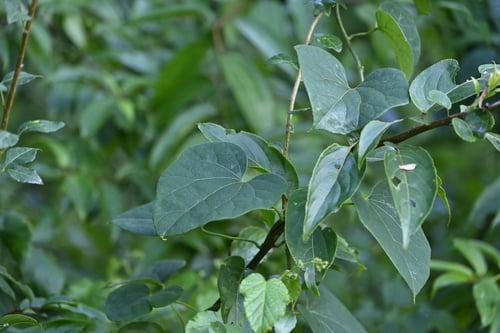
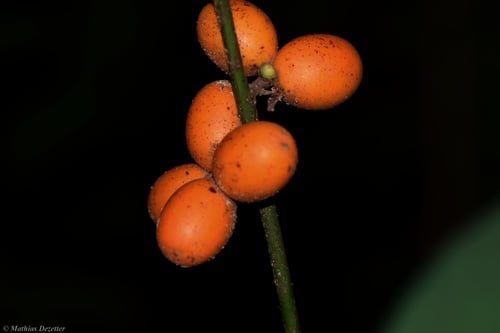
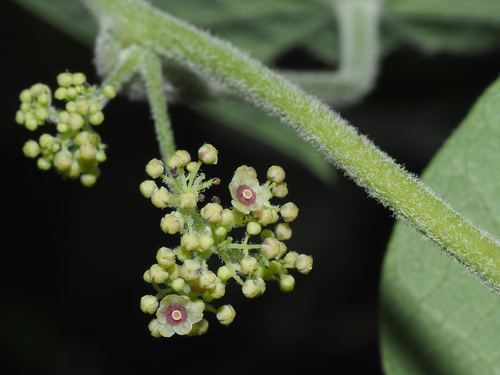
A woody creeper. It grows 30 m long. The branches are hairy and hang down. The leaves are alternate and simple and very hairy. The leaf stalk is 12-14 cm long. The leaf blade is almost round or 5 angled. The flowers are in groups in the axils of leaves and these hang down. Male and female flowers are separate. The fruit are 3 fleshy sections join together. They are 1.2 cm long by 1 cm wide. There is one seed in each section.
Edible Uses
Fruits and roots are eaten by the Turumbu people in DR Congo. The roots are used in the preparation of palm wine to give it extra strength.
Traditional Uses
The pulp of the fruit is eaten raw.
This uses section is brief — help expand it
Medicinal Uses
It is used in traditional medicine.
Known Hazards
A fishing poison is prepared from the leaves, combined with the leaves of Tephrosia vogelii. The roots are used as an ordeal-poison, judgement resting on whether the roots caused constipation or diarrhoea, indicating innocence or guilt, respectively.
Distribution
A tropical plant. It grows in dense evergreen and semi-deciduous forest in humid areas. It occurs at low and medium altitudes.
Where It Grows
Africa, Angola, Cameroon, Central Africa, Central African Republic, Congo DR, East Africa, Gabon, Zambia,
Cultivation
A dioecious species, both male and female forms need to be grown if fruit and seed are required.
Other Uses
The stem is fibrous. It is used as a rope in house construction, and also to make fishing nets and frames.
Notes
It is used in traditional medicine.
Synonyms
Also Known As
Adumasa, Agbetu, Agietu, Ndende, Tonga to boliki, Tongatobolondi
References (7)
- Grubben, G. J. H. and Denton, O. A. (eds), 2004, Plant Resources of Tropical Africa 2. Vegetables. PROTA, Wageningen, Netherlands. p 560
- Jardin, C., 1970, List of Foods Used In Africa, FAO Nutrition Information Document Series No 2.p 126
- Liengola, I. B., 2001, A contribution to the study of native edible plants by the Turumbu and Lokele of the Tshopo District, Province Orientale, D. R. Congo. Syst. Geogr. Pl. 71:687-698
- Malaisse, F., 1997, Se nourrir en floret claire africaine. Approche ecologique et nutritionnelle. CTA., p 59
- Malaisse, F., 2010, How to live and survive in Zambezian open forest (Miombo Ecoregion). Les Presses Agronomiques de Gembloux.
Show all 7 references Hide references
- Oyen, L. P. A., 2008, PROTA4U
- Termote, C., et al, 2011, Eating from the wild: Turumbu, Mbole and Bali traditional knowledge of non-cultivated edible plants, District Tshopo, DRCongo, Gen Resourc Crop Evol. 58:585-618