Cissampelos hirta
Klotzsch
iNaturalist· cc-by-nc
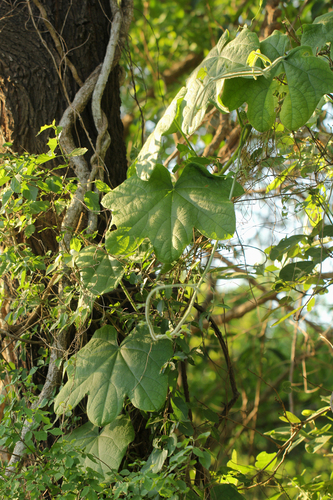
(c) magdastlucia, some rights reserved (CC BY-NC), uploaded by magdastlucia
iNaturalist· cc-by-nc
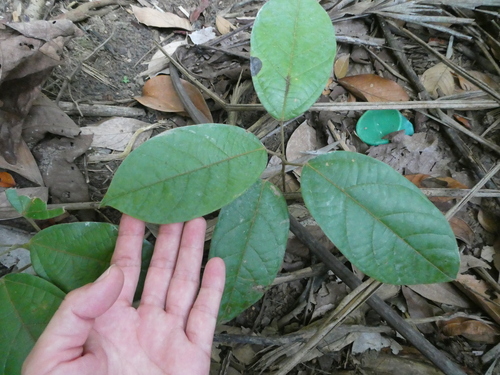
(c) Ricky Taylor, some rights reserved (CC BY-NC)
iNaturalist· cc-by-nc
(c) Ricky Taylor, some rights reserved (CC BY-NC)
Description
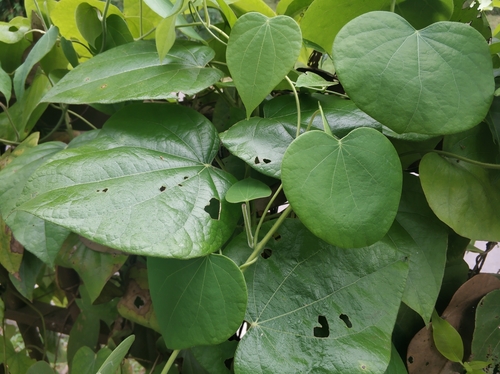
A herb that grows attached to other plants. It can be a climber. The branches have lines along them. The leaves are simple and deeply heart shaped. There is a short tip. There are 5-7 veins from the base spread out like fingers on a hand. Male and female flowers are separate. The flowers are small and 1 mm long and green. The fruit is flattened and fleshy and sometimes has some hairs.
Edible Uses
The leaves are eaten as a green vegetable, while the ripe fruits are eaten as a dessert fruit.
Traditional Uses
The leaves are eaten as a green vegetable. The ripe fruit are eaten as a dessert fruit.
This uses section is brief — help expand it
Distribution
It is a subtropical plant. It can grow in arid places.
Where It Grows
Africa, East Africa, Eswatini, Mozambique, South Africa, Southern Africa, Swaziland,
Notes
There are about 20 Cissampelos species.
Synonyms
References (6)
- Fox, F. W. & Young, M. E. N., 1982, Food from the Veld. Delta Books. p 265
- Long, C., 2005, Swaziland's Flora - siSwati names and Uses http://www.sntc.org.sz/flora/
- Plowes, N. J. & Taylor, F. W., 1997, The Processing of Indigenous Fruits and other Wildfoods of Southern Africa. in Smartt, L. & Haq. (Eds) Domestication, Production and Utilization of New Crops. ICUC p 188
- Royal Botanic Gardens, Kew (1999). Survey of Economic Plants for Arid and Semi-Arid Lands (SEPASAL) database. Published on the Internet; http://www.rbgkew.org.uk/ceb/sepasal/internet [Accessed 3rd May 2011]
- Ruiters-Welcome, A. K., 2019, Food plants of southern Africa. Ph.D. thesis. Univ. of Johannesburg p 78
Show all 6 references Hide references
- Welcome, A. K. & Van Wyk, B.-E., 2019, An inventory and analysis of the food plants of southern Africa. South African Journal of Botany 122 (2019) 136–179