Cissampelos mucronata
A. Rich.
iNaturalist· cc-by-nc
(c) Jean Stephenson, some rights reserved (CC BY-NC), uploaded by Jean Stephenson
iNaturalist· cc0
no rights reserved
iNaturalist· cc0
no rights reserved
Description
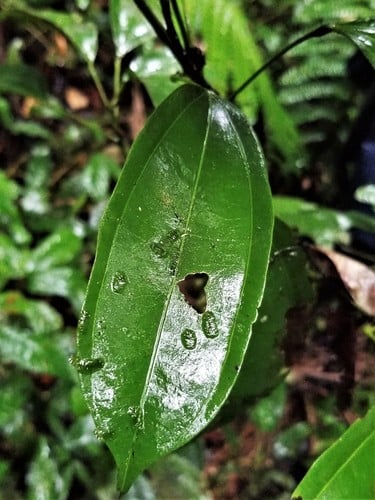
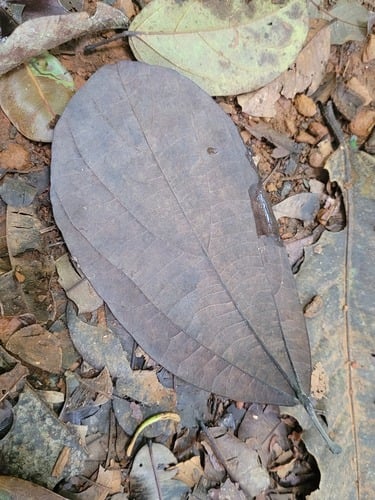
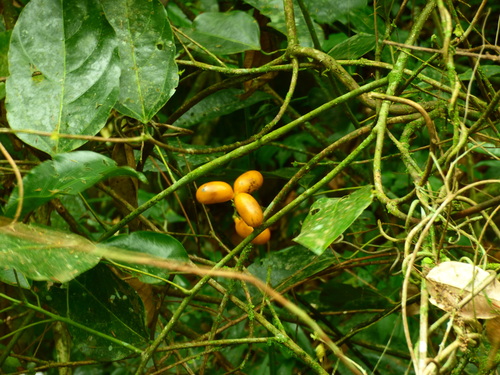
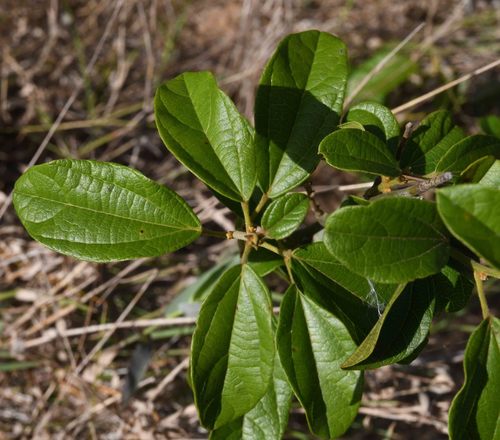
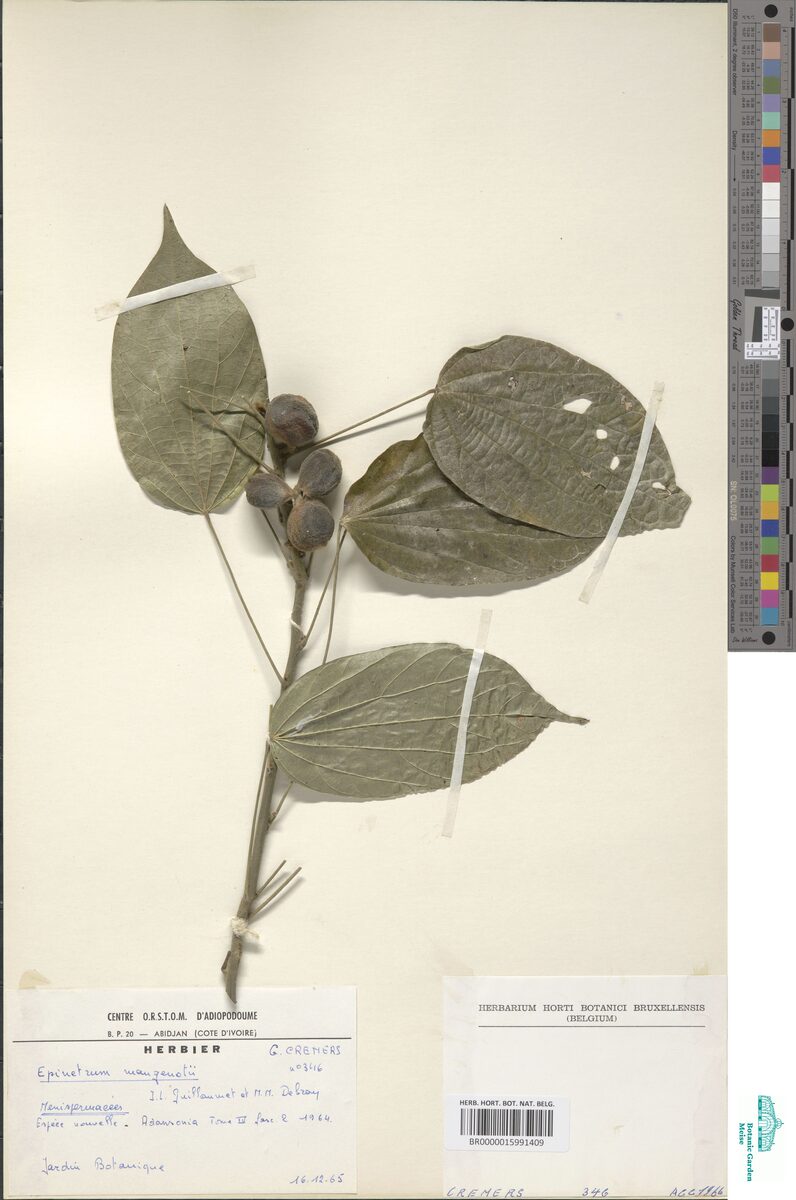
A climbing herb. It has a woody rootstock. The leaves are oval or heart shaped and the leaf stalk joins away from the edge. They have a short tip at the end. The flowers are in the axils of leaves and male and female flowers are separate. The fruit are green but turn bright red when ripe.
Edible Uses
Leaves are eaten, though caution is advised.
Medicinal Uses
The plant has a wide range of medicinal uses in Africa, where it is commonly used throughout its extensive range. There has been considerable research into the plants attributes, much of which has helped to support the traditional uses. All parts of the plant, but especially the rhizomes, are rich in alkaloids. Methanolic extracts from the dried rhizome have shown significant antiprotozoal activity against chloroquine sensitive and chloroquine resistant Plasmodium falciparum. The methanolic extract also inhibited the enzyme tyrosine kinase. Alkaloids isolated from the ethanolic extracts of the rhizome have shown sedative effects. The ethanol extract has shown uterine relaxant activities. Methanolic leaf extracts of the plant had a positive effect against indomethacin-induced stomach ulcers. An infusion, usually of the bitter rhizome, although sometimes it is the leaves and stems, or even the fruit juice, is used in the treatment of various complaints. In particular, it is used to treat a range of gastro-intestinal complaints such as diarrhoea, dysentery, colic, intestinal worms and digestive problems; urogenital problems including menstrual difficulties, venereal diseases, infertility, azoospermia, as an oxytocic to induce contraction of the uterus to start labour or abortion and to expel the placenta; pulmonary conditions including catarrh, sore throats, cough and lung problems. The rhizome is also used in treating conditions such as oedema, fevers caused by malaria or jaundice, headaches, neck pain and back pain. The sap from the rhizome is used as ear drops to treat earache. The powdered rhizome is applied to open wounds to promote healing. The roots are used in medical rituals to treat mental problems such as psychoses. A leaf decoction is taken as a vermifuge against tapeworm. An infusion of the leafy stems is used as an emmenagogue. The fresh leaf pulp, mixed with clay, is eaten to stop stomatitis.. The vapour of a leaf decoction is inhaled to induce vomiting. The leaf pulp is taken internally, or applied to the affected area, as an antidote for snake venom. The fresh pulp is also applied to the head to relieve severe headache. The fresh, heated or pulped leaves are applied to wounds, ulcers, conjunctivitis and syphilis sores, and a poultice of leaves, combined with natron, is applied to swellings, ulcers and Guinea worm sores. The whole plant is used in preparations to treat intercostal pain. The pounded plant is applied to snakebites. The plant is used to treat diseases affecting the spine. Ash from the plant is rubbed into scarifications made in the skin in order to relieve arthritis.
Known Hazards
Leaves should be used with caution.
Distribution
It is a tropical plant. It grows in woodland, savannah and palm groves. It grows up to 1,800 m above sea level.
Where It Grows
Africa, Botswana, Burkina Faso, East Africa, Guinea, Guinée, Guinea-Bissau, Kenya, Mozambique, Namibia, Southern Africa, Uganda, West Africa, Zambia, Zimbabwe,
Cultivation
The plant can flower virtually all year round. A dioecious species, both male and female forms need to be grown if fruit and seed are required.
Other Uses
The fibrous stems are commonly used for tying and binding, to make fishing lines and in wickerwork. The stems are picked and wound into a coil, they are soaked in water for a day or are boiled and on drying are dark-brown in colour, and are used for binding the edges of baskets.
Synonyms
Also Known As
Aboce, Anefiafia, Bacalambach, Bislina, Cabate-cu'uite, Cabate-ufate, Cauce-edjanbaran, Chimpombafolia, Cubate-cuite, Inetulo, Manefa-fia, Neun'fa-ak, Nhinatulo, Nhocanhocani, Nofelbade, Nofer-balo, Nopelelbalo, Oredja-de-rato, Oredja-di-sanjo, Orelha-de-rato, Sapate-o
References (7)
- Grivetti, L. E., 1980, Agricultural development: present and potential role of edible wild plants. Part 2: Sub-Saharan Africa, Report to the Department of State Agency for International Development. p 70
- Masters, T., 2021, Traditional food plants of the upper Aswa River catchment of northern Uganda—a cultural crossroads. Journal of Ethnobiology and Ethnomedicine (2021) 17:24
- Mutie, F. M., et al, 2023, Important Medicinal and Food Taxa (Orders and Families) in Kenya, Based on Three Quantitative Approaches. Plants 2023, 12, 1145
- PROTA
- Ruiters-Welcome, A. K., 2019, Food plants of southern Africa. Ph.D. thesis. Univ. of Johannesburg p 78
Show all 7 references Hide references
- Welcome, A. K. & Van Wyk, B.-E., 2019, An inventory and analysis of the food plants of southern Africa. South African Journal of Botany 122 (2019) 136–179
- World Checklist of Useful Plant Species 2020. Royal Botanic Gardens, Kew