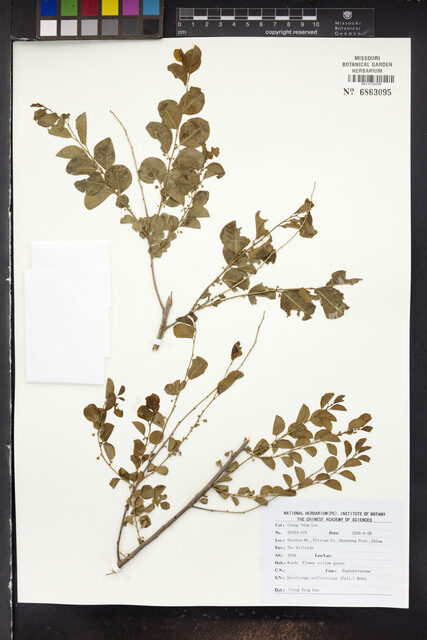
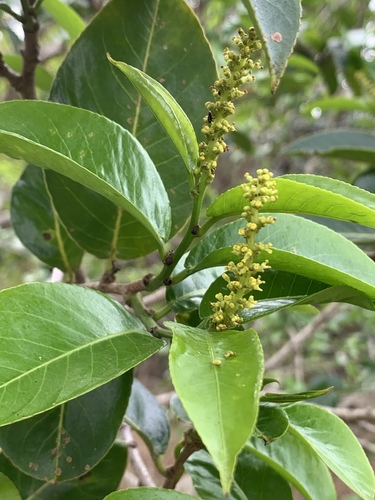
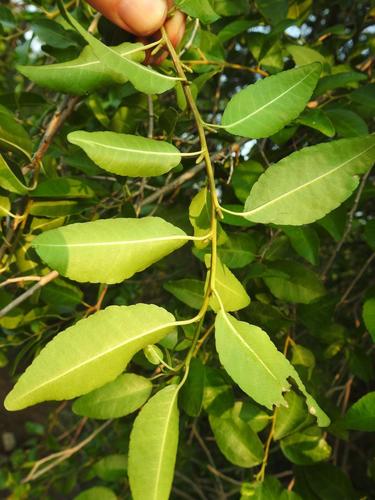
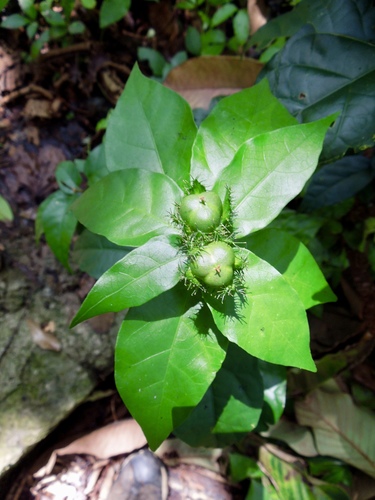
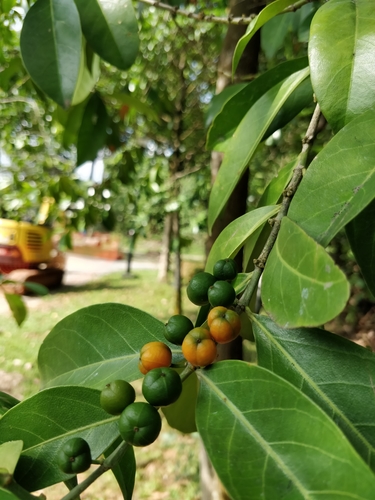
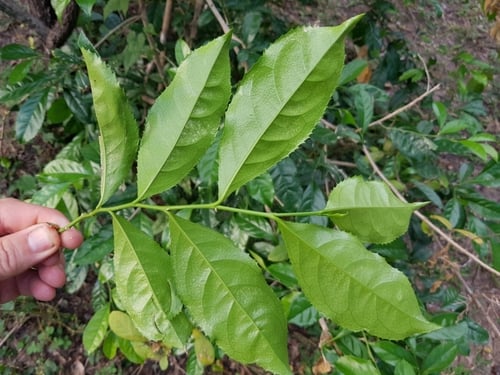
Acalypha bipartita
Muell. Arg.
Mhacha
wikimedia· pd
Wikimedia Commons (via Wikimedia Commons)
gbif· cc-by
Royal Botanic Gardens, Kew
Summary
Source: WikipediaAcalypha bipartita is a species in the botanical family Euphorbiaceae. It occurs widely in Africa where it is eaten as a vegetable, or fed to animals. The leaves are considered nutritious, as they contain a high concentration of calcium. It is often found as undergrowth in the forest, on the edges of the forest, and in wooded grasslands, particularly in Sudan, Uganda, Kenya, eastern Zaire, Burundi, Rwanda, and Tanzania. The stems are often used in making baskets.
Description
A shrub or small tree. It grows 5 m tall. There are prickles along the stem. The leaves are twice divided and there are 8-18 pairs of pinnae. There are up to 50 pairs of pinnules on each pinnae. The flowers are yellow. They are in large clusters at the ends of branches. The pods are flattened.
Edible Uses
Young leaves and shoots are eaten as a vegetable, typically chopped and added to beans and eaten with the staple food. The plant is occasionally sold in local markets.
Traditional Uses
The young leaves and shoots are eaten as a vegetable. They are usually chopped and added to beans and eaten with the staple food.
This uses section is brief — help expand it
Distribution
It is a tropical plant. It often grows near rivers. It grows in forest undergrowth. It grows between 1,000-1,500 m above sea level. It grows in areas with an annual rainfall of 900-1,500 mm.
Where It Grows
Africa, Burundi, Central Africa, Congo, East Africa, Kenya, Rwanda, Sudan, Tanzania, Uganda,
Cultivation
Acalypha bipartita is a plant of medium elevations in the drier tropics, where it can be found at elevations from 1,000 - 1,500 metres. It is found growing in areas where the mean annual rainfall is in the range 900 - 1,500mm. Prefers yellowish, sandy loams but tolerates a wide range of soil types. When growing in moist soils, the leaves can be harvested all year round.
Other Uses
The stems are used to make baskets for winnowing and in the construction of granaries.
Other Information
It is occasionally sold in local markets.
Notes
There are over 450 Acalypha species. They are tropical. There are 225 in tropical America.
Nutrition
| Part | Moisture | kJ | kcal | Protein | Vit A | Vit C | Iron | Zinc |
|---|---|---|---|---|---|---|---|---|
| Leaves | — | — | 17.1 | — | 92 | 22 | — | — |
Synonyms
Also Known As
Ayuu, Ayuyu, Egoza, Ejerengesa
References (9)
- Acipa, A. et al, 2013, Nutritional Profile of some Selected Food Plants of Otwal and Ngai Counties, Oyam District, Northern Uganda. African Journal or Food, Agriculture, Nutrition and Development. 13(2)
- Agea, J. G., et al 2011, Wild and Semi-wild Food Plants of Bunyoro-Kitara Kingdom of Uganda: etc. Environmental Research Journal 5(2) 74-86
- Andabati, B., & Muyonga, J., 2014, Phenolic content and antioxidant activity of selected Ugandian traditional medicinal foods. African Journal of Food Science. 8(8), pp 427-434
- Godfrey, J. et al, 2013, Harvesting, preparationand preservation of commonly consumed wild and semi-wild food plants in Bunyoro-Kitara Kingdom, Uganda. Int. J. Med. Arom. Plants. Vol.3 No.2 pp 262-282
- Goode, P., 1989, Edible Plants of Uganda. FAO p 26
Show all 9 references Hide references
- Grubben, G. J. H. and Denton, O. A. (eds), 2004, Plant Resources of Tropical Africa 2. Vegetables. PROTA, Wageningen, Netherlands. p 29
- Peters, C. R., O'Brien, E. M., and Drummond, R.B., 1992, Edible Wild plants of Sub-saharan Africa. Kew. p 107
- Ruffo, C. K., Birnie, A. & Tengnas, B., 2002, Edible Wild Plants of Tanzania. RELMA p 90
- Tallantire & Goode, 1975,