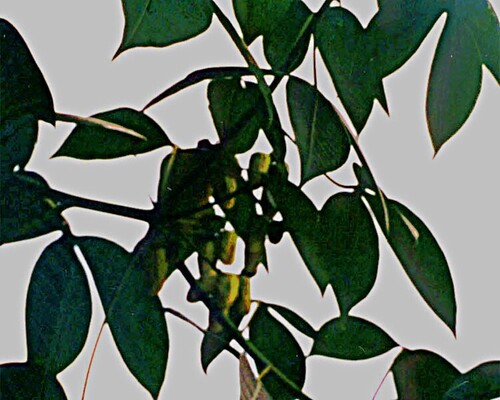
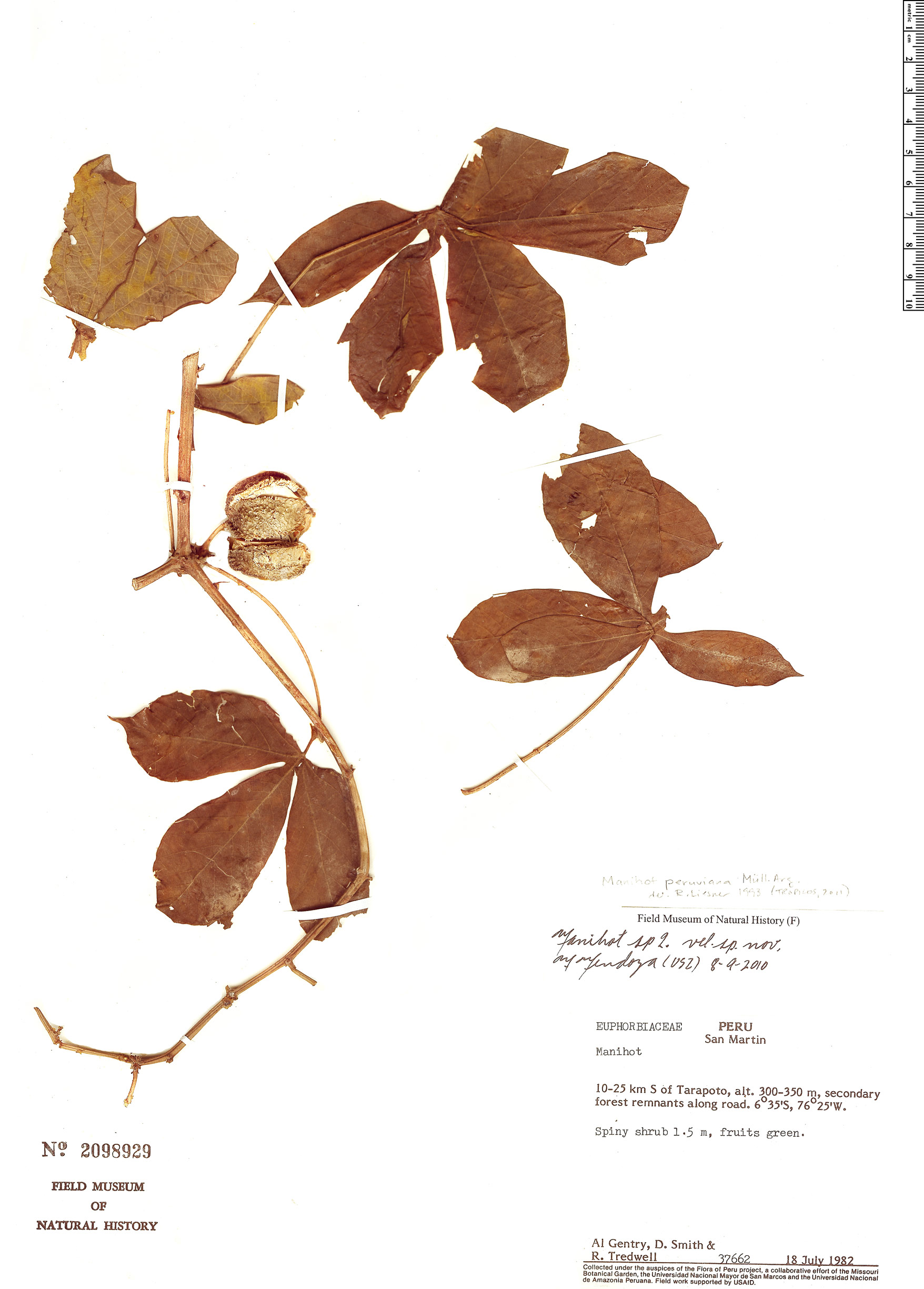
Croton mubango
Muell. Arg.
wikimedia· cc0
Wikimedia Commons - Daderot
Description
A tropical shrub or small tree in the Euphorbiaceae family.
This description is brief — help expand it
Edible Uses
The bark of young twigs is used as a flavouring.
Traditional Uses
The bark of young twigs is used as a flavouring.
This uses section is brief — help expand it
Medicinal Uses
A decoction of the bark is taken to treat gastritis and painful periods. Combined with the seeds of Monodora myristica, the bark is eaten to treat abdominal pain and expel intestinal worms. The powdered bark in palm wine is taken to treat oedema. The bark pulp is rubbed onto the gums and teeth to treat toothache, and is also applied to haemorrhoids, hernias, skin eruptions and painful joints. The body is rubbed with a bark maceration as a tonic. Young fruits soaked in palm wine are taken as a laxative. A decoction of the root, combined with the roots of Mundondo (Chlorocodon spp.) and Tylopliora conspicua, is used as a drastic purgative. The powdered root, or a root maceration, is taken to treat diarrhoea and dysentery. The leaves are eaten to ease pain. A leaf infusion is used as a body wash to treat fever. A stem bark decoction is taken to treat abdominal pain, fevers, enlarged spleen and tuberculosis. When mixed with the leaves or stems of Mobiro (Adoiia lobata), it is an excellent anthelmintic remedy. Preliminary screening showed the presence of flavonoids, sterols, triterpenes, saponins and reducing sugars. Stem bark extracts showed weak antibacterial and anti-amoebic activities in vitro. Methanolic, dichloromethane and aqueous stem bark extracts showed antiplasmodial activity against Plasmodium falciparum in vitro. At a daily oral dose of 200 mg/kg, the dichloromethane extract, the petroleum-ether, chloroform, ethyl-acetate and residual water-soluble fractions showed antiplasmodial activity against Plasmodium berghei. In-vitro antibacterial screening of the stem bark extract showed no activity against enteropathogens.
Distribution
A tropical plant.
Where It Grows
Africa, Angola, Central Africa, Congo DR,
Cultivation
Plants can be grown from seed.
Other Uses
The white wood is hard and firm, but cracks easily. No uses are recorded for it. The scented flowers are very attractive to bees.
Notes
There are about 750 Croton species. The leaves are used in medicine.
Also Known As
Mubango mbango, Nbangu nbangu, Saku
References (5)
- Latham, P., 2004, Useful Plants of Bas-Congo province. Salvation Army & DFID p 99
- Martin, F.W. & Ruberte, R.M., 1979, Edible Leaves of the Tropics. Antillian College Press, Mayaguez, Puerto Rico. p 191
- Okigbo, B.N., Vegetables in Tropical Africa, in Opena, R.T. & Kyomo, M.L., 1990, Vegetable Research and development in SADCC countries. Asian Vegetable Research and development Centre. Taiwan. p 38
- Schmelzer, G.H., 2007. Croton mubango Müll.Arg. [Internet] Record from Protabase. Schmelzer, G.H. & Gurib-Fakim, A. (Editors). PROTA (Plant Resources of Tropical Africa), Wageningen, Netherlands. < http://database.prota.org/search.htm>. Accessed 15 October 2009.
- World Checklist of Useful Plant Species 2020. Royal Botanic Gardens, Kew