Cucumis myriocarpus
Naudin
Striped wild cucumber
iNaturalist· cc-by-nc
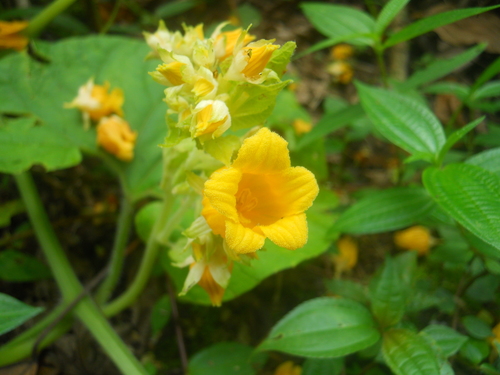
(c) Richard Adcock, some rights reserved (CC BY-NC), uploaded by Richard Adcock
iNaturalist· cc-by-nc
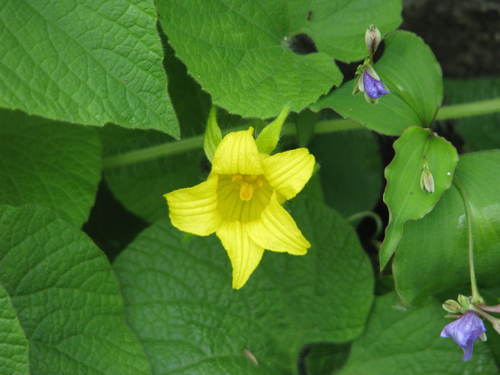
(c) Emily Sonter, some rights reserved (CC BY-NC), uploaded by Emily Sonter
iNaturalist· cc-by-nc
(c) Joel Hernandez, some rights reserved (CC BY-NC), uploaded by Joel Hernandez
Summary
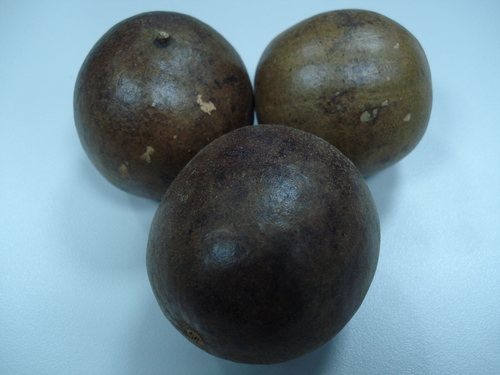
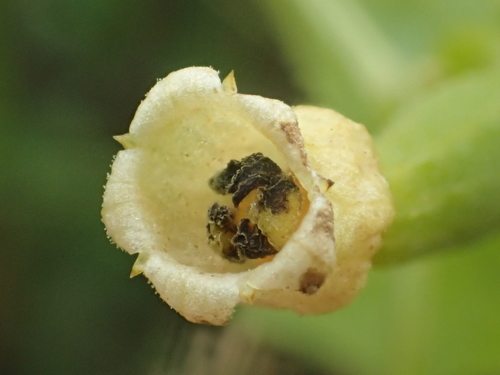
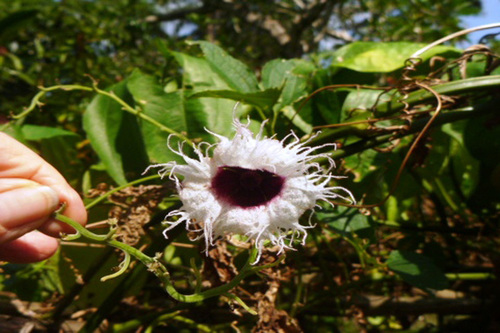
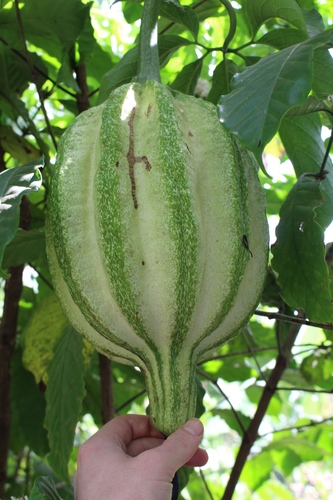
Source: WikipediaCucumis myriocarpus, the gooseberry cucumber, gooseberry gourd, paddy melon, mallee pear or prickly paddy melon, is a prostrate or climbing annual herb native to tropical and southern Africa. It has small, round, yellow-green or green-striped fruit with soft spines, small yellow flowers and deeply lobed, light green leaves. The melon occurs in disturbed soil and cleared or bare areas, and thrives on summer moisture. The fruit and foliage are toxic due to the presence of cucurbitacin. The plant is toxic to humans as well as to horses, sheep, cattle and pigs and it has been associated with stock deaths. It has been used by humans as an emetic. There are records of poisoning occurring in humans. The melon is a noxious weed in Australia and in California, where it may also be known as prickly paddy melon, bitter apple, gooseberry gourd and gooseberry cucumber. One of many invasive species in Australia, it is highly damaging to the economy, with the farmers bearing most of the cost. Cucumis myriocarpus (paddy melon) is often confused with Citrullus lanatus (the Afghan melon, camel melon or bitter wooly melon) in Australia, where both species are introduced. Cucumis myriocarpus has many small fruit, hidden under the leaves. The fruit are smaller than a golf ball and green in colour, developing to yellow on maturity. The larger melons commonly seen on roadsides in rural Australia are in fact Citrullus lanatus, a wild relative of the watermelon. The confusion is widespread in Australia, such that in common parlance, the term "paddy melon" is understood to mean the larger green/yellow fruit of the Citrullus lanatus. Children in rural Australia often use the fruit of this plant as an opportunistic source of entertainment, for example by throwing it at each other's feet, or squeezing the fruit to shoot the seeds at each other. Paddy and Afghan melons (collectively referred to as wild melons) sometimes occur in mixed infestations in Australia. They vary only slightly in colour and appearance, with Citrullus lanatus leaves being a little more variegated than those of Cucumis myriocarpus. Fruit size is the clearest identifying factor. However, management of all wild melons is similar, apart from some variation in sensitivity to the herbicide glyphosate. Mechanical removal of small infestations is the simplest control method, and cultivation at early stages of growth can be effective. Large infestations are sometimes controlled by the spray-graze method, in which plants are sprayed with a sublethal dose of hormone herbicide to make them more palatable to stock, and the area is heavily grazed three days later. Toxicity is managed by making other feed available. Both wild melon species have a similar unpleasant odor when broken or disturbed. That makes them less palatable to stock, so poisoning tends to occur only when little other feed is available. The plant occurs in Spain, where it is naturalized and known by the common names of habanera or sandía habanera.
Description
A herb. It is an annual plant in the pumpkin family. It grows 20 cm high and spreads 5 m wide. The stem lies along the ground and has tendrils. The leaves are oval or heart shaped and 6 cm long. There are 5 leaflets with teeth along the edges The flowers are white with dark green stripes. The flowers occur in clusters or 2 to 4. The fruit are pale green oval melons that turn yellow when ripe. They are 2-3 cm across. There are many fruit hidden under the leaves.
Edible Uses
The fruit can be eaten raw, with green fruit being less bitter than ripe ones, though extensive preparation is often needed to remove poisons. The leaves are eaten as a cooked green vegetable and used in relishes and chutneys.
Traditional Uses
The fruit are eaten raw. The green fruit are less bitter than ripe fruit. Caution: It often needs extensive preparation to remove poisons. The leaves are eaten as a green vegetable after cooking and also used in relishes and chutneys.
Medicinal Uses
The fruit pulp is used as an emetic and purgative. Some caution is advised - see notes above on toxicity. The fresh fruits contain cucurbitacins A and D. Cucurbitacins, which are also known from many other species in the family Cucurbitaceae as well as various other plant species. These cucurbitacins exhibit cytotoxicity (including antitumor activity), anti-inflammatory and analgesic activities.
Known Hazards
The fruit is reported to be used medicinally, however overdosing and/or the inclusion of the seeds in the pulp have been blamed for fatal cases of poisoning. The plant is suspected of causing photosensitization in sheep and blindness in cattle. However, reports on medicinal use and toxicity of this plant are suspected of wrong identification, and may refer to other species.
Distribution
It is a tropical and subtropical plant. It will grow in most soils. It needs an open sunny position. It is resistant to drought and frost. It can grow in arid places.
Where It Grows
Africa, Australia, Botswana, East Africa, Eswatini, Europe, Lesotho, Mozambique, South Africa*, Southern Africa, Swaziland, Tasmania, USA, Zambia, Zimbabwe,
Cultivation
Plants are grown from seeds.
Other Uses
The plant is a promising source of disease and pest resistance for economically important Cucumis species.
Other Information
It is cultivated.
Synonyms
Also Known As
Gooseberry cucumber, Isendelenja, Mokapana, Monyaku, Thlare sa mpja, Tshinyagu, Wildekomkommer
References (18)
- Bodkin, F., 1991, Encyclopedia Botanica. Cornstalk publishing, p 306
- Flyman, M. V. & Afolayan, A. J., 2006, A Survey of plants used as wild vegetables in four districts of Botswana. Ecology of Food and Nutrition, 45:405-415
- Fowler, D. G., 2007, Zambian Plants: Their Vernacular Names and Uses. Kew. p 79
- Fox, F. W. & Young, M. E. N., 1982, Food from the Veld. Delta Books. p 172
- Grivetti, L. E., 1980, Agricultural development: present and potential role of edible wild plants. Part 2: Sub-Saharan Africa, Report to the Department of State Agency for International Development. p 79
Show all 18 references Hide references
- Grubben, G. J. H. and Denton, O. A. (eds), 2004, Plant Resources of Tropical Africa 2. Vegetables. PROTA, Wageningen, Netherlands. p 252
- Grivetti, 1976, 1979,
- Long, C., 2005, Swaziland's Flora - siSwati names and Uses http://www.sntc.org.sz/flora/ (As subsp. myriocarpus)
- Magwede, K., van Wyk, B.-E., & van Wyk, A. E., 2019, An inventory of Vhavenḓa useful plants. South African Journal of Botany 122 (2019) 57–89
- Marker & Sheape,
- Peters, C. R., O'Brien, E. M., and Drummond, R.B., 1992, Edible Wild plants of Sub-saharan Africa. Kew. p 101
- Plowes, N. J. & Taylor, F. W., 1997, The Processing of Indigenous Fruits and other Wildfoods of Southern Africa. in Smartt, L. & Haq. (Eds) Domestication, Production and Utilization of New Crops. ICUC p 189
- Royal Botanic Gardens, Kew (1999). Survey of Economic Plants for Arid and Semi-Arid Lands (SEPASAL) database. Published on the Internet; http://www.rbgkew.org.uk/ceb/sepasal/internet [Accessed 16th April 2011]
- Ruiters-Welcome, A. K., 2019, Food plants of southern Africa. Ph.D. thesis. Univ. of Johannesburg p 49
- Swaziland's Flora Database http://www.sntc.org.sz/flora
- Welcome, A. K. & Van Wyk, B.-E., 2019, An inventory and analysis of the food plants of southern Africa. South African Journal of Botany 122 (2019) 136–179
- World Checklist of Useful Plant Species 2020. Royal Botanic Gardens, Kew
- Zeven, A. C. & de West, J. M. J., 1982, Dictionary of cultivated plants and their regions of diversity. Wageningen. p 124