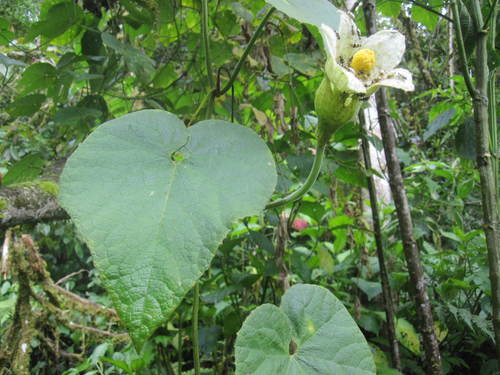
Siraitia grosvenorii
(Swingle) A. M. Lu & Zhi Y. Zhang
Lo han kuo
iNaturalist· cc-by-sa
(c) User:KasugaHuang, some rights reserved (CC BY-SA)
iNaturalist· cc-by-nc
(c) jiuheng92, some rights reserved (CC BY-NC)
iNaturalist· cc-by-nc
(c) jiuheng92, some rights reserved (CC BY-NC)
Summary
Source: WikipediaSiraitia grosvenorii, also known as monkfruit, luo han guo (Chinese: 羅漢果; pinyin: luóhàn guǒ), or Swingle fruit, is a herbaceous perennial vine of the gourd family, Cucurbitaceae. It is native to southern China. The plant is cultivated for its fruit extract containing mogrosides. Mogroside extract has been used as a low-calorie sugar substitute for drinks and in traditional Chinese medicine. One mogroside, mogroside V, creates a sweetness sensation 250 times stronger than sucrose.
Description
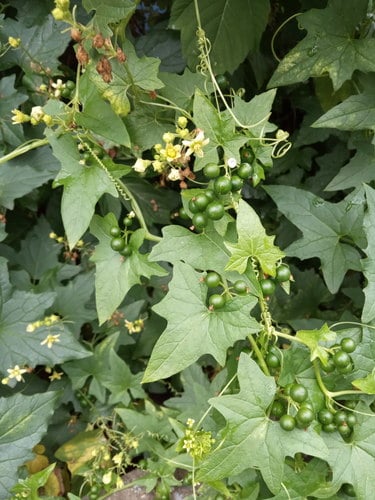
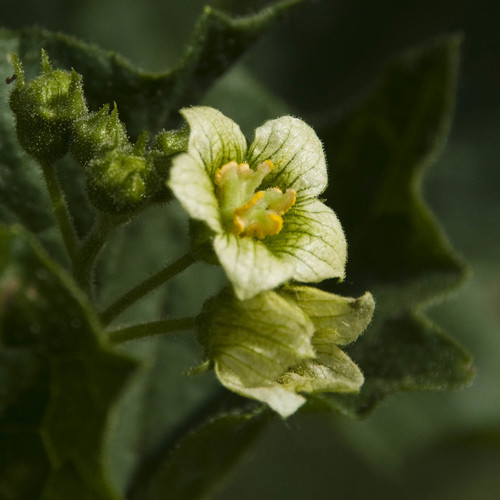
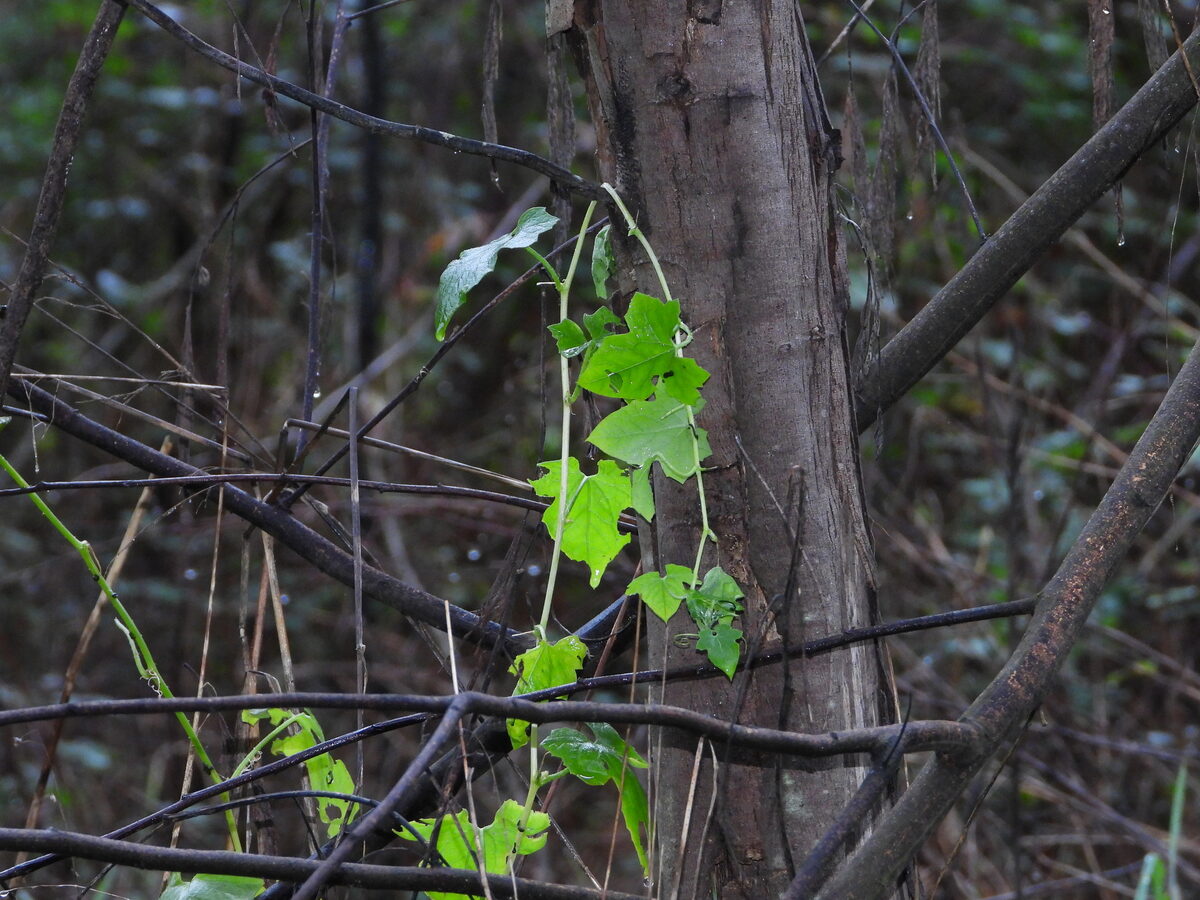
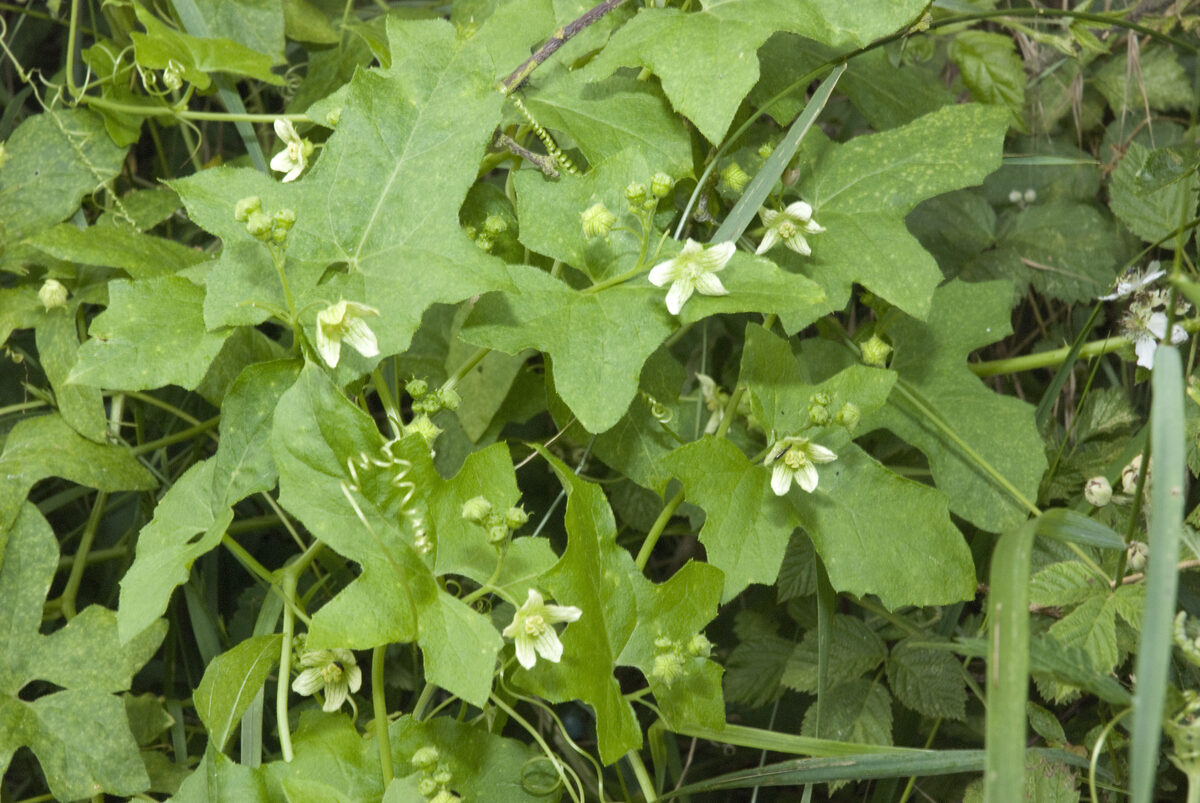
A robust climber. It keeps growing from year to year. It has fleshy oval rootstocks. These are 7-23 cm long by 6-12 cm wide. The branches emerge from this short stem each year. They are 3-5 m long. The young growth has yellow-brown hairs. The tendrils have 2 branches. The leaves are triangle shaped and 12-25 cm long by 5-17 cm wide at the base. The edges are wavy and there are small teeth. The leaf stalks are 5-7 cm long. The flowers are yellow. They are 3-4 cm across. The fruit are round or pear shaped. They are 5-8 cm long by 4-7 cm wide. They have hairs. There can be 6-11 faint ridges. The rind is thin and brittle. It is 1 mm thick. The fruit are very sweet. The fruit are green but become brown on drying. The seeds are oblong and with deep grooves. There are some named varieties.
Edible Uses
The fruit is used to make soup and tea, and serves as a sugar substitute due to its high sweetness from mogrosides. Flowers can be used for tea. Fresh or dried fruit is consumed.
Traditional Uses
The fruit are used to make soup. They are also used to make tea. It is very sweet. The fruit are used as a substitute for sugar. Fruit can be dried.
Medicinal Uses
Traditional use as a sweetener, possibly 300 times the sweetness of sugar without caloric content.
Known Hazards
At least one generally recognized as safe (GRAS) notice has been received by the U.S. Food and Drug Administration. The FDA granted GRAS certification to Siraitia grosvenorii extracts/processed products in 2011. In Europe, it is classified as an unapproved novel food (not used in the food system before May 1997) which means that it may be marketed as a food or food ingredient only after a safety assessment and approval by the European Commission. In 2019, the EFSA Panel on Food Additives and Flavourings (FAF) was asked by the European Commission to provide its scientific opinion on the safety of monkfruit extract as a food additive. The panel concluded that the current body of research was insufficient. As of 2023, Siraitia grosvenorii was not listed among approved Novel Foods in the EU.
Distribution
It is a temperate plant. It grows in the mountain in Guangxi in China. It suits shady places.
Where It Grows
Asia, China, SE Asia, Thailand, Vietnam,
Cultivation
Plants are grown from seed. Seeds only germinate slowly and can take several months.
Production
Flowers are best artificially pollinated.
Other Information
It is a cultivated food plant. Available in Chinese shops in Australia. It is sold in local markets in China.
Notes
A sweetener. Possibly 300 times sugar and without calorie problems. The sweetness is due to mogrosides a group of triterpene glycosides.
Synonyms
Also Known As
Buddha's fruit, Monk fruit
References (10)
- Facciola, S., 1998, Cornucopia 2: a Source Book of Edible Plants. Kampong Publications, p 89 (As Thladiantha grosvenorii)
- Guihaia 4:29. 1984
- Hu, Shiu-ying, 2005, Food Plants of China. The Chinese University Press. p 710
- Kew Bull. 33:393. 1979 (As Thladiantha grosvenorii)
- Li, D. et al, 2017, Ethnobotanical survey of herbal tea plants from the traditional markets in Chaoshan, China. Journal of Ethnopharmacology. 205 (2017) 195-206
Show all 10 references Hide references
- Lim, T. K. Edible Medicinal and Non-Medicinal Plants Volume 2, Fruits. Springer p 392
- Tang, S. et al, 2007, Assessment of genetic diversity in cultivars and wild accessions. Genet. Resourc. Crop Evol. 54:1053-1061
- Walters, T. W., 1989, Historical Overview on Domesticated Plants in China with Special Emphasis on the Cucurbitaceae. Economic Botany 43(3): 297-313 (As (Swingle) C. Jeffrey)
- Wikipedia
- World Checklist of Useful Plant Species 2020. Royal Botanic Gardens, Kew