Telfairia occidentalis
Hook. f.
Fluted pumpkin, Fluted gourd
iNaturalist· cc-by-nc
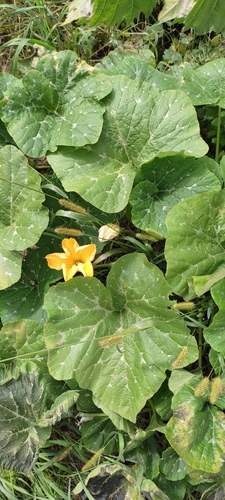
(c) International Institute of Tropical Agriculture, some rights reserved (CC BY-NC)
iNaturalist· cc-by-nc
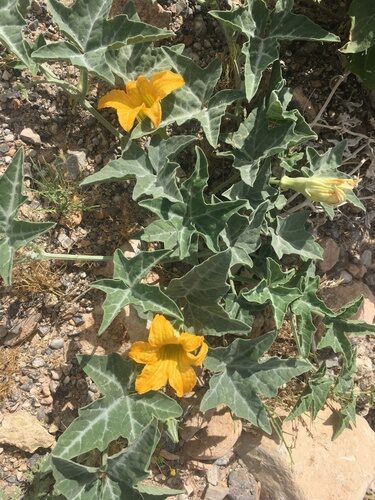
(c) International Institute of Tropical Agriculture, some rights reserved (CC BY-NC)
iNaturalist· cc-by-nc
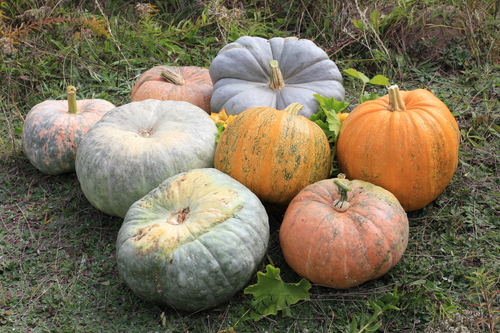
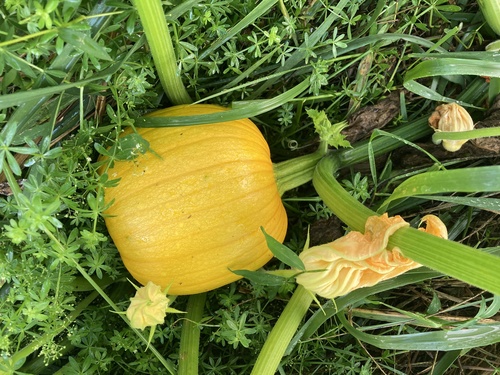
(c) afroboy22, some rights reserved (CC BY-NC)
Summary
Source: WikipediaTelfairia occidentalis is a tropical vine grown in West Africa as a leaf vegetable and for its edible seeds. Common names for the plant include fluted gourd, fluted pumpkin, ugu (in the Igbo language), "Eweroko" (in the Yoruba language),okwukwo-wiri (in Ikwerre language), nkemaku in Ubang language, and ikong-ubong (in the Efik and Ibibio languages), "Akwukwor ri" (in Etche language). T. occidentalis is a member of the family Cucurbitaceae and is indigenous to southern Nigeria. The fluted gourd grows in many nations of West Africa, but is mainly cultivated in southeastern Nigeria and it is used primarily in soups and herbal medicines. Although the fruit is inedible, the seeds produced by the gourd are high in protein and fat, and can, therefore, contribute to a well-balanced diet. The plant is a drought-tolerant, dioecious perennial that is usually grown trellised. T. occidentalis is traditionally used by an estimated 30 to 35 million people in Nigeria, including the Efik, Ibibio, Ikwerre, and Urhobo ethnic groups. However, it is predominantly used by the Igbo ethnic group, who continue to cultivate the gourd for food sources and traditional medicines. A recurring subject in the Igbo’s folklore, the fluted gourd is noted to have healing properties and was used as a blood tonic, to be administered to the weak or ill. It is endemic to southern Nigeria, and was an asset to international food trades of the Igbo ethnic group.
Description
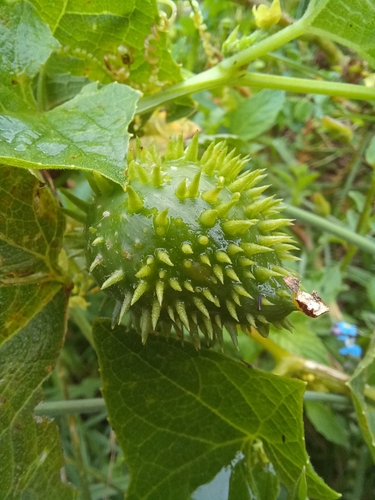
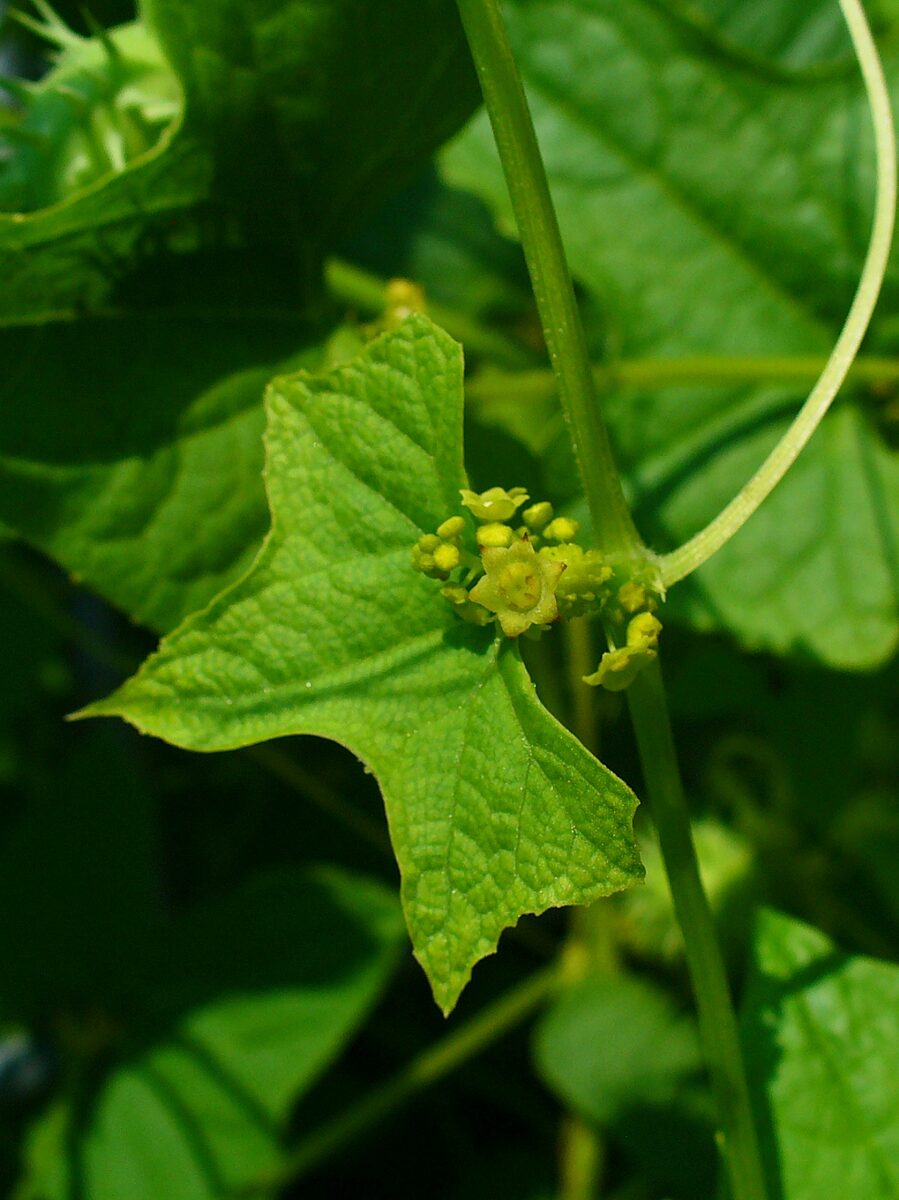
A pumpkin family plant. It is a strong vine which loses its leaves during the year. Stems can be 10 m long. The leaves have 3-5 leaflets which look like claws. They are arranged like fingers on a hand. The stalk of the leaflets is about 2.5 cm long. The leaflets have teeth on the edge of the top part of them. They are often rough underneath. The vine has tendrils which are branched and with coiled tips which clasp objects. Plants are separately male and female. Male plants have tougher shoots and smaller leaves. The male flowers are on flower stalks 5-25 cm long. Female flowers occur singly and are on short stalks. Female flowers are in the axils of leaves. Male flowers are small, pink and in clusters. The fruit are pale green and covered with a white waxy layer that rubs off easily. Fruit are strongly ribbed at maturity. They can be 25 cm long and weigh 3-6 kg. The flesh is light yellow and fibrous. The seeds are flattened, round and 3.5 cm across. There are 30-70 seeds in each fruit.
Edible Uses
The seeds are pleasant-tasting with an almond-like flavour and can be boiled and eaten as a nut or ground into flour for use in soups. Immature seeds can be cooked or roasted, or fermented for several days and eaten as a slurry. Mature seeds are not consumed directly due to a high content of antinutrients. The raw flour has better water and fat absorption properties than the oil, making it useful in baking. Seeds contain up to 30% protein and a high content of a non-drying oil. The large seeds, up to 5cm in diameter, are enclosed in a fruit that can weigh up to 50kg. The seeds are also pressed to produce a cooking oil whose main constituents are oleic acid (37%), stearic and palmitic acid (both 21%), and linoleic acid (15%), though variation between samples is large. Leaves and young shoots are cooked as a potherb. The leaves can be used alone or combined with okra (Abelmoschus caillei and Abelmoschus esculentus), dika nut (Irvingia gabonensis), or egusi seeds (Citrullus lanatus and other species), and can also be mixed with eru (Gnetum africanum) and Pterocarpus soyauxii. Young shoots up to 50cm long are used in stews and as a side dish. The fruit pulp, including young seeds, is occasionally made into marmalade.
Traditional Uses
The thick shoots of the female plant are chopped and used on soups. The seeds are stripped of their coat then ground and used in soups. The seeds are also boiled in their seed coats then shelled and eaten. The seeds yield a cooking oil. The young shoots and leaves are used as a potherb. They are also added to soups and stews. They can also be dried and stored. CAUTION: The roots are poisonous.
Medicinal Uses
Pregnant women and patients with anaemia use the leaf juice as a tonic to strengthen the blood.
Distribution
It is a tropical plant. It occurs in forest zones in Africa. It can grow in shade or bright sunlight. It can survive moderate droughts. It can grow in arid places.
Where It Grows
Africa, Angola, Benin, Cameroon, Central Africa, Congo DR, Côte d'Ivoire, East Africa, Equatorial Guinea, Ghana, Ivory Coast, Nigeria, Sierra Leone, Uganda, West Africa,
Cultivation
It grows best in areas where annual daytime temperatures are within the range 21 - 30°c, but can tolerate 19 - 38°c. The plant can survive temperatures down to about 5°c. It prefers a mean annual rainfall in the range 1,900 - 2,200mm, but tolerates 1,500 - 2,700mm. Succeeds in shade or full sun. Tolerant of a wide range of soils, though a humus-rich, moist, fertile soil gives best yields. Prefers a pH in the range 5 - 6, tolerating 4.5 - 7. Established plants are drought resistant, though yields are greatly reduced in times of drought. Fluted pumpkin grows fast in the warm, humid tropics, producing edible leaves in the rainy season and at the beginning of the dry season, for a period of 6 - 10 months. The plant can be managed as a short-term perennial when grown on well-drained soils, slightly shaded and well mulched. On soggy soils and in sunlit spots it can only be grown as an annual. Female plants are usually grown for their edible young shoots since males do not produce many of these. The first harvest of these shoots occurs about 2 - 3 months after sowing the seed. Up to 15 harvests may be obtained during the following 120 - 160 days. Male plants start to flower about 3 months after planting, a month earlier than females plants. Hand pollination seems to be advantageous for fruit set as it resulted in 35% fruit set compared to 15% fruit set in open pollination. Female plants produce about 18 single flowers which set fruit, but only 1 - 4 develop into mature fruits. Out of the female plants of a population, only 35% bear fruits. A large variation occurs between and within plants in the number of seeds per fruit, from 6 seeds per fruit up to 196, with an average of 62 seeds. The seeds are also unequal in size, varying in weight from 1 - 68g. Fruits are ready about 5 - 6 months after sowing. The fresh shoot yield can be as low as 500 - 1,000 kilos per hecttare, but it can also reach 3 - 10 tonnes. In home gardens in Benin, one plant occupying 3 metres of fence produced 2 kilos of young leaves per metre in the rainy season and 500g in the dry season without irrigation. The seed yield can reach 1.9 tonnes per hctare, derived from 3,000 fruits. A dioecious species, both male and female forms need to be grown if fruit and seed are required. Identifying the female plants from either seeds or young seedlings has not been successful, but vine size 64 days after planting could be used as a sex indicator, because female plants are more vigorous than the male ones.
Propagation
Seed can be sown in situ or in containers. When using containers, sow 2–3 seeds per container and thin to the strongest seedling after germination. Seed size affects vigour, germination rate, and establishment: viability ranges from 63% for small seeds weighing less than 11g up to 89% for seeds weighing 22g. Germination takes about 14 days in natural soil but only 7 days in a sawdust medium. Vine length one week after emergence averages 31cm for large seeds and 16cm for small seeds. Container-grown plants should be set out after approximately 30 days. Some seeds exhibit polyembryony, producing more than one seedling. The seed is recalcitrant, often germinating while still inside the fruit, and has short viability, making storage difficult. The critical seed moisture content below which seeds cannot recover from desiccation is 40–60%. The plant can also be propagated by layering, which is very easy.
Other Uses
Fluted pumpkin is commonly grown in homesteads, intercropped with other vegetables and food crops such as cassava, yams, and maize, or planted against fences. The seed oil, though reported to be non-drying, is also used as a drying oil for paints and varnishes. The stems are macerated to produce fibres used as a sponge.
Production
The first leaf harvest can occur 12 weeks after planting. Seed harvest takes 8-10 months. Shoots can be picked 10-15 times over 4-5 months.
Other Information
It is a commercially cultivated vegetable.
Notes
The leaves have anti-bacterial properties.
Nutrition
| Part | Moisture | kJ | kcal | Protein | Vit A | Vit C | Iron | Zinc |
|---|---|---|---|---|---|---|---|---|
| Seeds | 6 | 2280 | 546 | 20.5 | — | — | — | — |
| Leaves | 86 | 197 | 47 | 2.9 | — | — | — | — |
Also Known As
Apiroko, Calabaza, Emeke, Gonugbe, Iroko, Krobonko, Njee, Oysternut, Pondokoko, Ubong, Ugu, Ugwu, Umee, Umwenkhen
References (39)
- Abbiw, D.K., 1990, Useful Plants of Ghana. West African uses of wild and cultivated plants. Intermediate Technology Publications and the Royal Botanic Gardens, Kew. p 40
- Achigan-Dako, E, et al (Eds), 2009, Catalogue of Traditional Vegetables in Benin. International Foundation for Science.
- Akoroda M.O., 1990, Ethnobotany of Telfairia occidentalis (Cucurbitaceae) among Igbos of Nigeria. Economic Botany. 44(1) pp 29-39
- Burkill, H. M., 1985, The useful plants of west tropical Africa, Vol. 1. Kew.
- Busson, 1965,
Show all 39 references Hide references
- Dalziel, J. M., 1937, The Useful plants of west tropical Africa. Crown Agents for the Colonies London.
- Dansi, A., et al, 2008, Traditional leafy vegetables and their use in the Benin Republic. Genet Resour Crop Evol (2008) 55:1239–1256
- Dansi, A., et al, 2009, Traditional leafy vegetables in Benin: folk nomenclature, species under threat and domestication. Acta Bot. Gallica 156(2), 183-199
- Epenhuijsen C.W. van., 1974, Growing Native vegetables in Nigeria. FAO Rome, p 95
- Esquinas-Alcazar, et al, 1983, Genetic Resources of Cucurbitaceae. International Board of Plant Genetic Resources.
- Eseyin, O. A., Sattar, M. A. and Rathore, H. A., 2014, A Review of the Pharmacological and Bio‐ logical Activities of the Aerial Parts of Telfairia occidentalis Hook.f. (Cucurbitaceae), Tropical Journal of Pharmaceutical Research, 13 (10), pp. 1761-1767.
- Facciola, S., 1998, Cornucopia 2: a Source Book of Edible Plants. Kampong Publications, p 89
- Grivetti, L. E., 1980, Agricultural development: present and potential role of edible wild plants. Part 2: Sub-Saharan Africa, Report to the Department of State Agency for International Development. p 32
- Grubben, G. J. H. and Denton, O. A. (eds), 2004, Plant Resources of Tropical Africa 2. Vegetables. PROTA, Wageningen, Netherlands. p 522
- Hedrick, U.P., 1919, (Ed.), Sturtevant's edible plants of the world. p 644
- Jardin, C., 1970, List of Foods Used In Africa, FAO Nutrition Information Document Series No 2.p 48, 106
- JSTOR Global Plants edible
- Kamda, A. G. S., et al, 2014, Protective effect of edible Cucurbitaceae seed extract from Cameroon against oxidative stress. Environmental Engineering and Management Journal. Vol. 13, No. 7, 1721-1727
- Kays, S. J., and Dias, J. C. S., 1995, Common Names of Commercially Cultivated Vegetables of the World in 15 languages. Economic Botany, Vol. 49, No. 2, pp. 115-152
- Kiple, K.F. & Ornelas, K.C., (eds), 2000, The Cambridge World History of Food. CUP p 1774
- Ladeji, O., Okoye, Z.S.C. and Ojobi, T., 1995, Chemical evaluation of the nutritive value of leaf of fluted pumpkin (Telfairia occidentalis). Food Chemistry (53) pp. 353-354.
- Martin, F.W., & Ruberte, R.M., 1979, Edible Leaves of the Tropics. Antillian College Press, Mayaguez, Puerto Rico. p 31, 190
- Noumedem, J. AK., 2013, In Vitro antibacterial and antibiotic-potentiation activities of four edible plants against multidrug-resistant gram-negative species. BMC Complementary and Alternative Medicine 13:190
- Nyadanu, D., et al, 2015, Agro-biodiversity and challenges of on-farm conservation: the case of plant genetic resources of neglected and underutilized crop species in Ghana. Genet. Resourc. Crop Evol. 62(7):
- Okigbo, B.N., Vegetables in Tropical Africa, in Opena, R.T. & Kyomo, M.L., 1990, Vegetable Research and development in SADCC countries. Asian Vegetable Research and development Centre. Taiwan. p 38
- D. Oliver, Fl. trop. Afr. 2:524. 1871
- Onuminya, T. O., et al, 2017, Comparative proximate and Phytochemical Analysis of leafy vegetables in Lagos State. Nig. J. Pure and Applied Sci. Vol. 30 Issue 3: p 3097f
- Oomen, H.A.P.C., & Grubben, G.J.H., 1978, Tropical Leaf Vegetables in Human Nutrition, Communication 69, Department of Agricultural research, RTI Amsterdam, p 28, 97
- Peters, C. R., O'Brien, E. M., and Drummond, R.B., 1992, Edible Wild plants of Sub-saharan Africa. Kew. p 103
- Royal Botanic Gardens, Kew (1999). Survey of Economic Plants for Arid and Semi-Arid Lands (SEPASAL) database. Published on the Internet; http://www.rbgkew.org.uk/ceb/sepasal/internet [Accessed 16th April 2011]
- Smith, F. I. and Eyzaquirre, P., 2007, African leafy vegetables: Their role in the World Health Organization's global Fruit and Vegetables Initiative. AJFAND, Vol. 7 No. 3
- Terra, G.J.A., 1973, Tropical Vegetables. Communication 54e Royal Tropical Institute, Amsterdam, p 77
- Tindall, H.D., 1983, Vegetables in the tropics. Macmillan p. 184
- USDA, ARS, National Genetic Resources Program. Germplasm Resources Information Network - (GRIN). [Online Database] National Germplasm Resources Laboratory, Beltsville, Maryland. Available: www.ars-grin.gov/cgi-bin/npgs/html/econ.pl (10 April 2000)
- Vivien, J., & Faure, J.J., 1996, Fruitiers Sauvages d'Afrique. Especes du Cameroun. CTA p 139
- Wiersema, J. H. & Leon, B., 2013, World Economic Plants. A Standard Reference CRC Press. 2nd Ed. p 678
- World Checklist of Useful Plant Species 2020. Royal Botanic Gardens, Kew
- Zeven, A. C. & de West, J. M. J., 1982, Dictionary of cultivated plants and their regions of diversity. Wageningen. p 124
- Zon, A.P.M. van der, Grubben, G.J.H., 1976, Les legumes-feuilles spontanes et cultives du Sud-Dahomey, Communication 65, Royal Tropical Institute, Amsterdam, p 100, 101