Telfairia pedata
(Sm. ex Sims) Hooker
Telfairia nut, Oyster nut, African pumpkin
iNaturalist· cc-by-nc
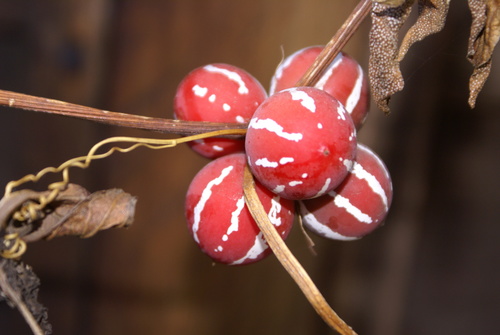
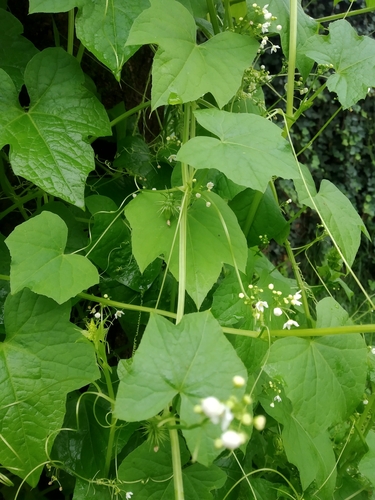
(c) Cory Whitney, some rights reserved (CC BY-NC), uploaded by Cory Whitney
iNaturalist· cc-by-nc
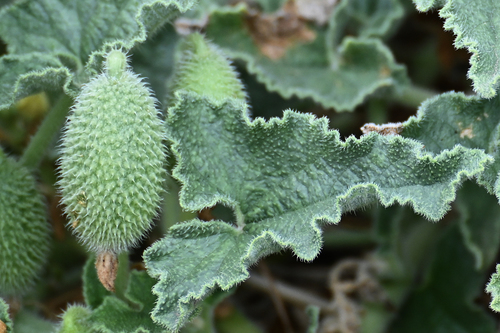
(c) paullatham36, some rights reserved (CC BY-NC)
iNaturalist· cc-by-nc
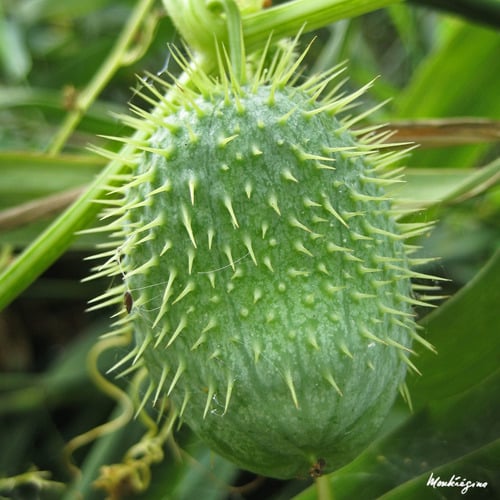
(c) paullatham36, some rights reserved (CC BY-NC)
Summary
Source: WikipediaTelfairia pedata, commonly known as oysternut (alternately spelled as 'oyster nut', etc.), queen's nut, Zanzibar oilvine (alternately spelled as 'oil vine', etc.), kweme or kulekula, is a dioecious African liana which can grow up to 30 metres long, having purple-pink fringed flowers, and very large (30–90 cm × 15–25 cm), many-seeded, drooping, ellipsoid berries which can weigh up to 15 kg (though one old source from 1882 claimed up to 60 lbs). It is valuable for having edible fruit, seeds and oil.
Description
A pumpkin family plant. It is a climbing woody vine. It can be 30 m or more long. It has fleshy roots. The leaves are smooth and alternate. They are divided into 5-7 leaflets like fingers on a hand. Male and female flowers are on separate plants. The flowers are purple. The seeds are inside a long gourd like a pumpkin. The seeds are flat and round. They are 4 cm across and 1 cm thick. There can be 500 seeds in a fruit.
Edible Uses
The seeds can be eaten raw or cooked and have a soft but firm texture with an excellent flavour, making them suitable as a substitute for almonds or brazil nuts in confectionery as well as in a variety of local food dishes. They are usually roasted before eating. Each seed is irregularly circular, about 4cm in diameter and 12mm thick, and is easily extracted from its shell. Seeds contain about 30% protein and up to 61% oil. They can be stored in their shells for several years without spoiling. To remove any bitterness, whole seeds can be soaked for 8 hours in 3 changes of water. To extract the kernel, first partially cut away the fibrous husk, then crack and open the shell with a knife. An oil pressed from the seed has a pleasant, slightly sweet flavour and makes a good cooking oil. It is important to remove the husk before extracting the oil, as it contains an intensely bitter substance that can contaminate the final product.
Traditional Uses
The seeds are usually roasted and eaten. They can be eaten raw. They are a substitute for almonds in confectionary. They can also be pressed for oil, which is edible if the shells have been removed. The leaves and young shoots are commonly eaten as a pot herb.
Medicinal Uses
The seeds are valued for their galactagogue properties and are widely sought by mothers who consume them shortly after childbirth as a tonic to regain strength and improve milk flow. The oil extracted from the seeds is used medicinally for stomach complaints and rheumatism.
Distribution
It is a tropical plant. It cannot tolerate frost when young. In Malawi it is cultivated at about 1,200 m altitude. It can grow from sea level to 2,000 m altitude.
Where It Grows
Africa, Asia, Burundi, Central Africa, Congo, Côte d'Ivoire, East Africa, Egypt, India, Ivory Coast, Kenya, Madagascar, Malawi, Mauritius, Mozambique, Rwanda, Southern Africa, Tanzania, West Africa, Zambia,
Cultivation
Plants are easily grown from fresh seed. Seed germinate in a week. The soft ripe fruit falls from the plant and bursts releasing the nuts. There are 100-400 seeds per fruit.
Propagation
Seed has short viability and is best sown as soon as it is ripe. Repeated soaking and drying promotes germination. Seeds can be sown in situ or in containers. The drip line of trees is a favoured planting site. When sowing in containers, place 2–3 seeds per container and thin to the strongest seedling after germination. Germination usually occurs within 7–14 days, and seedlings are ready for planting out about 30 days after germinating. Layering is very easy. Stem cuttings root in 2–3 weeks and produce shoots 6–7 weeks after planting.
Other Uses
Oysternut is part of the rich agroforestry systems of Mount Meru and Mount Kilimanjaro in Tanzania, where it is grown alongside coffee and banana. The oil from the seeds can be used to make soap, candles and cosmetics. The fibrous husk of the seed is sometimes used for polishing traditional earthenware pots.
Production
Plants grow vigorously. Fruit are produced in the seventh year. Fruit can be 12 kg each and there can be several fruit per vine.
Other Information
It is a commercially cultivated vegetable. It is sold in local markets. It is cultivated.
Nutrition
| Part | Moisture | kJ | kcal | Protein | Vit A | Vit C | Iron | Zinc |
|---|---|---|---|---|---|---|---|---|
| Seeds | 2.8 | 2821 | 675 | 22.9 | — | — | 6.2 | 1.6 |
Synonyms
Also Known As
Chitando, Cungo, Fluted cucumber, Kweme, Matandu, Ng'eme, Nkungu, Zanzibar oil-vine
References (29)
- Ambasta, S.P. (Ed.), 2000, The Useful Plants of India. CSIR India. p 624
- Bot. Mag. 54: t. 2751-52. 1827
- Edwards. S., et al, (Eds), 1995, Flora of Ethiopia and Eritrea. Vol.2, Part 2 Canellaceae to Euphorbiaceae. Uppsala, Sweden. p 62
- Esquinas-Alcazar, et al, 1983, Genetic Resources of Cucurbitaceae. International Board of Plant Genetic Resources.
- FAO, 1988, Traditional Food Plants, FAO Food and Nutrition Paper 42. FAO Rome p 486
Show all 29 references Hide references
- Fleuret, 1979,
- Fowler, D. G., 2007, Zambian Plants: Their Vernacular Names and Uses. Kew. p 79
- Gouldstone, S., 1983, Growing your own Food-bearing Plants in Australia. Macmillan p 148
- Grubben, G. J. H. and Denton, O. A. (eds), 2004, Plant Resources of Tropical Africa 2. Vegetables. PROTA, Wageningen, Netherlands. p 565
- Hedrick, U.P., 1919, (Ed.), Sturtevant's edible plants of the world. p 644
- Jardin, C., 1970, List of Foods Used In Africa, FAO Nutrition Information Document Series No 2.p 48, 106
- JSTOR Global Plants edible
- Kays, S. J., and Dias, J. C. S., 1995, Common Names of Commercially Cultivated Vegetables of the World in 15 languages. Economic Botany, Vol. 49, No. 2, pp. 115-152
- Kiple, K.F. & Ornelas, K.C., (eds), 2000, The Cambridge World History of Food. CUP p 1827
- Macmillan, H.F. (Revised Barlow, H.S., et al) 1991, Tropical Planting and Gardening. Sixth edition. Malayan Nature Society. Kuala Lumpur. p 310
- Martin, F.W. & Ruberte, R.M., 1979, Edible Leaves of the Tropics. Antillian College Press, Mayaguez, Puerto Rico. p 190
- Menninger, E.A., 1977, Edible Nuts of the World. Horticultural Books. Florida p 108
- Msuya, T. S., et al, 2010, Availability, Preference and Consumption of Indigenous Foods in the Eastern Arc Mountains, Tanzania, Ecology of Food and Nutrition, 49:3, 208-227
- Okigbo, B.N., Vegetables in Tropical Africa, in Opena, R.T. & Kyomo, M.L., 1990, Vegetable Research and development in SADCC countries. Asian Vegetable Research and development Centre. Taiwan. p 38
- Peters, C. R., O'Brien, E. M., and Drummond, R.B., 1992, Edible Wild plants of Sub-saharan Africa. Kew. p 103
- Tindall, H.D., 1983, Vegetables in the tropics. Macmillan p. 186
- USDA, ARS, National Genetic Resources Program. Germplasm Resources Information Network - (GRIN). [Online Database] National Germplasm Resources Laboratory, Beltsville, Maryland. Available: www.ars-grin.gov/cgi-bin/npgs/html/econ.pl (10 April 2000)
- Wehmeyer, A. S, 1986, Edible Wild Plants of Southern Africa. Data on the Nutrient Contents of over 300 species
- Welcome, A. K. & Van Wyk, B.-E., 2019, An inventory and analysis of the food plants of southern Africa. South African Journal of Botany 122 (2019) 136–179
- Wickens, G.E., 1995, Edible Nuts. FAO Non-wood forest products. FAO, Rome. p 120
- Wiersema, J. H. & Leon, B., 2013, World Economic Plants. A Standard Reference CRC Press. 2nd Ed. p 678
- Williamson, J., 2005, Useful Plants of Malawi. 3rd. Edition. Mdadzi Book Trust. p 243
- World Checklist of Useful Plant Species 2020. Royal Botanic Gardens, Kew
- www.worldagroforestrycentre.org/treedb/