Thladiantha cordifolia
(Blume) Cogn.
iNaturalist· cc-by-nc
(c) enahmat, some rights reserved (CC BY-NC), uploaded by enahmat
Description
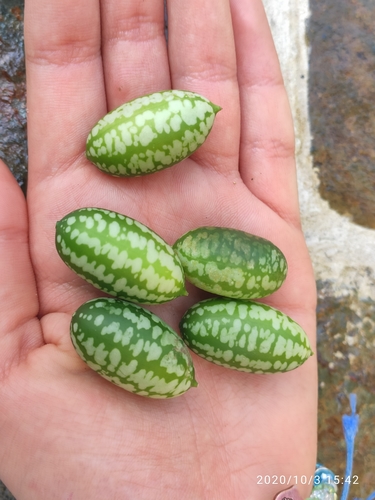
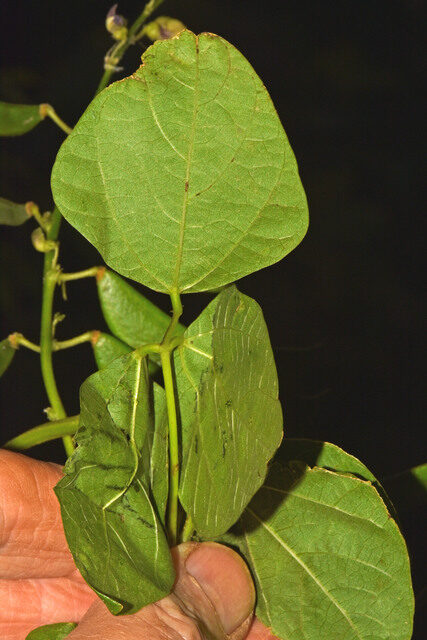
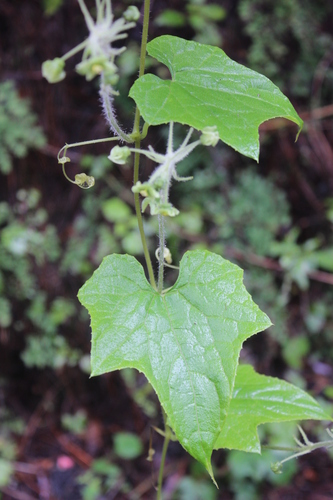
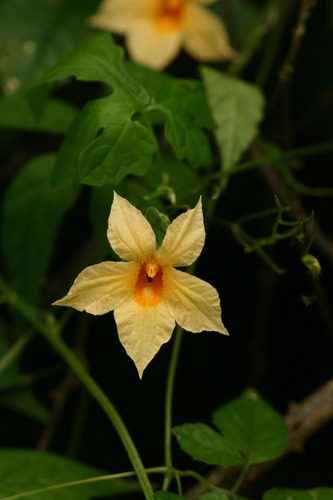
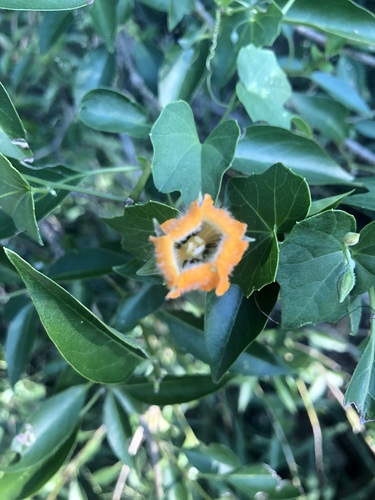
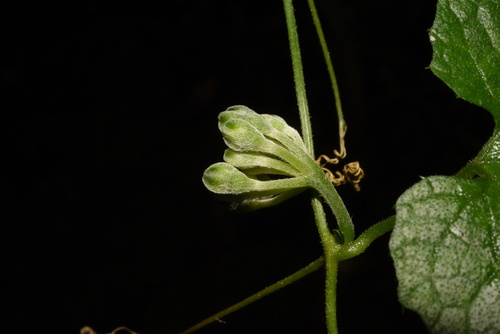
A vine. It is a climbing plant. It is hairy. The stems are robust, branched and angular. The leaves are oval or heart shaped and 8-15 cm long by 6-11 cm wide. It has simple tendrils. Male flowers occur as 3 or more together and female flowers occur singly. The fruit are oblong and 3-5 cm long by 2-3 cm wide.
Edible Uses
Leaves are cooked as a vegetable, typically by boiling.
Traditional Uses
The leaves are cooked as a vegetable. They are boiled.
This uses section is brief — help expand it
Distribution
It is a tropical plant. It grows near streams and in forests between 800-2,600 m above sea level. In Sichuan and Yunnan.
Where It Grows
Asia, Bhutan, China, Himalayas, India, Indochina, Indonesia, Laos, Myanmar, Nepal, Northeastern India, SE Asia, Thailand, Vietnam,
Synonyms
Also Known As
Ban karayla, Kang-mang, Nyomrang payin
References (4)
- Kar, A., et al, 2013, Wild Edible Plant Resources used by the Mizos of Mizoram, India. Kathmandu University Journal of Science, Engineering and Technology. Vol. 9, No. 1, July, 2013, 106-126
- Mukhia, P.K., et al, 2013, Wild plants as Non Wood Forest Products used by the rural community of Dagana, a southern foothill district of Bhutan, SAARC Journal, 27 pages
- Taram, M., et al, 2018, Wild Food Plant Resources of Komkar Adi Tribe of Upper Siang District in Arunachal Pradesh, India. Bulletin of Arunachal Forest Research, Vol. 33(2), 27-35
- Xu, You-Kai, et al, 2004, Wild Vegetable Resources and Market Survey in Xishuangbanna, Southwest China. Economic Botany. 58(4): 647-667.