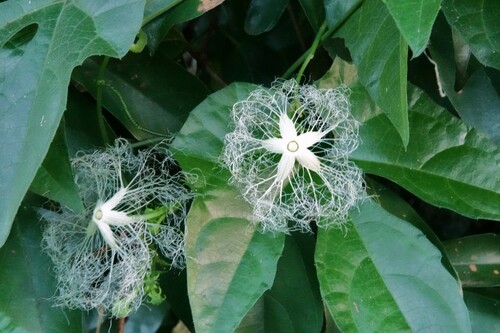
Thladiantha dubia
Bunge
Red hailstone, Manchu Tuber Gourd
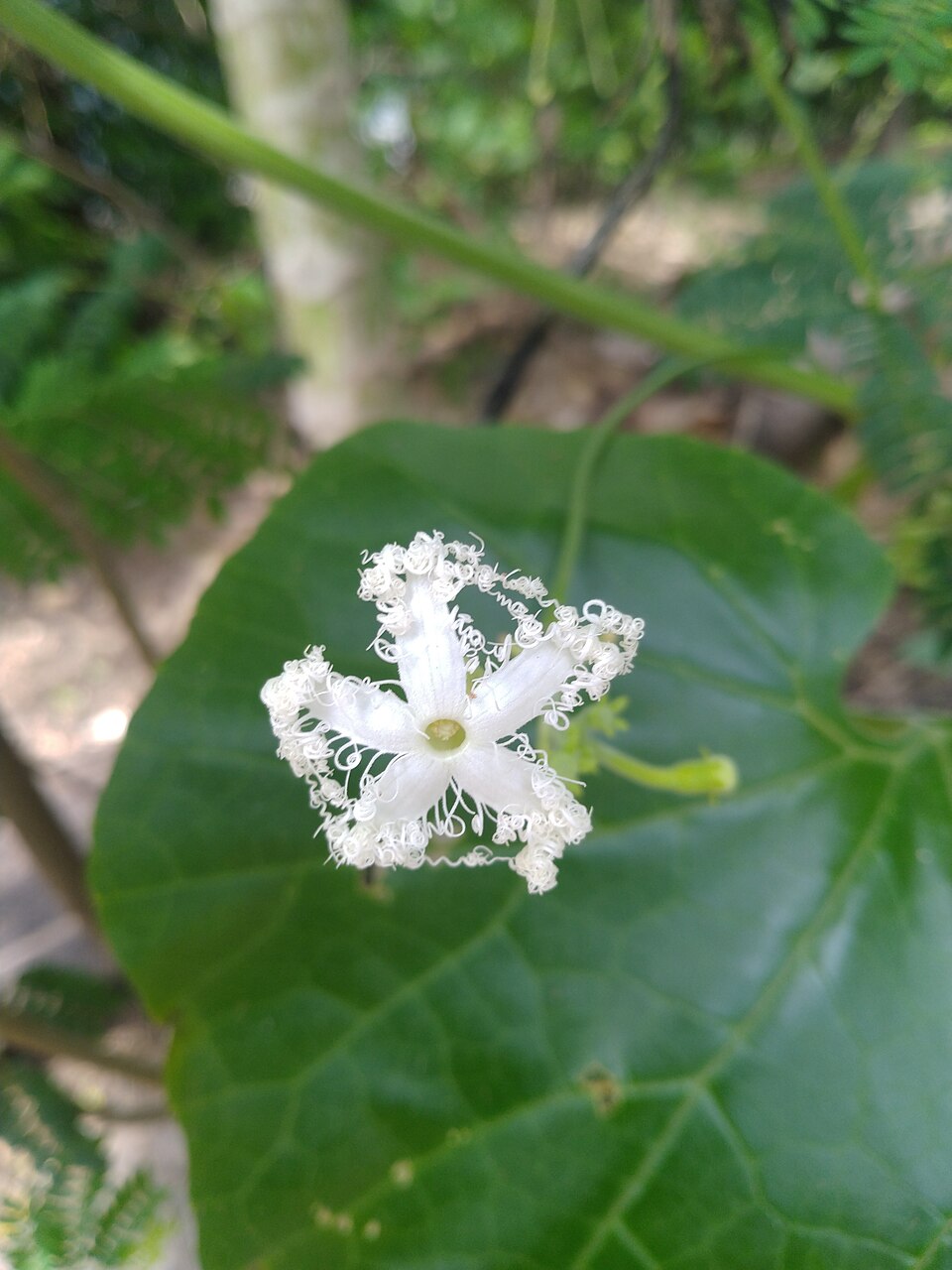
iNaturalist· cc-by-sa
(c) peganum, some rights reserved (CC BY-SA)
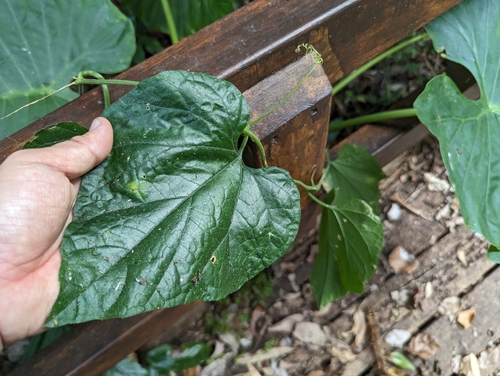
iNaturalist· cc-by-nc
(c) Evgenia Vorontsova, some rights reserved (CC BY-NC)
iNaturalist· cc-by-nc
(c) Evgenia Vorontsova, some rights reserved (CC BY-NC)
Summary
Source: WikipediaThladiantha dubia, the Manchu tubergourd, goldencreeper, wild potato, red hailstone, or (French) thladianthe douteuse, is a herbaceous perennial climbing vine of the gourd family. It is native to Russia, northern China, and Korea, but has been introduced to Japan, southeast Europe (Austria, Romania, Germany), the Galapagos Islands, and scattered locations in North America (Manitoba, Ontario, Quebec, Connecticut, Illinois, Massachusetts, Minnesota, New Hampshire, New York, Wisconsin). It is occasionally grown as a medicinal plant, or as an ornamental in North America (the US and Canada). Like other members of the genus, it is dioecious. It grows from a tuber and spreads vegetatively by sending out underground rhizomes that produce new tubers.
Description
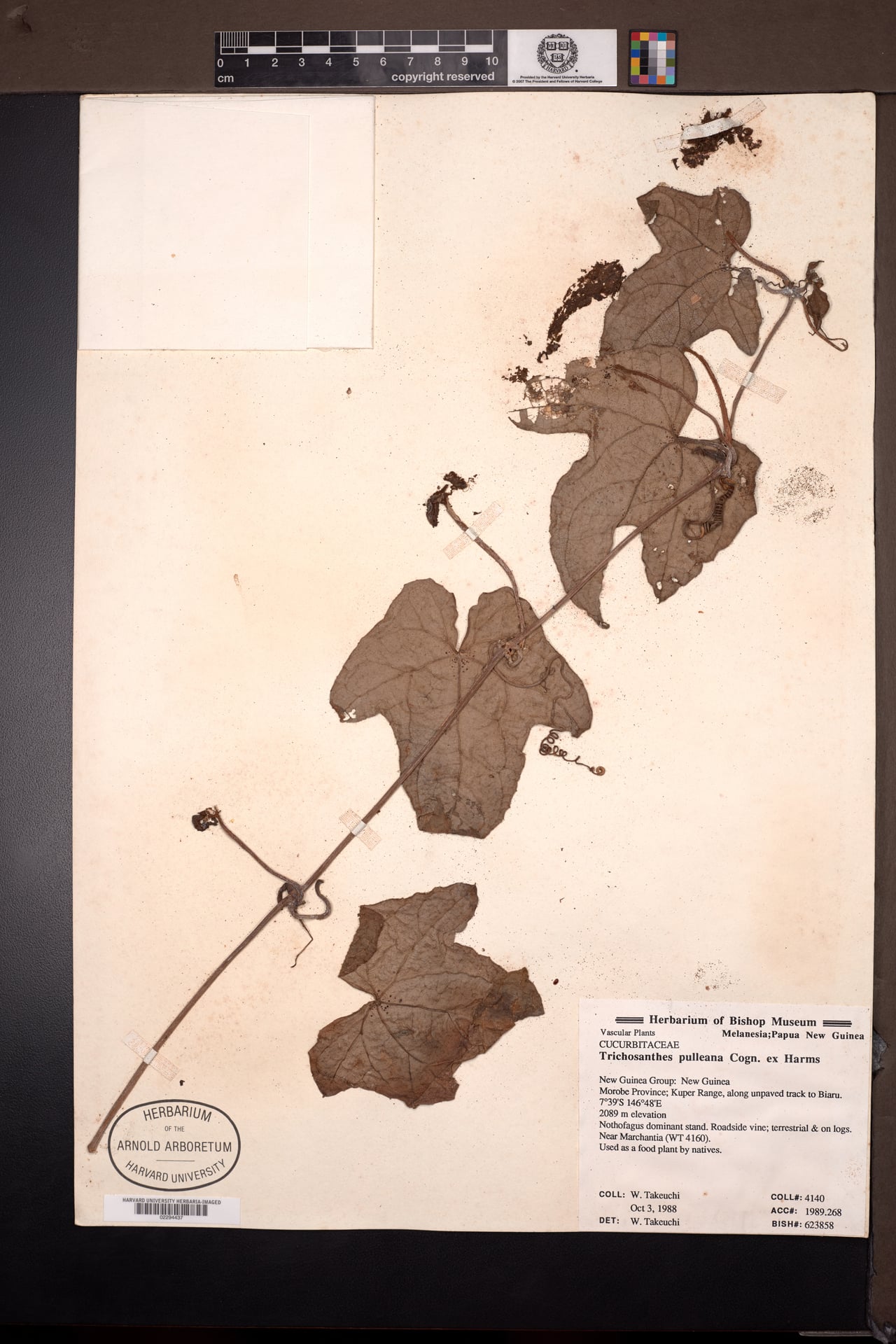
A pumpkin family plant. It is a climbing plant. It has yellow hairs. The roots are fattened as tubers. The stem is robust and angular. The leaves are oval or heart shaped and 5-8 cm long by 4-9 cm wide. There are irregular teeth along the edge. It has simple thin tendrils. Male flowers can occur singly or in groups and female flowers are single. The fruit is oblong and succulent. It is orange to yellow. It is oval and 4-5 cm long by 3 cm wide.
Edible Uses
The fruit is succulent and can be eaten raw or cooked; it is oblong, about 4cm long and 2.5cm wide. Young shoots of the plant are edible cooked. The root is also edible, though no further details are recorded.
Traditional Uses
The young fruit are occasionally eaten. The young shoots are eaten. The carrot like roots are eaten.
This uses section is brief — help expand it
Medicinal Uses
The seed acts as a cardiac tonic and an astringent. The root is alterative, cholagogue, diuretic, and galactogogue.
Distribution
It is a temperate plant. In north China it grows on the edges of forests and in valleys between 300-1,800 m above sea level.
Where It Grows
Asia, China, Japan, Korea, Mongolia, Myanmar, SE Asia, Slovenia,
Cultivation
Succeeds in almost any soil that is well-drained. Prefers a fertile soil in a sunny but sheltered position. Hardy to about -20°c. Although the plant is hardy, it grows better on a sunny wall. A fast-growing plant, climbing by means of tendrils. It grows well on fences etc and can be used as a screen over unsightly objects, though it dies back to the roots each winter. The young shoots require protection (the report does not specify from what). Dioecious. Male and female plants must be grown if fruit and seed is required.
Propagation
Sow seed in spring in a greenhouse. Prick seedlings out into individual pots of fairly rich soil when large enough to handle, and plant out after the last expected frosts. Tubers can be divided in spring or autumn; lift them in autumn, store in a cool frost-free place over winter, and plant out in spring.
Other Uses
None known Special Uses
Also Known As
Hegerin huanggua, Navadna zmečkanka, Red bone vine, T'u kua, Wang kua
References (7)
- Enum. pl. China bor. 29. 1833 (Mem. Acad. Imp. Sci. St.-Petersbourg Divers Savans 2:103. 1835)
- Facciola, S., 1998, Cornucopia 2: a Source Book of Edible Plants. Kampong Publications, p 89
- Hedrick, U.P., 1919, (Ed.), Sturtevant's edible plants of the world. p 649
- http://www.botanic-gardens-ljubljana.com/en/plants
- Khasbagan, Hu-Yin Huai, and Sheng-Ji pei, 2000, Wild Plants in the Diet of Athorchin Mongol Herdsmen in Inner Mongolia. Economic Botany 54(4): 528-536
Show all 7 references Hide references
- Plants for a Future database, The Field, Penpol, Lostwithiel, Cornwall, PL22 0NG, UK. http://www.scs.leeds.ac.uk/pfaf/
- Tanaka,