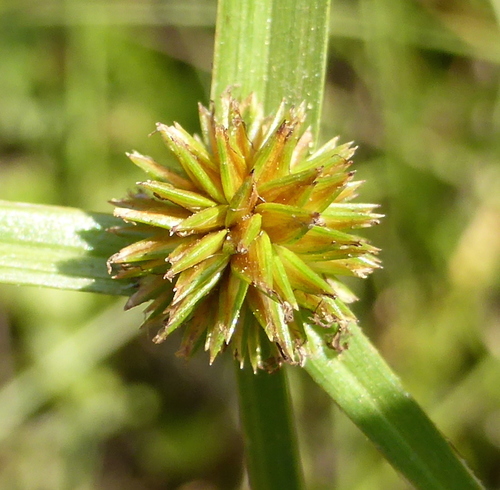
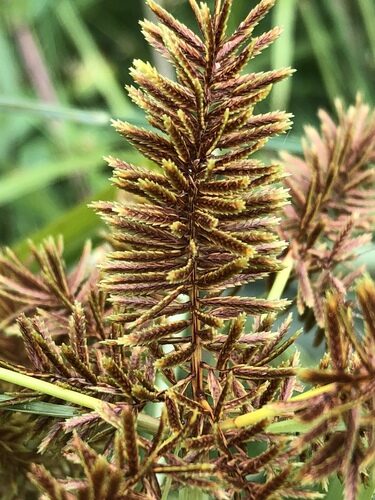
Kyllinga erecta
Schumach.
Great kyllingia
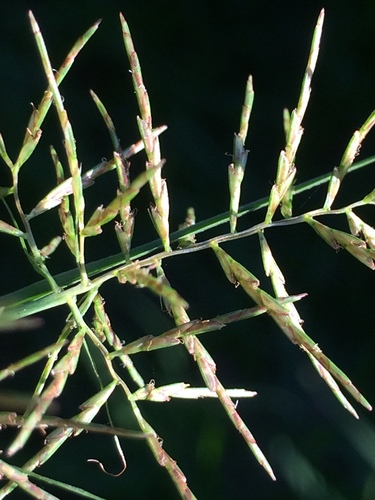
iNaturalist· cc-by-nc
(c) Klementina Semprimožnik, some rights reserved (CC BY-NC)
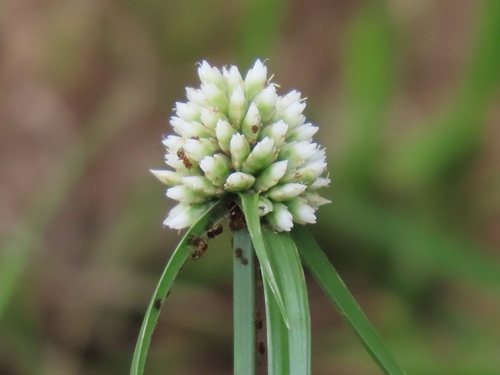
iNaturalist· cc-by-nc
(c) Max Hsieh(雁子), some rights reserved (CC BY-NC)
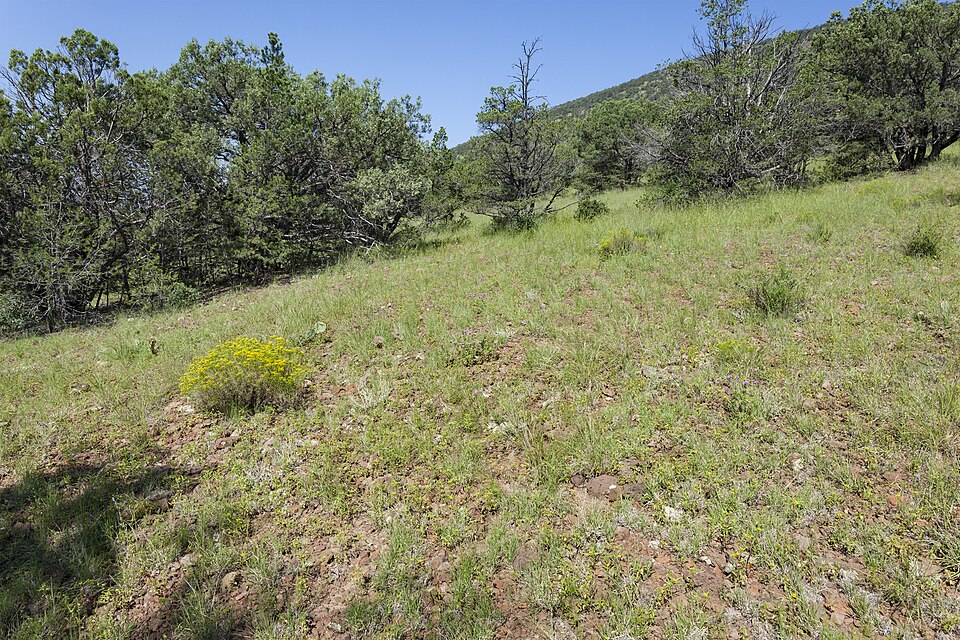
iNaturalist· cc-by-nc
(c) Max Hsieh(雁子), some rights reserved (CC BY-NC)
Description
A robust perennial sedge in the Cyperaceae family that grows in tropical wet grasslands and around water pools. The rhizomes are commercially traded in markets.
Edible Uses
The rhizomes are used as flavoring in sauces and similar dishes. The stem base, bulb, and roots are also edible parts.
Traditional Uses
The rhizome is used as flavouring in sauces etc.
This uses section is brief — help expand it
Medicinal Uses
The rhizome is used for flavoring.
Distribution
It is a tropical plant. It grows in wet grasslands and on the edges of water pools.
Where It Grows
Africa, Botswana, Burkina Faso, Central Africa, Congo, East Africa, Eswatini, Gabon, Gambia, Ghana, Guinea, Guinée, Lesotho, Madagascar, Mali, Mascarenes, Mozambique, Nigeria, Sao Tome and Principe, Senegal, Sierra Leone, Southern Africa, South America, Swaziland, West Africa,
Other Information
Rhizomes are sold in markets.
Notes
There are about 50 Kyllinga species.
Synonyms
Also Known As
Angi, Njawa, Tonku
References (8)
- Burkill, H. M., 1985, The useful plants of west tropical Africa, Vol. 1. Kew.
- Dalziel, J. M., 1937, The Useful plants of west tropical Africa. Crown Agents for the Colonies London.
- Grivetti, L. E., 1980, Agricultural development: present and potential role of edible wild plants. Part 2: Sub-Saharan Africa, Report to the Department of State Agency for International Development. p 24
- Harris, F. M. A. and Salisu Mohammed, 2003, Relying on nature: Wild Foods in Northern Nigeria. AMBIO Vol. 32 No. 1, p 27
- Peters, C. R., O'Brien, E. M., and Drummond, R.B., 1992, Edible Wild plants of Sub-saharan Africa. Kew. p 15
Show all 8 references Hide references
- Seidemann J., 2005, World Spice Plants. Economic Usage, Botany, Taxonomy. Springer. p 193
- Simpson, D. A. & Inglis, C. A., 2001, Cyperaceae of Economic, Ethnobotanical and Horticultural Importance: A checklist. Kew Bulletin Vol. 56, No. 2 (2001), pp. 257-360
- Swaziland's Flora Database http://www.sntc.org.sz/flora