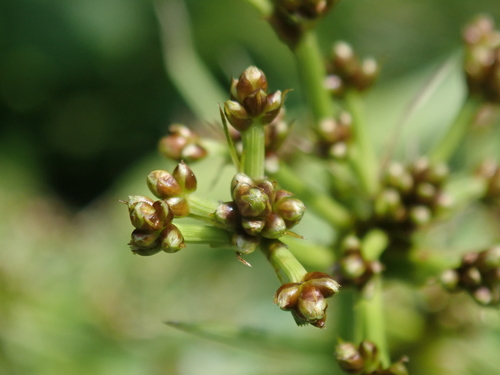
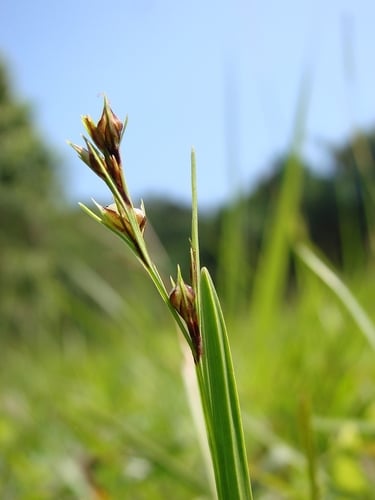
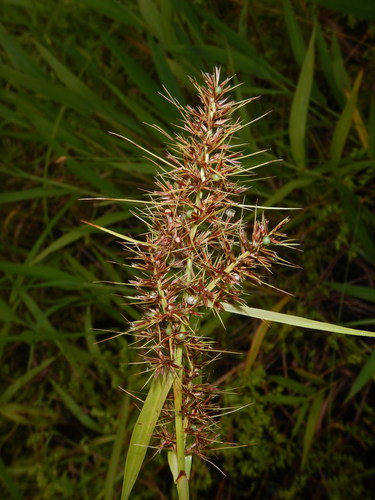
Schoenoplectus californicus
(C. A. Mey.) Steud.
California bullrush, Southern bulrush
iNaturalist· cc-by-nc
(c) Tina Reimer, some rights reserved (CC BY-NC), uploaded by Tina Reimer
iNaturalist· cc-by-nc
(c) naturalistchu, some rights reserved (CC BY-NC)
Summary
Source: WikipediaSchoeneoplectus californicus is a species of sedge known by the common names California bulrush, southern bulrush and giant bulrush. It is also sometimes called "tule", but the closely related Schoenoplectus acutus is the species most often referred to by that name.
Description
A sedge. These grow in clumps and have grass like leaves and solid stalks. It grows 2 m tall. It has spreading rhizomes.
This description is brief — help expand it
Edible Uses
Rhizomes and shoots are edible and were historically cultivated as vegetables, giving this plant an edibility rating of 4/5. Both parts are starchy, mild, and nutty, with a texture similar to tender bamboo shoots when young. Andean cultures domesticated the plant for its edible rhizomes.
Traditional Uses
The rhizome and the lower 25 cm of the stem are baked and eaten or dried for later use.
This uses section is brief — help expand it
Medicinal Uses
The roots were once used medicinally and have been described as astringent and diuretic.
Distribution
It is a tropical plant. It grows in wet places. It grows in fresh marshes and along shores. It can grow from sea level to 1,400 m above sea level. In Argentina it grows from sea level to 2,000 m above sea level.
Where It Grows
Andes, Argentina, Bolivia, Brazil, Central America, Chile, Colombia, Cook Is., Costa Rica, Ecuador, El Salvador, Falklands, Guatemala, Hawaii, Honduras, Mexico, New Zealand, North America, Paraguay, Peru, South America, Uruguay, USA,
Cultivation
A plant of low to medium elevations in the warm temperate to tropical zones.
Propagation
Propagate by seed or division.
Other Uses
The stems have been used as basketry material.
Other Information
It is cultivated.
Nutrition
| Part | Moisture | kJ | kcal | Protein | Vit A | Vit C | Iron | Zinc |
|---|---|---|---|---|---|---|---|---|
| Rhizome | 14.1 | 1302 | 318 | 8.9 | — | — | — | — |
Synonyms
Also Known As
Estoquilla, Junco, Nadi, Tagua-tagua, Tahua-tahua, Totora, Tromen, Tule
References (14)
- Facciola, S., 1998, Cornucopia 2: a Source Book of Edible Plants. Kampong Publications, p 90
- Kermath, B. M., et al, 2014, Food Plants in the Americas: A survey of the domesticated, cultivated and wild plants used for Human food in North, Central and South America and the Caribbean. On line draft. p 790
- Kew Plants of the World Online
- Kinupp, V. F., 2007, Plantas alimenticias nao-convencionais da regiao metropolitana de Porto Alegre, RS, Brazil p 76
- Leon-Lobos, P., et al, 2022, Patterns of Traditional and Modern Uses of Wild Edible Native Plants of Chile: Challenges and Future Perspectives. Plants (Basel) v 11 (6) Table S1
Show all 14 references Hide references
- Lim, T. K., 2015, Edible Medicinal and Non Medicinal Plants. Volume 9, Modified Stems, Roots, Bulbs. Springer p 75
- Malezas Comestibles del Cono Sur, INTA, 2009, Buernos Aires
- Nomencl. bot. ed. 2, 2:538. 1841
- Plant Ecology - Reviews of Research. 1955, Arid Zone Research VI. UNESCO (As Scirpus tatora)
- Rapoport, E. H. & Ladio, A. H., 1999, Plantas comestibles. Bosque Volume 20 No. 2. ISSN 0314-8799 (As Scirpus californicus)
- Schmeda-Hirschmann, G., et al, 1999, Proximate Composition and Biological Activity of Food Plants gathered by Chilean Amerindians. Economic Botany Vol. 53. No. 2. pp. 177-187 (As Scirpus californicus)
- Simpson, D. A. & Inglis, C. A., 2001, Cyperaceae of Economic, Ethnobotanical and Horticultural Importance: A checklist. Kew Bulletin Vol. 56, No. 2 (2001), p. 334
- Torre, de la, L., et al, 2008, Enciclopedia de las Plantas Útiles del Ecuador. Herbario QCA. Pontificia Universidad Católica del Ecuador. p 307
- Upson, R., & Lewis R., 2014, Updated Vascular Plant Checklist and Atlas for the Falkland Islands. Falklands Conservation and Kew.