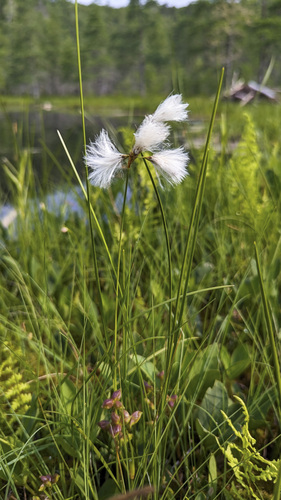
Schoenoplectus acutus
(Muhl. ex Bigelow)
Hardstem Bulrush
iNaturalist· cc-by-nc
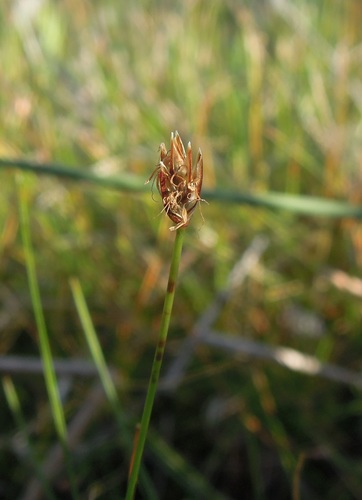
(c) Sean Blaney, some rights reserved (CC BY-NC), uploaded by Sean Blaney
iNaturalist· cc-by-nc
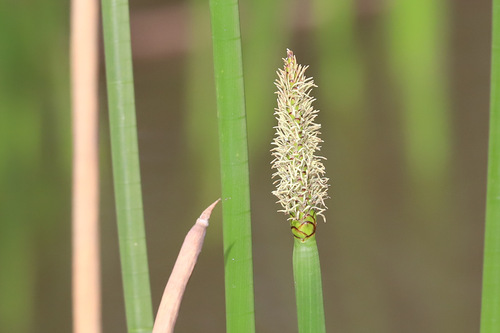
(c) Erin Haase, some rights reserved (CC BY-NC)
Summary
Source: WikipediaSchoenoplectus acutus (syn. Scirpus acutus, Schoenoplectus lacustris, Scirpus lacustris subsp. acutus), called tule , common tule, hardstem tule, tule rush, hardstem bulrush, or viscid bulrush, is a giant species of sedge in the plant family Cyperaceae, native to freshwater marshes all over North America. The common name derives from the Nāhuatl word tōllin [ˈtoːlːin], and it was first recognized by the early Spanish explorers and missionaries in New Spain who saw the marsh plants in the Central Valley of California as similar to those in the marshes around Mexico City being used to construct shelters by the indigenous inhabitants.
Description
A sedge. These grow in clumps and have grass like leaves and solid stalks. It keeps growing from year to year. It grows 1-3 m tall. It has a tough, thickened brown rhizome. The stems are unbranched and do not have leaves. The flowers grow near the tip of the stem. There are a cluster of heads. These are made up of overlapping scales. The fruit or seeds are hard and flat and 3-5 mm long.
Edible Uses
Rhizomes, young shoots, pollen, and seeds are all edible, with rhizomes and seeds being the most worthwhile (edibility rating 4/5). Rhizomes yield carbohydrates with a pleasant mild sweetness; when boiled they have a mildly sweet, marshy flavour with a fibrous texture that varies with age, and the cooking broth is sweet and nutrient-rich. Shoots can be eaten raw or cooked and have a crisp, grassy flavour. Seeds, once winnowed and ground, make a flour similar in use to wild rice or wheat germ; roasting before grinding removes any pond-like flavour and develops nutty tones. Pollen can be collected as a fine yellow meal. New shoots appear in spring, flowering occurs mid to late summer, and seeds mature in late summer to early autumn. Rhizomes can be dug year-round, though carbohydrate reserves peak during winter dormancy. To prepare, dig rhizomes in winter or early spring, peel and boil; collect shoots in spring; gather mature seeds in late summer, then dry, winnow, and toast or grind before use. Bulrushes can bioaccumulate contaminants in polluted wetlands, so always harvest from clean, unpolluted freshwater sources. Indigenous peoples across California and the Great Basin used the rhizomes, seeds, and pollen as food.
Traditional Uses
The young shoots and tender roots can be eaten raw. They can be sliced and served in salads. The roots and shoots can be boiled and eaten. The young shoots can be boiled for several hours to make a sweet syrup. The seeds and pollen can be ground into flour. This can be used for biscuits.
Medicinal Uses
None known
Distribution
It is a temperate plant. It grows on the banks of streams, lakes and ponds.
Where It Grows
Canada, North America, USA,
Cultivation
It can be grown from seeds or by division of the clump.
Propagation
Propagate by rhizome division or seed. Plant rhizomes horizontally at 5–10cm depth. Seeds require cold-moist stratification and germinate best in shallow water or saturated media.
Other Uses
Stems and leaves have been used for mats, baskets, roofing, boats, and cordage. Tule canoes were a hallmark of Central California tribes. The species provides critical habitat for waterfowl and marsh birds; seeds are eaten by ducks, geese, and shorebirds; stems provide nesting material; and rhizomes stabilize sediments and support aquatic invertebrates.
Notes
There are about 100 Scirpus species.
Synonyms
Also Known As
Tule
References (9)
- Beckstrom-Sternberg, Stephen M., and James A. Duke. "The Foodplant Database." http://probe.nalusda.gov:8300/cgi-bin/browse/foodplantdb.(ACEDB version 4.0 - data version July 1994) (As Scirpus acutus)
- Duke, J.A., 1992, Handbook of Edible Weeds. CRC Press. p 178 (As Scirpus acutus)
- Elias, T.S. & Dykeman P.A., 1990, Edible Wild Plants. A North American Field guide. Sterling, New York p 70 (As Scirpus acutus)
- Esperanca, M. J., 1988. Surviving in the wild. A glance at the wild plants and their uses. Vol. 2. p 5 (As Scirpus acutus)
- Fl. boston. 15. 1814 (As Scirpus acutus)
Show all 9 references Hide references
- Kermath, B. M., et al, 2014, Food Plants in the Americas: A survey of the domesticated, cultivated and wild plants used for Human food in North, Central and South America and the Caribbean. On line draft. p 791
- MacKinnon, A., et al, 2009, Edible & Medicinal Plants of Canada. Lone Pine. p 374
- Moerman, D. F., 2010, Native American Ethnobotany. Timber Press. p 521 (As Scirpus acutus)
- Plants for a Future database, The Field, Penpol, Lostwithiel, Cornwall, PL22 0NG, UK. http://www.scs.leeds.ac.uk/pfaf/ (As Scirpus acutus)