Billardiera scandens
Smith
Appleberry, Apple dumpling, Common Appleberry
iNaturalist· cc-by-nc-nd
(c) David Midgley, some rights reserved (CC BY-NC-ND)
iNaturalist· cc-by
(c) Eamonn Culhane, some rights reserved (CC BY)
iNaturalist· cc-by-nc
(c) Geoffrey Cox, some rights reserved (CC BY-NC), uploaded by Geoffrey Cox
Summary
Source: WikipediaBillardiera scandens, commonly known as hairy apple berry or common apple-berry, is a small shrub or twining plant of the Pittosporaceae family which occurs in forests in the coastal and tableland areas of all states and territories in Australia, apart from the Northern Territory and Western Australia. It has a silky touch and appearance that becomes more brittle as the dense growth matures. The inflorescence consists of single or paired yellow flowers, pink-tinged yellow sepals and bright yellow petals and is attached to a hairy drooping peduncle. The summer flush produces fruit of oblong berries up to 30 mm long, initially green in colour and covered in fine hair - somewhat akin to a tiny kiwifruit in appearance.
Description
A small woody plant. It has twining branches. The stems can be 3-4 m long. The leaves are thin and sword shaped. They are 3-5 cm long. The edges can be wavy. The upper surface is dull green and the underneath is paler with prominent midribs. The flowers are large and greenish-yellow then turning purple. They are bell shaped and hang downwards. They are 2-5 cm across. Flower stalks are slender and 2.5 cm long. The fruit is 4 cm long and 1 cm wide and green turning yellow when ripe. The fruit are edible.
Edible Uses
Edible Parts: Fruit Edible Uses: Fruit - raw or cooked. Unripe fruits can be roasted. A pleasant sub-acid flavour akin to dried apples. Tastes like kiwi fruits (Actinidia deliciosa). The fruits are up to 2.5cm long.
Traditional Uses
The ripe fruit are eaten. They have a flavour like stewed apples. The unripe fruit need to be cooked. For eating fresh the fruit should be very ripe and soft. They can be cooked. It can be used in baked desserts, pies, tarts, muffins and scones.
Medicinal Uses
None known
Distribution
It is a temperate plant. It tends to grow in dry woodland. It can grow in coastal scrub or high rainfall forest. It needs well drained soil. It can stand light frost. Tasmania Herbarium.
Where It Grows
Australia*, Tasmania*,
Cultivation
Plants can be grown from seed or cuttings. The fresh seed with the pulp removed are sown shallowly. They take 8-10 weeks to germinate. Stored seed may take a year to germinate. Cuttings strike easily. Semi ripe cuttings 10-12 cm long with a heel are planted in warm soil. Young stems can be layered to form roots.
Propagation
Seed - best sown in a warm greenhouse as soon as it is ripe. Only just cover the seed. Sow stored seed in early spring in a warm greenhouse. The germination of fresh seed is usually prolific, but stored seed can take a year to germinate. When they are large enough to handle, prick the seedlings out into individual pots and grow them on in the greenhouse for at least their first winter. Plant them out into their permanent positions in late spring or early summer, after the last expected frosts. Cuttings of half-ripe wood, 10 - 12cm with a heel, July/August in a frame. Fair percentage. Layering.
Other Uses
None known Special Uses
Production
Fruit are usually harvested after they have fallen to the ground. They are then very ripe.
Other Information
The fruit are eaten by children.
Notes
There are about 25 Billardiera species. They grow in Australia.
Nutrition
| Part | Moisture | kJ | kcal | Protein | Vit A | Vit C | Iron | Zinc |
|---|---|---|---|---|---|---|---|---|
| Fruit | 66.7 | 319 | 76 | 1.1 | — | — | 7.7 | 1.5 |
References (40)
- Blomberry, A.M., 1979, Australian Native Plants. Angus and Robertson p 164
- Bodkin, F., 1991, Encyclopedia Botanica. Cornstalk publishing, p 148
- Brickell, C. (Ed.), 1999, The Royal Horticultural Society A-Z Encyclopedia of Garden Plants. Convent Garden Books. p 179
- Cameron, M., (Ed.) 1981, A Guide to Flowers & Plants of Tasmania. Reed p 88
- Caton, J.M. & Hardwick, R. J., 2016, Field Guide to Useful Native Plants from Temperate Australia. Harbour Publishing House. p 312
Show all 40 references Hide references
- Cherikoff V. & Isaacs, J., The Bush Food Handbook. How to gather, grow, process and cook Australian Wild Foods. Ti Tree Press, Australia p 194, 198
- Cronin, L., 1989, The Concise Australian Flora. Reed. p 24
- Cribb, A.B. & J.W., 1976, Wild Food in Australia, Fontana. p 62
- Curtis, W.M., 1956, The Students Flora of Tasmania Vol 1 p 56
- Edible and Useful Native Plants (off internet)
- Elliot, W.R., & Jones, D.L., 1982, Encyclopedia of Australian Plants suitable for cultivation. Vol 2. Lothian. p 322
- Facciola, S., 1998, Cornucopia 2: a Source Book of Edible Plants. Kampong Publications, p 173
- Greig, D., 1996, Flowering Natives for Home Gardens. Angus & Robertson. p 74
- Grieg, D., 2002, A photographic guide to Wildflowers of South-eastern Australia. New Holland. p 101
- Hardwick, R.J., 2000, Nature's Larder. A Field Guide to the Native Food Plants of the NSW South Coast. Homosapien Books. p 90
- Haslam, S., 2004, Noosa's Native Plants. Noosa Integrated Catchment Assn. Inc. p 224
- Hastings Advance Community College, 2017, Uses for Native Plants of the Mornington Peninsula. 86pp. p 24
- Heyne, G. & P., 1985, Australian Plants for your Garden. Lothian. p 48
- Hibbert, M., 2002, The Aussie Plant Finder 2002, Florilegium. p 43
- Isaacs, J., 1987, Bush Food, Aboriginal Food and Herbal Medicine. Weldons. p 60, 64
- Jones, D.L. & Gray, B., 1977, Australian Climbing Plants. Reed. p 79
- Lazarides, M. & Hince, B., 1993, Handbook of Economic Plants of Australia, CSIRO. p 33
- Lord, E.E., & Willis, J.H., 1999, Shrubs and Trees for Australian gardens. Lothian. p 321
- Low, T., 1992, Bush Tucker. Australia’s Wild Food Harvest. Angus & Robertson. p 23, 40
- Lyle, S., 2006, Discovering fruit and nuts. Land Links. p 94
- Maiden, J. H., 1889, The Useful Native Plants of Australia (including Tasmania). The Technology Museum of NSW, Sydney. p 10
- Molyneux, B & Forrester, S., 1997, The Austraflora A-Z of Australian Plants. Reed. p 55
- Morley, B.D., & Toelken, H.R., (Eds), 1983, Flowering Plants in Australia. Rigby. p 140
- Plants for a Future database, The Field, Penpol, Lostwithiel, Cornwall, PL22 0NG, UK. http://www.scs.leeds.ac.uk/pfaf/
- Recher, P, 2001, Fruit Spirit Botanical Gardens Plant Index. www.nrg.com.au/~recher/ seedlist.html p 1
- Robins, J., 1996, Wild Lime. Cooking from the Bush food garden. Allen & Unwin p 86
- Ryan, M. (Ed.), 2003, Wild Plants of Greater Brisbane. Queensland Museum. p 309
- Smith, K & I., 199, Grow your own bushfoods. New Holland. Australia. p 23
- Spec. bot. New Holland 1, t. 1. 1793
- Steenbeeke, Greg as part of the Plants Directory project. List of plant species from northern NSW that may be used as food plants p 11
- Townsend, K., 1994, Across the Top. Gardening with Australian Plants in the tropics. Society for Growing Australian Plants, Townsville Branch Inc. p 100
- White, G., 2008, The Bush Tucker Survival Guide. https://www.survival.org.au
- Williams, K.A.W., 1999, Native Plants of Queensland Volume 4. Keith A.W. Williams North Ipswich, Australia. p 74
- Wrigley, J.W., & Fagg, M., 1982, Australian Native Plants. Collns. p 76
- www.ceres.org/au/bushfood catalogue
More from Pittosporaceae
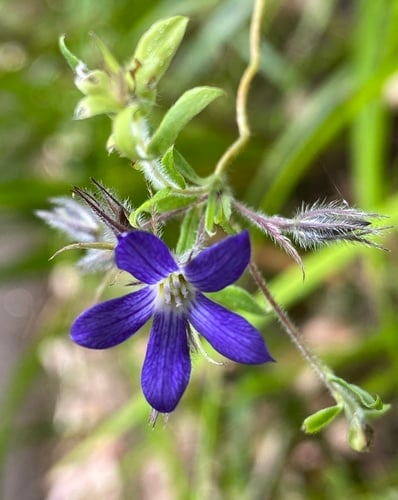
Billardiera variifolia
Western bluebell
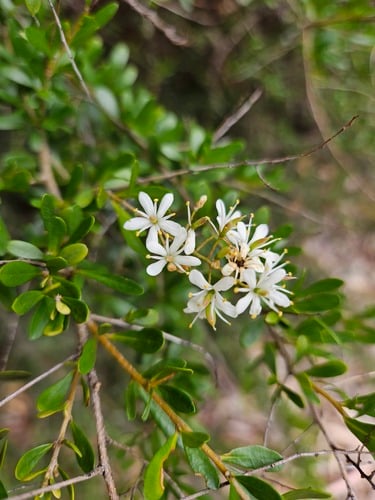
Bursaria spinosa
Australian Blackthorn, Sweet Bursaria
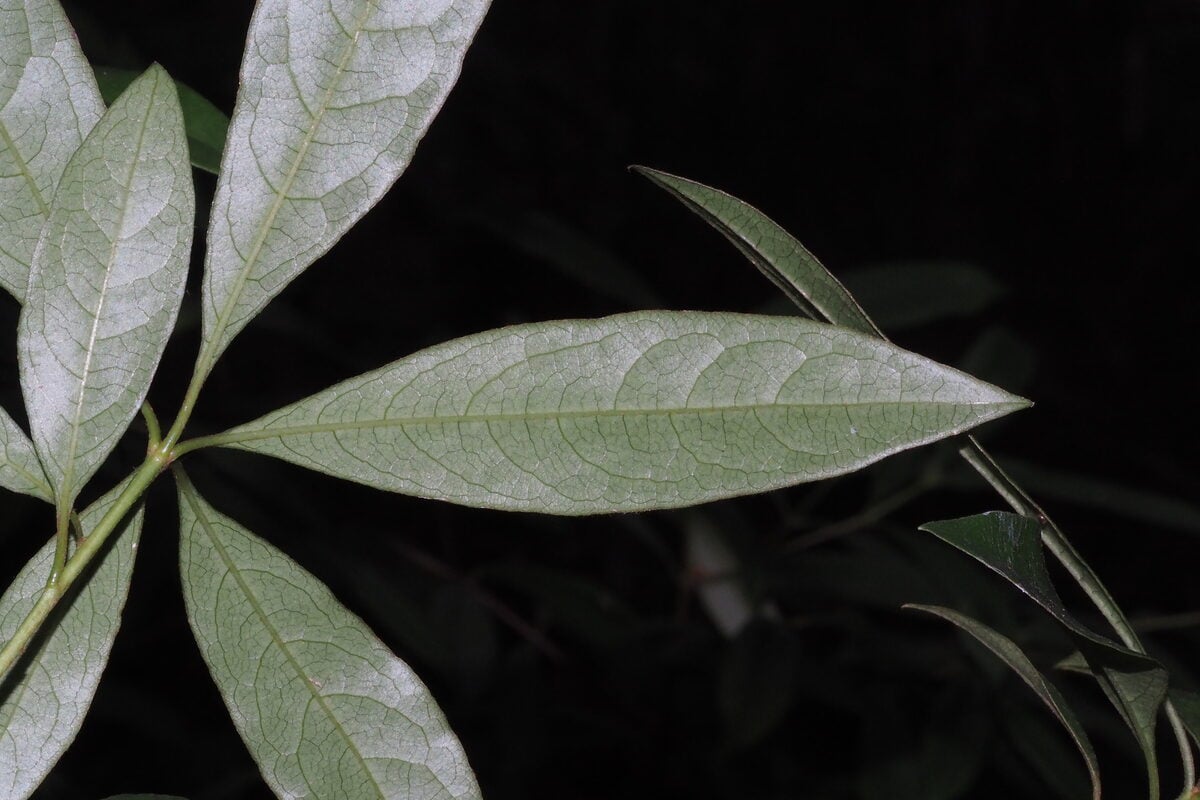
Pittosporum balansae
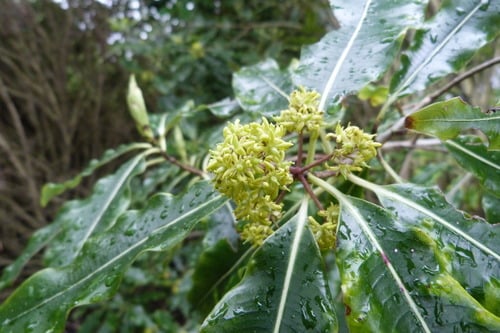
Pittosporum eugenioides
Lemonwood
Pittosporum ferrugineum
Rusty Pittosporum, Mock Orange
Pittosporum phillyreoides
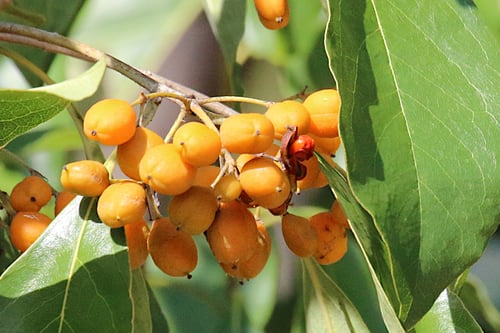
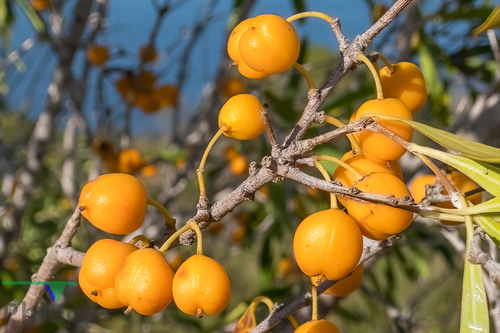
Weeping pittosporum, Butter bush, Native willow, Meemeei, Wild apricot, Berrigan