Billardiera erubescens
(Putterl.) E.M. Bennett
Red Billardiera
iNaturalist· cc-by-nc
(c) Mike and Cathy Beamish, some rights reserved (CC BY-NC)
iNaturalist· cc-by-nc
(c) Mike and Cathy Beamish, some rights reserved (CC BY-NC)
iNaturalist· cc-by-nc
(c) Mike and Cathy Beamish, some rights reserved (CC BY-NC)
Description
A twining climber. It grows 3-5 m tall. The stems are slender. The leaves are wide and glossy. They are 2-3.5 cm long by 0.8-1.5 cm wide. The flowers are in clusters of 5-8 flowers. They are rich red to orange. They are shaped like bells.
Edible Uses
The fruit are edible.
Distribution
A temperate plant. It needs a dry, well drained soil. It can grow in full sunlight. It can stand light frost.
Where It Grows
Australia*,
Cultivation
It can be grown from seed or cuttings. Cuttings can be hard to strike.
Notes
There are about 25 Billardiera species. They grow in Australia.
Synonyms
References (6)
- Bodkin, F., 1991, Encyclopedia Botanica. Cornstalk publishing, p 147
- Elliot, W.R., & Jones, D.L., 1982, Encyclopedia of Australian Plants suitable for cultivation. Vol 2. Lothian. p 320
- Hibbert, M., 2002, The Aussie Plant Finder 2002, Florilegium. p 43
- Jones, D.L. & Gray, B., 1977, Australian Climbing Plants. Reed. p 78
- Lord, E.E., & Willis, J.H., 1999, Shrubs and Trees for Australian gardens. Lothian. p 321
Show all 6 references Hide references
- Molyneux, B & Forrester, S., 1997, The Austraflora A-Z of Australian Plants. Reed. p 54
More from Pittosporaceae
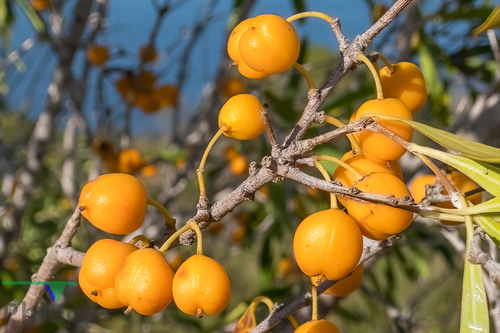
Pittosporum phillyreoides
Weeping pittosporum, Butter bush, Native willow, Meemeei, Wild apricot, Berrigan
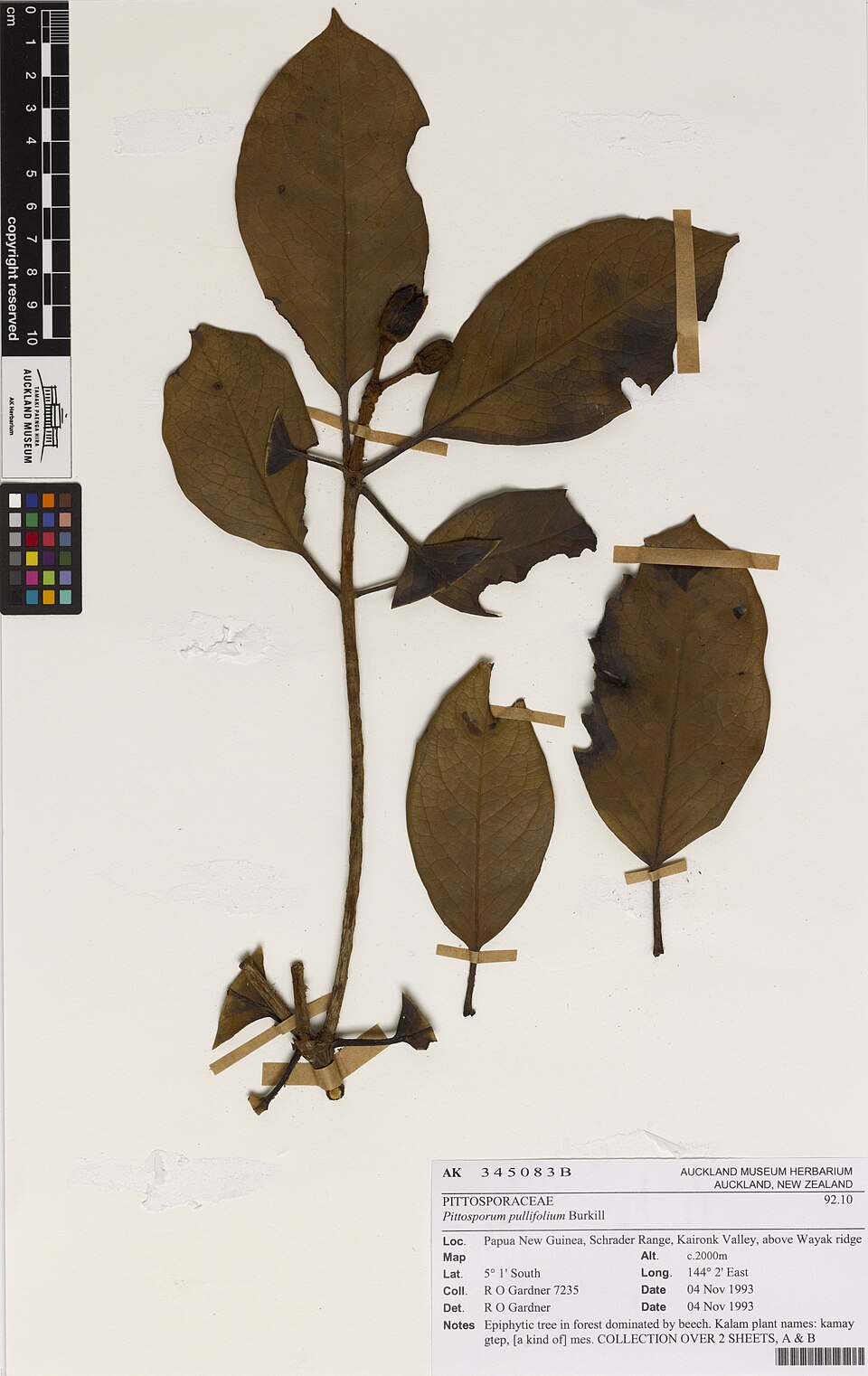
Pittosporum pullifolium
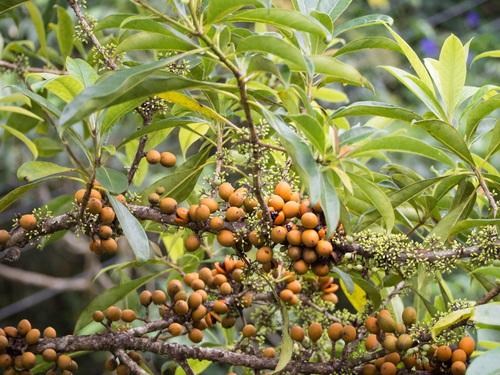
Pittosporum resiniferum
Resin cheesewood
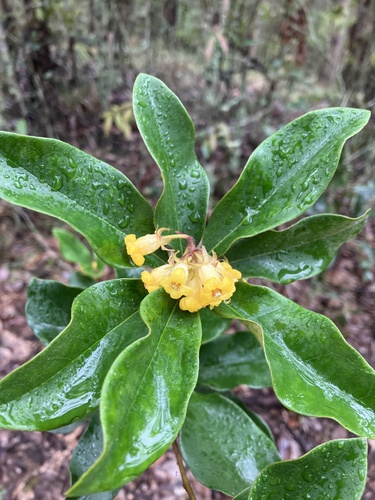
Pittosporum revolutum
Hairy pittosporum, Yellow Pittosporum, Rough-fruited Pittosporum, Mock orange
Pittosporum rhombifolium
Queensland pittosporum, Diamond leaf pittosporum
Pittosporum sinuatum