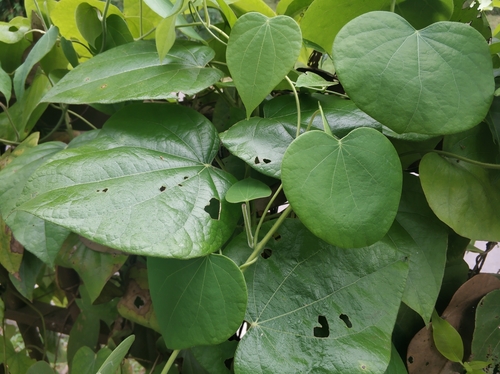
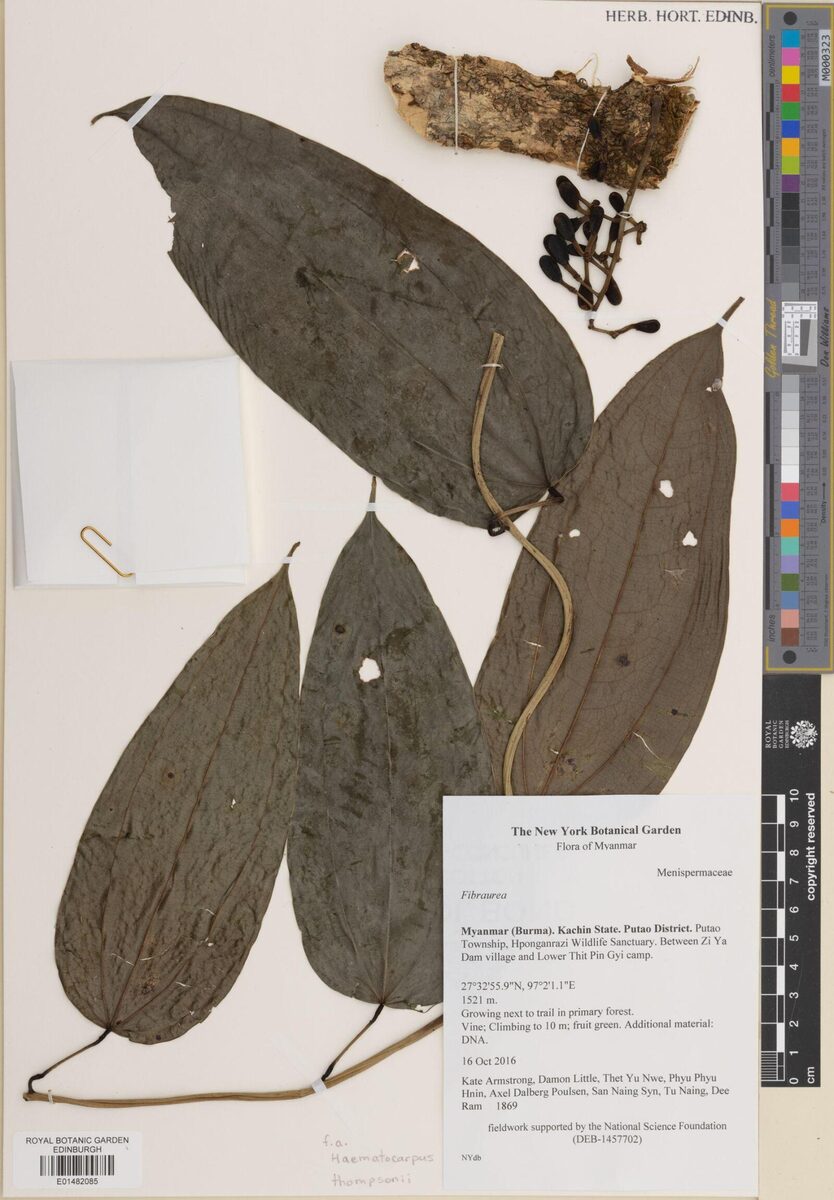
Abuta grandifolia
(Mart.) Sandwith
Large leaf abuta
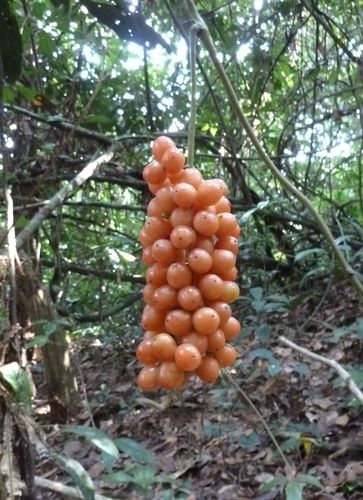
iNaturalist· cc-by-nc-sa
(c) c michael hogan, some rights reserved (CC BY-NC-SA)
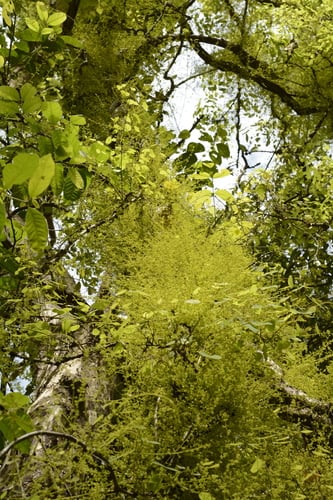
iNaturalist· cc-by-nc-sa
(c) c michael hogan, some rights reserved (CC BY-NC-SA)
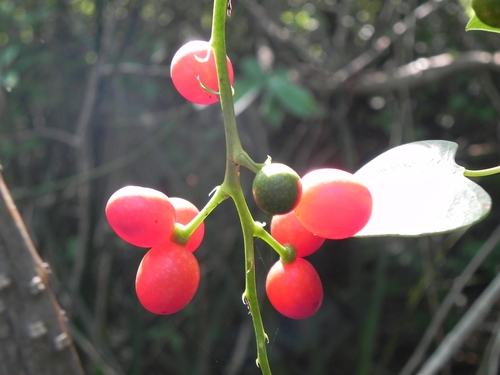
iNaturalist· cc-by-nc
(c) Sébastien SANT, some rights reserved (CC BY-NC)
Description
A shrub or small tree. It grows 5 m tall. There are prickles along the stem. The leaves are twice divided and there are 8-18 pairs of pinnae. There are up to 50 pairs of pinnules on each pinnae. The flowers are yellow. They are in large clusters at the ends of branches. The pods are flattened.
Edible Uses
Fruit. A thin layer of white flesh with a sweet-sour flavour. The hard-skinned, yellow fruit is about 15mm in diameter.
Traditional Uses
The pulp of the ripe fruit is eaten fresh.
This uses section is brief — help expand it
Medicinal Uses
The large root is acrid and bitter. It has a high reputation as a digestive, diuretic, emmenagogue, stomachic and tonic. It is used in the treatment of liver complaints; bladder complaints; digestive complaints such as flatulence and colic; oedema and snake bites. The roots are boiled in water as a remedy for anaemia. The plant is used as a substitute for Chondrodendron platyphyllum, and is often mixed with that species. A decoction of the root and the stems, either fresh or dried, is used as a contraceptive and also in the treatment of diabetes and high cholesterol levels An infusion of the leaves is used in the treatment of fevers. The stem, bark and leaves are macerated in rum to make an aphrodisiac drink. The plant contains the alkaloid palmatine and berberine derivatives.
Known Hazards
The plant is poisonous and is an ingredient of the famous S. American toxin 'curare'.
Distribution
It is a tropical plant. It grows in rainforest and especially in secondary forest. It is a lowland plant and grows up to 1,000 m above sea level.
Where It Grows
Amazon, Australia, Bolivia, Brazil, Colombia, Ecuador, Guiana, Guianas, Guyana, Peru, South America*, Suriname, Venezuela,
Cultivation
A plant of mainly lowland areas in the moist tropics. A dioecious species, both male and female forms need to be grown if fruit and seed are required.
Other Uses
The pale yellowish or light chocolate brown wood is odourless, but has a very bitter taste. It is coarse-textured, with a roey- or irregular-grain, very heavy, durable and is immune to stain and insects. It is not easy to work; takes a smooth finish The wood is used to make house rafters.
Production
Trees can produce fruit when 1 m high.
Notes
The Menispermaceae are mainly tropical rainforest plants. There are 32 Abuta in tropical America.
Synonyms
Also Known As
Achuni sanango, Bagabab, Bagawe, Bofroe-siri, Cafecillo, Caferano, Cajon yura, Calentrua caspi, Catuaba, Chicicaspi, Cipo abuta, Fruta de ciento pie, Grao-de-galo, Kapoewa-siri, Kau panka, Machap, Manguinha, Matiri kaspi, Motelo caspi, Odo odo, Palo de motelo, Parapara, Payanchi, Pichico huayo, Pitombinha, Piton, Siku tara, Suruki, Tara tara muyu yura, Xexua, Yawati kaspi, Yawati muyu, Yawati panka
References (12)
- Bortolotto, I. M., et al, 2015, Knowledge and use of wild edible plants in rural communities along Paraguay River, Pantanal, Brazil. Journal or Ethnobiology and Ethnomedicine. 11:46
- Bortolotto, I. M., et al, 2018, Lista preliminar das plantas alimenticias nativas de Mato Grosso do Sul, Brasil. Iheringia, Serie Botanica, Porto Alegre, 73 (supl.):101-116
- DUKE, J.A. & VASQUEZ, M.R.,1994, Amazonian ethnobotanical dictionary. USA. p:215
- Grandtner, M. M. & Chevrette, J., 2013, Dictionary of Trees, Volume 2: South America: Nomenclature, Taxonomy and Ecology. Academic Press p 4
- Lopez-Diago, D. & Garcia, N., 2021, Wild edible fruits of Colombia. Biota ColomBiana 22 (2) p 43
Show all 12 references Hide references
- NYBG herbarium "edible"
- Reis, S. V. and Lipp, F. L., 1982, New Plant Sources for Drugs and Foods from the New York Botanical Garden herbarium. Harvard. p 64
- Roa, J. A. G. & Boada, D. S. G., 2018, Fundación para el Fortalecimiento de la Fruticultura y Plantas Alimenticias no Convencionales en Colombia.
- Smith, N., et al, 2007, Amazon River Fruits. Flavors for Conservation. Missouri Botanical Gardens Press. p 181
- Torre, de la, L., et al, 2008, Enciclopedia de las Plantas Útiles del Ecuador. Herbario QCA. Pontificia Universidad Católica del Ecuador. p 441
- van Roosmalen, M.G.M., 1985, Fruits of the Guianan Flora. Utrecht Univ. & Wageningen Univ. p 291
- Zambrana, P, et al, 2017, Traditional knowledge hiding in plain sight – twenty-first century ethnobotany of the Chácobo in Beni, Bolivia. Journal of Ethnobiology and Ethnomedicine (2017) 13:57