Garcinia elliptica
Wall. ex Wight
wikimedia· cc0
Wikimedia Commons - Harmanis de Alwis
Description
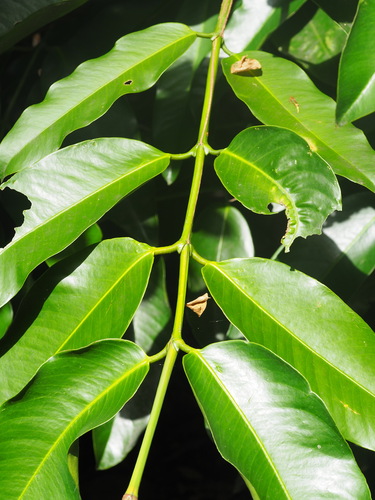
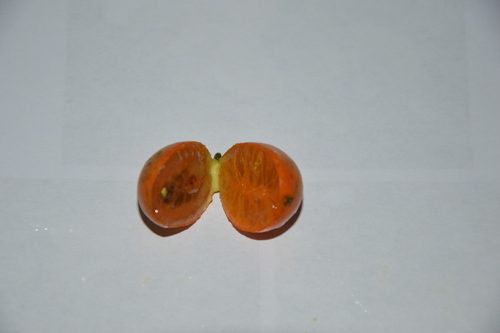
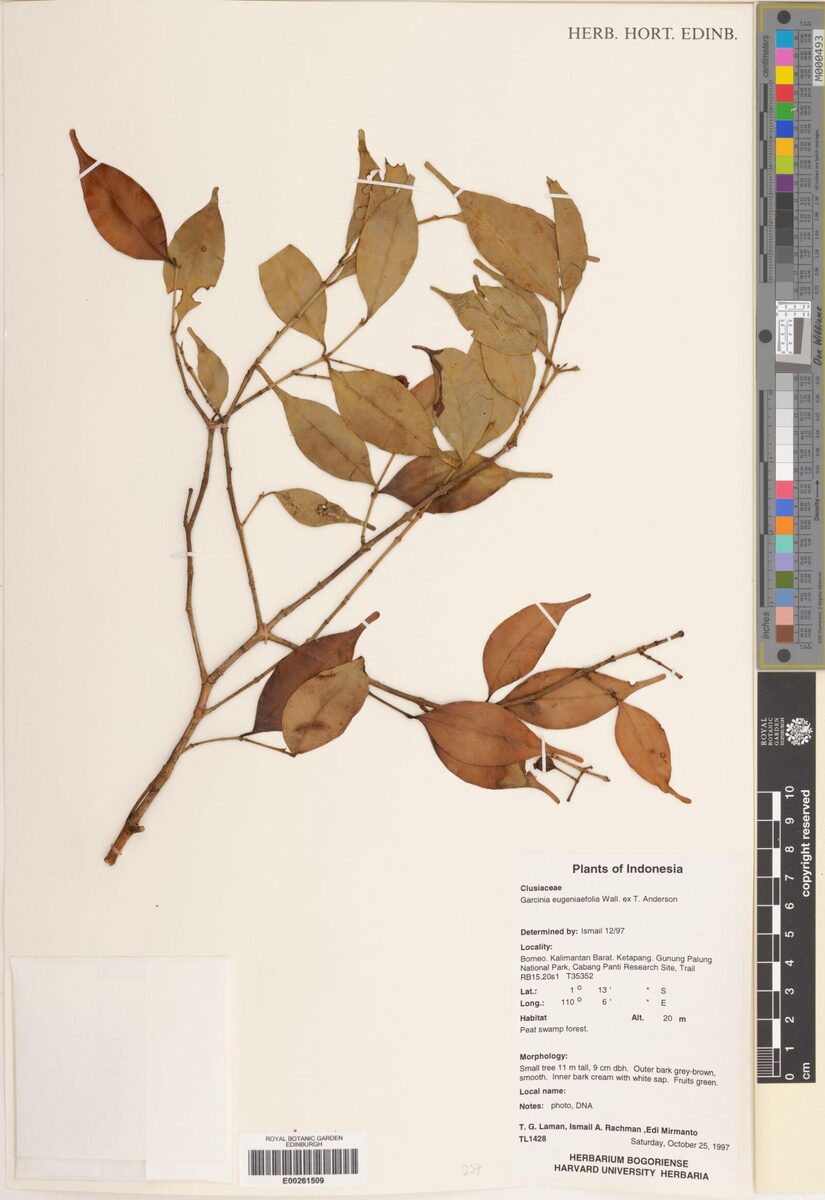
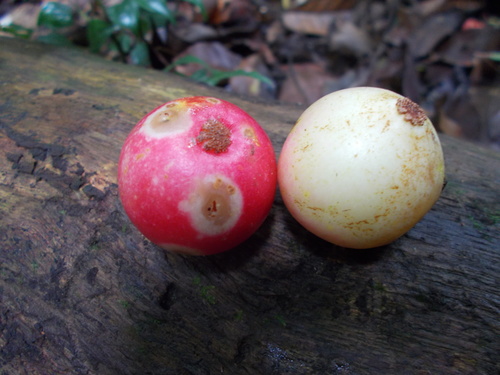
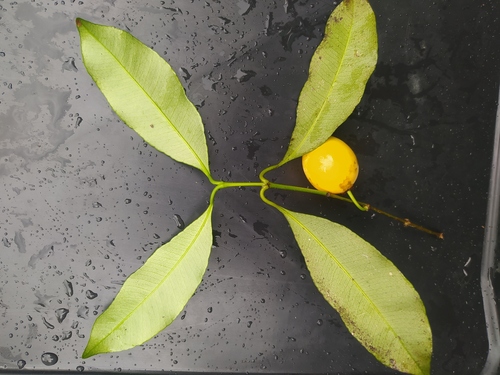
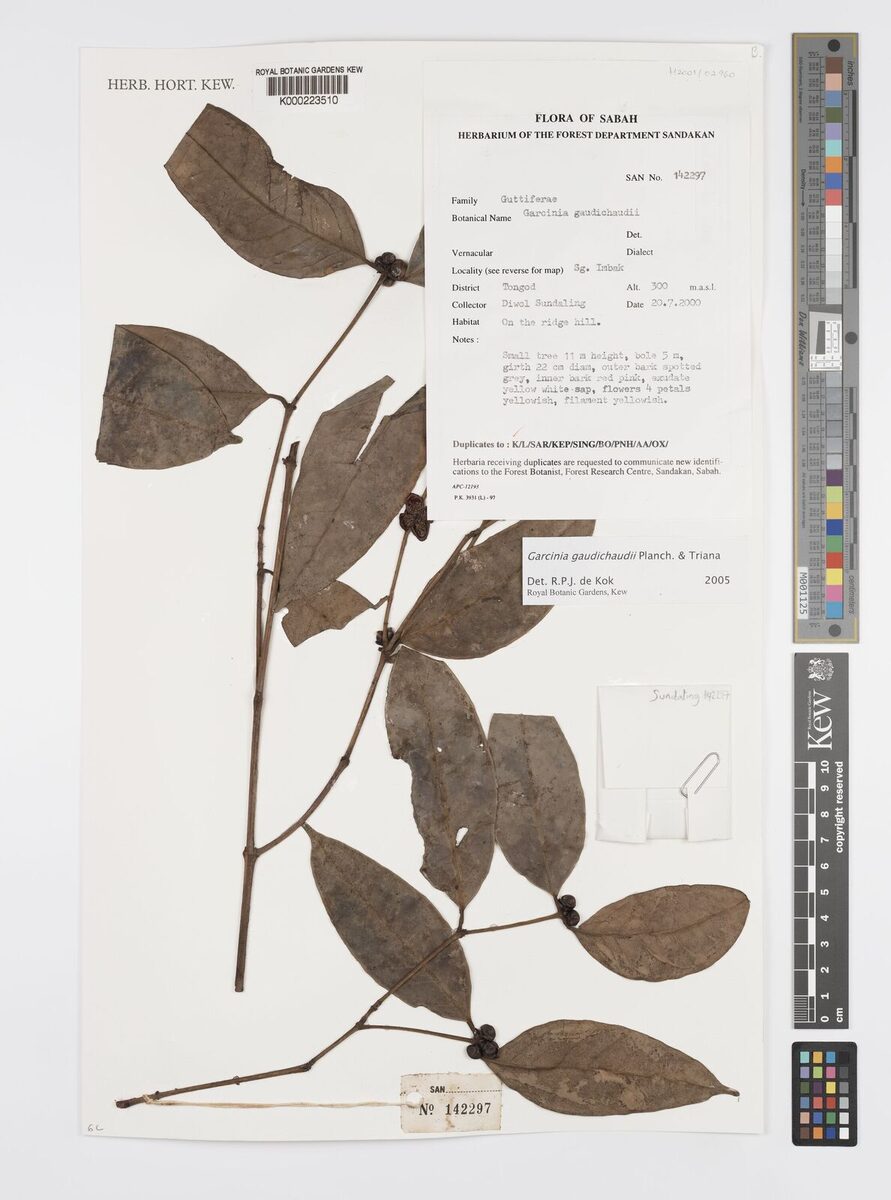
A tree. It grows 10-15 m high. The trunk is 30-40 cm across. The leaves are opposite. They are simple and 25-30 cm long by 11-13 cm wide. They are oval and leathery. They taper to the tip. The flowers are white and in groups or 2-3. The fruit is oval and 4-6 cm long by 4-5 cm wide. There are 1-2 large seeds. They are 3-4 cm long.
Edible Uses
The ripe fruit can be eaten raw or used in jams, preserves, and drinks. Fruit are sold in local markets.
Traditional Uses
The ripe fruit can be eaten raw. They are also used in jams, preserves and drinks.
This uses section is brief — help expand it
Medicinal Uses
Ripe fruits can be eaten but they are very acidic. Just like other garcinia varieties such as kokum (which is prevalent in the Indian west coast) or garcinia pedunculata, the fruit can be preserved by slicing into thin pieces and then drying under sun. It can be made into pickles. Bodos cook the unripe fruit as vegetable with fish. A chutney can be made by boiling the fruit. In Assam, dried and preserved slices are added to black green pulses to make a popular slightly acidic curry. Dried up fruit slices are valued as a traditional remedy for dysentery. In Ayurveda the fruits are used in the treatment of dysentery, gastritis, etc. and is said to have anti inflammatory properties. When the bark is cut it exudes a yellow resin called gamboge that is used in food, paints and medicines. It can be used as a rootstock for the mangosteen (Garcinia mangostana). In Malnad region of Karnataka, Tirtahalli and Chikkamagalore this is widely used in name of 'odduli', especially in fish recipes. Odduli is prepared by boiling the fruit to get a thick black liquid which can be stored for years without adding preservatives.
Distribution
A tropical plant. In Bolivia they grow above 600 m altitude and in rainfall of 1,200-1,500 mm per year. In Brazil it grows in the dryland forest of the Amazon. It occurs at 750 m altitude in Assam.
Where It Grows
Amazon, Asia, Bolivia, Brazil, Colombia, Ecuador, India, Northeastern India, Peru, South America,
Cultivation
Plants are grown from seed. Seeds are collected from ripe fruit. The fruit are stored in plastic bags to make it easier to remove the pulp. Fresh seeds are planted. They are put on their side in a shady nursery. Seeds emerge in 50-70 days.
Production
Plants grow at a moderate rate.
Other Information
Fruit are sold in local markets.
Notes
There are about 200 Garcinia species. They are in the tropics.
Synonyms
Also Known As
Bacuri-azedo, Bacuri-coroa, Bacuri-de-anta, Bacuri-de-espinhos, Bacuri-pari-selvagem, Bacuri, Charichuelo, Kawr-vawm-va, Limaozinho, Mae iba pirer, Nunu, Ocoro, Piri maharo
References (13)
- Chaudhury, R.H.N., et al, 1980, Ethnobotanical Uses of Herbaria - 2. J. Econ, Tax Bot Vol 1 p 167
- Etkin, N. L. (Ed.), 1994, Eating on the Wild Side, Univ. of Arizona. p 156 (As Rheedia acuminata)
- e-mardim.com (As Garcinia acuminata)
- Facciola, S., 1998, Cornucopia 2: a Source Book of Edible Plants. Kampong Publications, p 80 (As Rheedia acuminata)
- Kar, A., et al, 2013, Wild Edible Plant Resources used by the Mizos of Mizoram, India. Kathmandu University Journal of Science, Engineering and Technology. Vol. 9, No. 1, July, 2013, 106-126 (As Garcinia acuminata)
Show all 13 references Hide references
- Lamont, S.R., et al, 1999, Species composition, and use of Homegardens among three Amazonian Villages. Economic Botany 53(3) pp 312-326 (As Rheedia floribunda)
- Lopez-Diago, D. & Garcia, N., 2021, Wild edible fruits of Colombia. Biota ColomBiana 22 (2) p 35
- Lorenzi, H., Bacher, L., Lacerda, M. & Sartori, S., 2006, Brazilian Fruits & Cultivated Exotics. Sao Paulo, Instituto Plantarum de Estuados da Flora Ltda. p 125
- Lorenzi, H., 2009, Brazilian Trees. A Guide to the Identification and Cultivation of Brazilian Native Trees. Instituto Plantarum de Estuados da Flora Ltda. Vol. 3 p 91
- Morton, (As Rheedia acuminata)
- Popenoe, (As Rheedia acuminata)
- Uphof, (As Rheedia acuminata)
- Vasquez, Roberto Ch. & Coimbra, German S., 1996, Frutas Silvestres Comestibles de Santa Cruz. p 98 (As Rheedia acuminata)