Garcinia portoricensis
(Urb.) Alain
iNaturalist· cc-by-nc
(c) Juan Gabriel, some rights reserved (CC BY-NC)
gbif· cc-by-nc
Aspen S
iNaturalist· cc-by-nc
(c) Juan Gabriel, some rights reserved (CC BY-NC)
iNaturalist· cc-by-nc
(c) Kurt Miller, some rights reserved (CC BY-NC)
Description
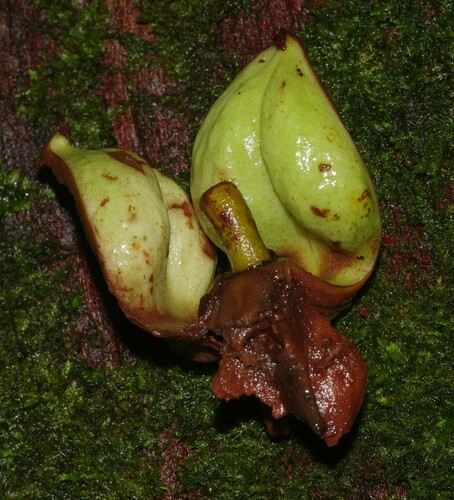
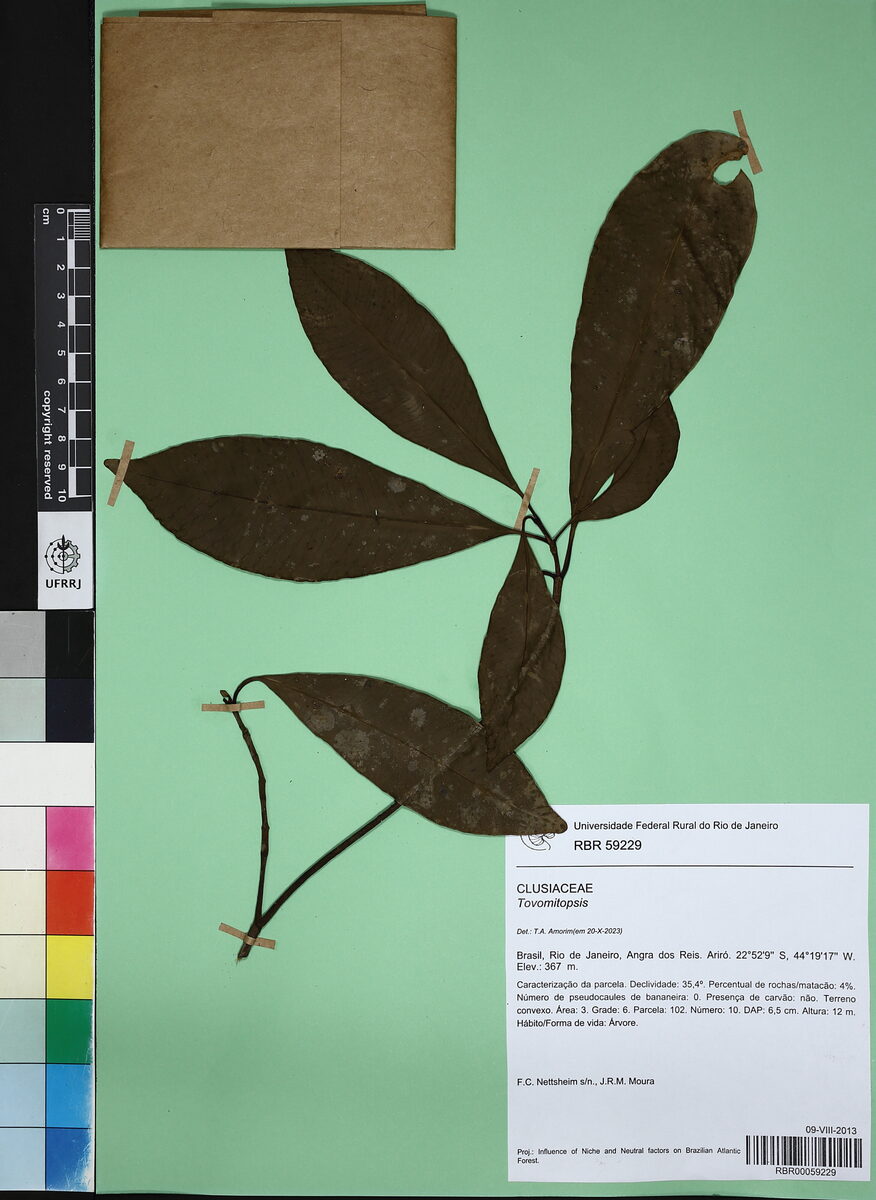
A tree. It can grow 7-20 m tall. The leaves are 10 cm long. They end with a sharp spine. The fruit are oval and 3 cm long. Probably now Garcinia madruno
Distribution
A tropical plant.
Where It Grows
Caribbean, Central America, Puerto Rico, West Indies,
Cultivation
Individual flowers on a tree can be bisexual or either male or female. In addition, distinctly male and female flowers can either both be on the same tree (monoecious) or on different trees (dioecious). At least some dioecious Garcinia species are able to produce fertile seed even in the absence of fertilization (asexual reproduction). Such seeds would be expected to be genetically identical to the parent
Propagation
Seed - we have no specific information on this species, but the seed of most members of the genus can be slow to germinate, even if sown fresh, often taking 6 months or more.
Other Uses
The heartwood is light browns; the sapwood is very light brown. The wood is very hard, heavy, and very fine-textured. Because of the small size of tliis tree, its wood is used only for posts. We do not have any more information on the wood of this species, but a general description of the wood for trees in the Americas which were formerly considered to be in the genus Rheedia is as follows:- The heartwood is dark yellow-brown, grayish- or pinkish-brown, merging gradually into the sapwood; surfaces are sometimes specked with resinous exudations. The texture is medium to coarse; the grain straight to irregular and roey; luster medium to rather low; it is free from discernible odour or taste. Species in Surinam are rated durable to attack by decay fungi and fairly resistant to dry wood termites. Species in Colombia are resistant to a brown-rot fungus but not the white-rot in a laboratory assay. Under field conditions the wood was susceptible to decay and attack by insects. It dries rapidly, but is reported to be moderately difficult to air season, tending to warp and check. Reports on workability vary with species from moderate to high resistance to cutting to machining fairly well; reports on ease of finishing are also variable. The wood is used for purposes such as furniture, flooring (quarter sawn), heavy construction, and general carpentry.
Synonyms
Also Known As
Guanabacoa, Palo de cruz, Sebuc n