Garcinia planchonii
Pierre
Bua Planchon
gbif· cc0
President and Fellows of Harvard College
Description
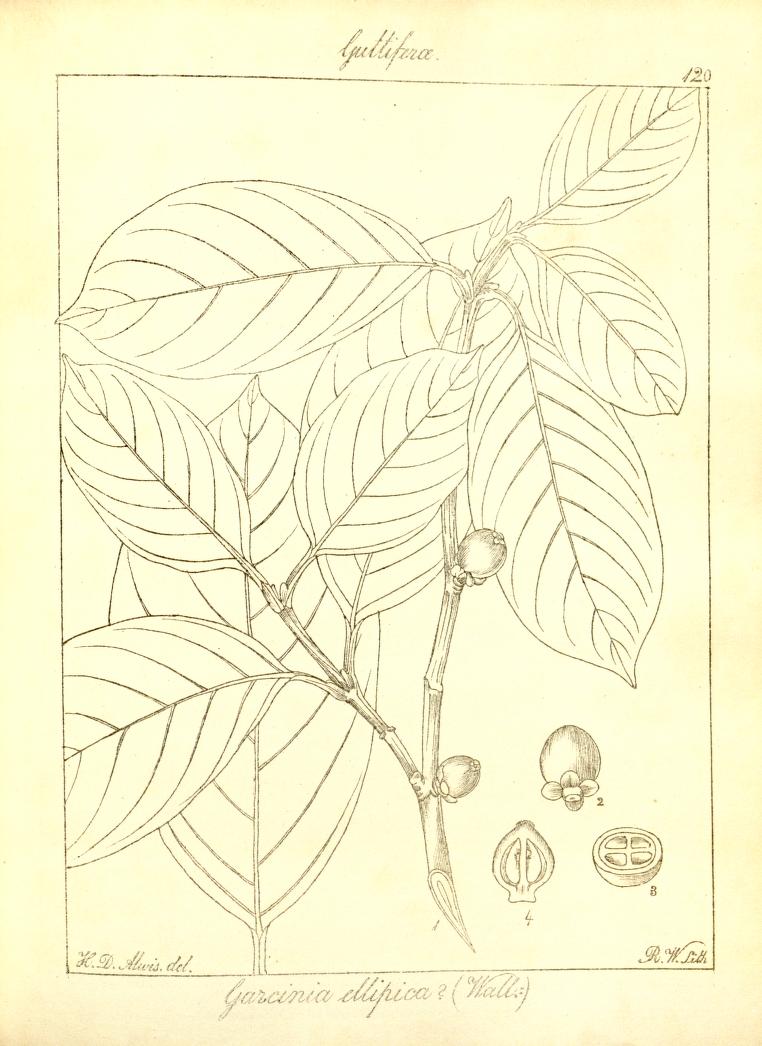
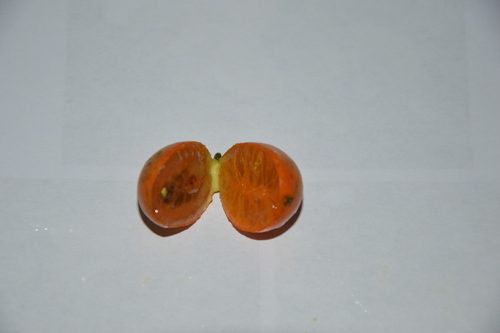
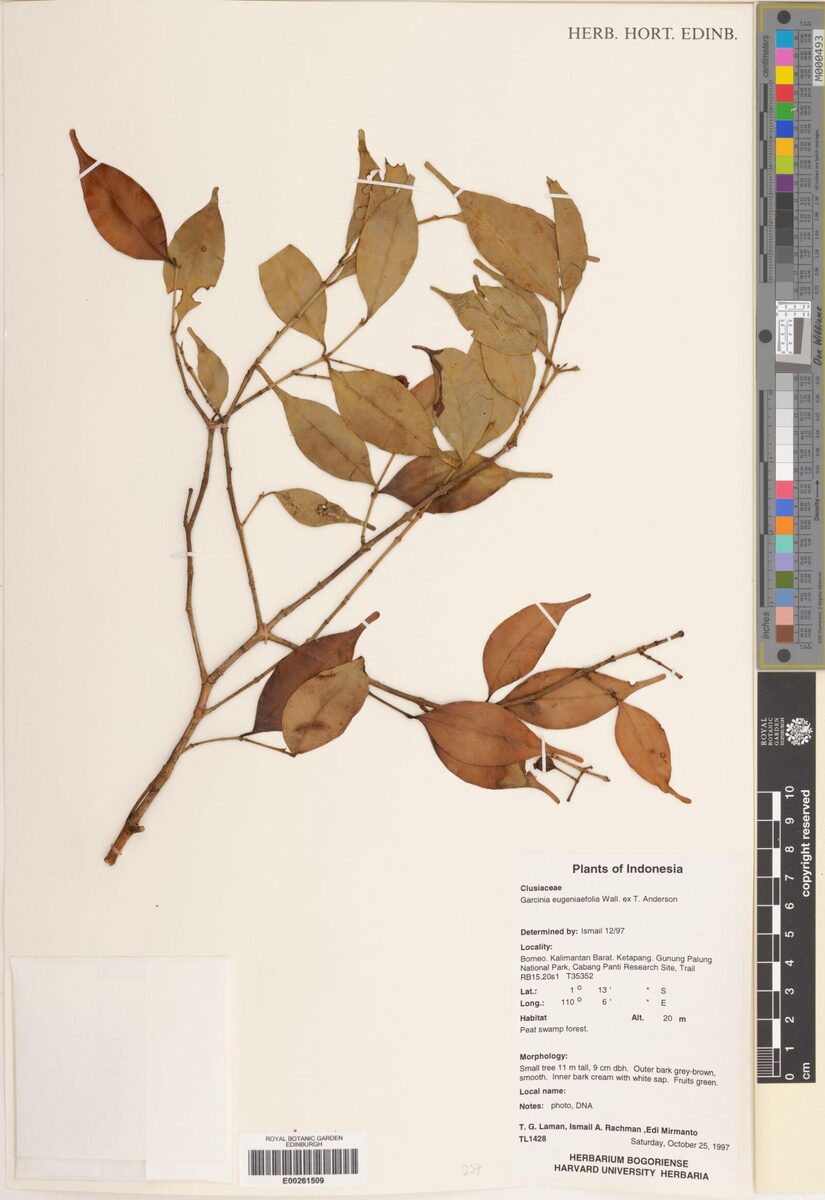
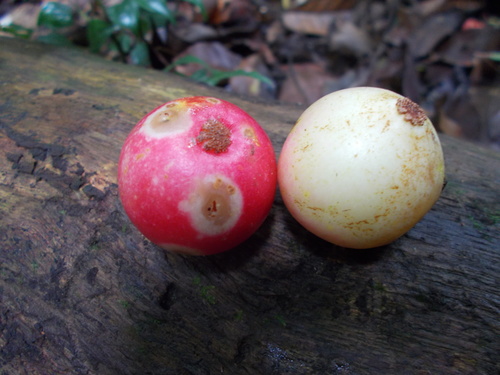
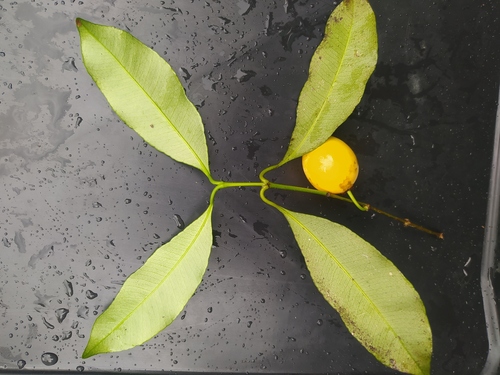
A tree. It grows up to 20 m high. The trunk is 50 cm across. The leaves are broadly oval and 16-22 cm long and 8-10 cm wide. The fruits are green to yellow. The fruit are 9 cm across. They are yellow-green and have grooves. There are 8 seeds.
Edible Uses
The fruit are edible and acid; they are sliced and dried in the sun and used as a substitute for tamarind in curries.
Traditional Uses
The fruit are edible and acid. They are sliced and dried in the sun. They are used as a substitute for tamarind in curries.
This uses section is brief — help expand it
Distribution
A tropical plant.
Where It Grows
Asia, Indochina, Laos, SE Asia, Vietnam,
Cultivation
The tree can flower and fruit all year round.
Propagation
Seed - we have no specific information on this species, but the seed of most members of the genus can be slow to germinate, even if sown fresh, often taking 6 months or more.
Production
It flowers are fruits throughout the year.
Notes
There are about 300 Garcinia species.
References (7)
- Burkill, I.H., 1966, A Dictionary of the Economic Products of the Malay Peninsula. Ministry of Agriculture and Cooperatives, Kuala Lumpur, Malaysia. Vol 1 (A-H) p 1063
- Fl. Forest. Cochinchina. 61, 1882
- Menninger, E.A., 1977, Edible Nuts of the World. Horticultural Books. Florida p 46
- Pham-Hoang Ho, 1999, An Illustrated Flora of Vietnam. Nha Xuat Ban Tre. p 451
- PROSEA (Plant Resources of South East Asia) handbook, Volume 2, 1991, Edible fruits and nut. p 177
Show all 7 references Hide references
- Wickens, G.E., 1995, Edible Nuts. FAO Non-wood forest products. FAO, Rome. p 132
- World Checklist of Useful Plant Species 2020. Royal Botanic Gardens, Kew