Garcinia prainiana
King
Button mangosteen
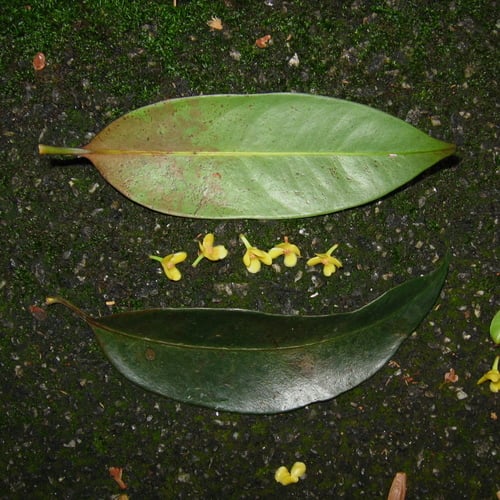
iNaturalist· cc-by-nc
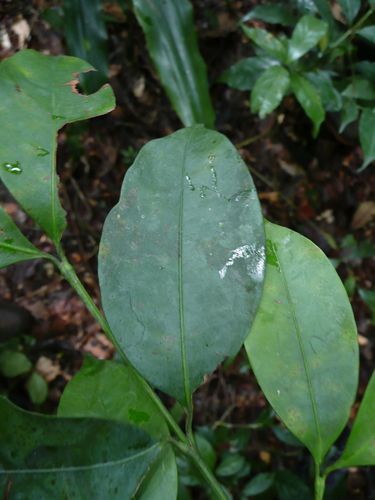
(c) scott.zona, some rights reserved (CC BY-NC)
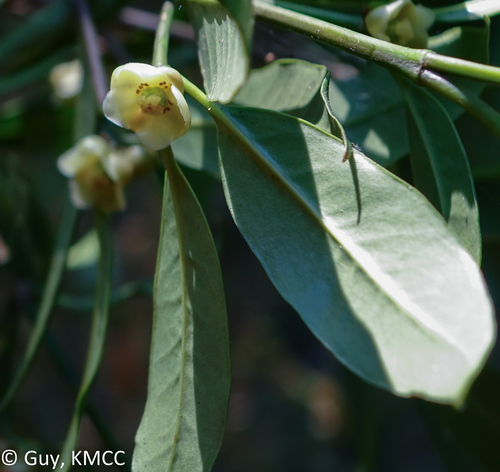
iNaturalist· cc-by-nc
(c) Rafidah Abdul Rahman, some rights reserved (CC BY-NC)
Summary
Source: WikipediaGarcinia prainiana, known as the button mangosteen or cherapu, is a species of flowering plant in the family Clusiaceae. Its fruit has a flavor similar to its cousin, the purple mangosteen, with an interesting taste some have compared to a tangerine, but unlike its cousin it has a tissue-thin skin rather than a hard rind, making it much easier to eat out-of-hand. Also unlike the purple mangosteen, it can be grown in a container. The fruit is cultivated widely in Southeast Asia. In the United States, success has been found with its cultivation by a few backyard growers in South Florida and the Whitman Tropical Fruit Pavilion at Florida's Fairchild Tropical Botanic Garden. It is a native of Malaysia and Thailand. The tree is small or medium-sized. It was featured in Malaysian 30 cents stamp in 1999.
Description
A small tree. It grows 10 m tall. The leaves are shiny and dark green They are oval and opposite. They are 5-12 cm long. The fruit are about 3-4 cm across. They are round and smooth. It is yellow to orange.
Edible Uses
Fruit - raw. The pulp has a subacid flavour. An unusual, sweet-sour flavoured pulp. The orange-coloured, globose fruit is up to 5cm in diameter. The acid-flavoured rind of the fruit is also eaten.
Traditional Uses
The ripe fruit are acid and eaten raw.
This uses section is brief — help expand it
Distribution
A tropical plant.
Where It Grows
Asia, Australia, India, Indochina, Indonesia, Malaysia, North America, SE Asia, Thailand, USA,
Cultivation
Plants can be grown from seed. They can take 2-6 months to germinate.
Propagation
Seed - it can take 2 - 6 months to germinate.
Other Uses
Young plants are used as a rootstock for the mangosteen, Garcinia mangostana. A good timber tree.
Production
It is slow growing but long lived. Plants can fruit at a young age.
Other Information
It is cultivated in villages.
Notes
There are about 300 Garcinia species.
Also Known As
Bonah, Chekau, Chepu, Cherapu, Cherupu, Chupak, Cupu', Kechupu, Kecupu, Mechupu
References (14)
- Burkill, I.H., 1966, A Dictionary of the Economic Products of the Malay Peninsula. Ministry of Agriculture and Cooperatives, Kuala Lumpur, Malaysia. Vol 1 (A-H) p 1073
- Facciola, S., 1998, Cornucopia 2: a Source Book of Edible Plants. Kampong Publications, p 79
- J. Asiat. Soc. Bengal, Pt. 2, Nat. Hist. 59(2):171. 1890
- Khoo, H. E., et al, 2008, Carotenoid Content of Underutilized Tropical Fruits. Plant Foods for Human Nutrition 63:170-175
- Macmillan, H.F. (Revised Barlow, H.S., et al) 1991, Tropical Planting and Gardening. Sixth edition. Malayan Nature Society. Kuala Lumpur. p 301
Show all 14 references Hide references
- Milow, P., et al, 2013, Malaysian species of plants with edible fruits or seeds and their evaluation. International Journal of Fruit Science. 14:1, 1-27
- Ong, H., et al, 2012, Traditional knowledge and usage of edible plants among the Semai community of Kampung Batu 16, Tapah, Perak, Malaysia. Scientific Research and Essays Vol. 7(4), pp. 441-445, 30 January, 2012
- PROSEA (Plant Resources of South East Asia) handbook, Volume 2, 1991, Edible fruits and nut. p 177
- Saw, L.G., LaFrankie, J. V. Kochummen, K. M., Yap S. K., 1991, Fruit Trees in a Malaysian Rain Forest. Economic Botany, Vol. 45, No. 1, pp. 120-136
- Tanaka,
- Uji, T., 2007, Keanekaragaman, Persebaran dan Potensi Jenis-jenis Garcinia. Berk. Penel. Hayati: 12 (129–135), 2007
- Uphof,
- World Checklist of Useful Plant Species 2020. Royal Botanic Gardens, Kew
- Zawiah, N. & Othaman, H., 2012, 99 Spesies Buah di FRIM. Institut Penyelidikan Perhutanan Malaysia. p 134