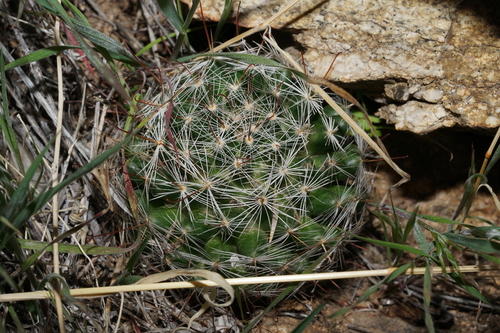
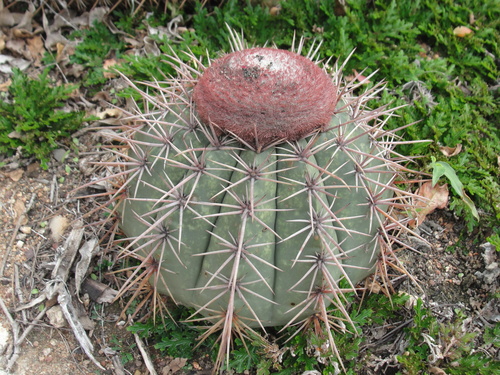
Opuntia paraguayensis
K. Schum.
Arumbeva, Arumbe, Palmatoria, Palma
iNaturalist· cc-by-nc
(c) Judá Alfredo Bernal Vázquez, some rights reserved (CC BY-NC)
iNaturalist· cc-by-nc
(c) Judá Alfredo Bernal Vázquez, some rights reserved (CC BY-NC)
iNaturalist· cc-by-nc
(c) 🦔🐠🐝🌿🦆🐢 Rocky 🦘🐌🪻🐜🍄🦋, some rights reserved (CC BY-NC)
Description
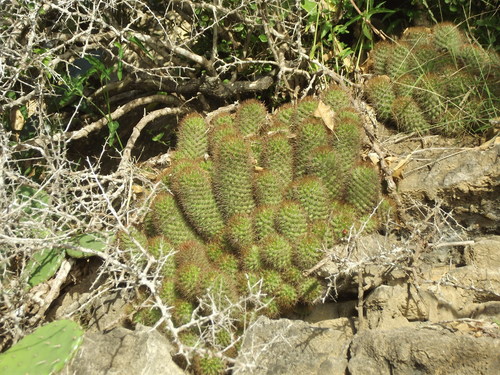
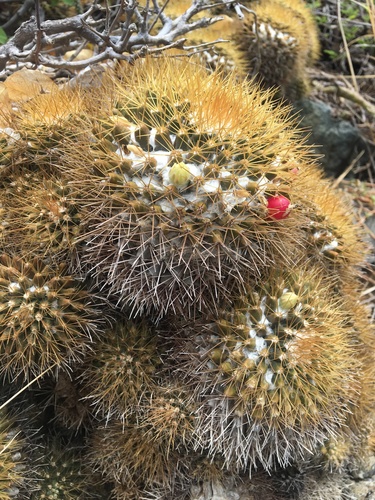
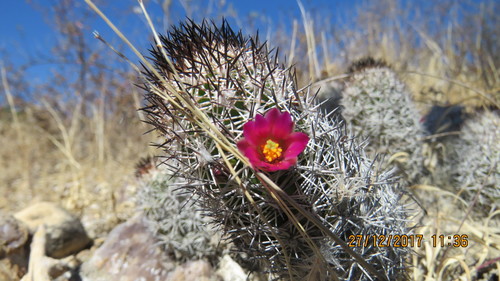
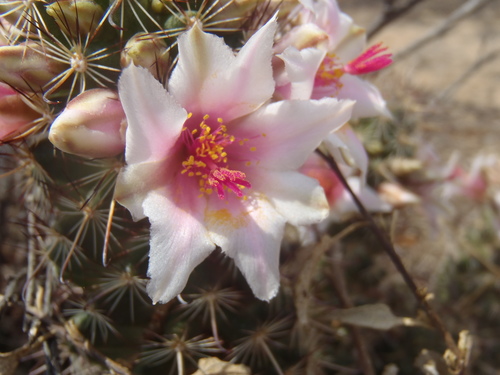
An erect cactus. It is up to 2 m tall. The stems are flattened and green and process sunlight. They are thickened with segments 14-25 cm long. There are a few widely spaced groups of thorns. These have 1-2 sharp spines up to 1 cm long. The flowers occur singly and flower during the day. The flowers are orange. They occur on the end segments. The fruit are green or purplish. They have a few spines that fall off and the fruit have a small sweet base.
Edible Uses
O. ficus-indica is consumed widely as food. The fruits are commercialized in many parts of the world, eaten raw, and have one of the highest concentrations of vitamin C of any fruit. The young "leaves" (actually cladodes, which technically are stems) are cooked and eaten as a vegetable known as nopalitos. They are sliced into strips, skinned or unskinned, and fried with eggs and jalapeños, served as a breakfast treat. They have a texture and flavor like green beans. The fruits or leaves can be boiled, used raw, or blended with fruit juice, cooked on a frying pan, used as a side dish with chicken, or added to tacos. Jams and jellies are produced from the fruit, which resemble strawberries and figs in color and flavor. Mexicans use Opuntia fruit to make an alcoholic drink called colonche.In Sicily, a prickly pear-flavored liqueur called ficodi is produced, flavored somewhat like a medicinal aperitif. In Malta, a liqueur called bajtra (the Maltese name for prickly pear) is made from this fruit, which grows wild in almost every field. On the island of Saint Helena, the prickly pear also gives its name to locally distilled liqueur, Tungi Spirit.
Traditional Uses
The fruit are eaten fresh.
This uses section is brief — help expand it
Distribution
It is a tropical plant. It grows naturally in Brazil. It grows in well-drained fields with open vegetation.
Where It Grows
Brazil, South America,
Cultivation
Plants can be grown from stem cuttings.
Other Information
It is not a very popular fruit.
Synonyms
References (3)
- Brazil: Biodiversity for Food and Nutrition. http://www.b4fn.org/countries/brazil/
- Lorenzi, H., Bacher, L., Lacerda, M. & Sartori, S., 2006, Brazilian Fruits & Cultivated Exotics. Sao Paulo, Instituto Plantarum de Estuados da Flora Ltda. p 105
- Monatsschr. Kakteenk. 9:149. 1899