Selenicereus megalanthus
(K. Schumann ex Vaupel) Moran
Yellow pitaya, Pitata-amarela
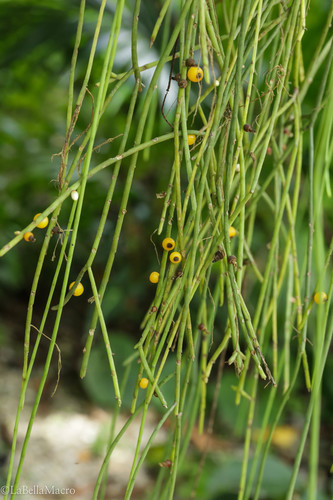
iNaturalist· cc-by-nc
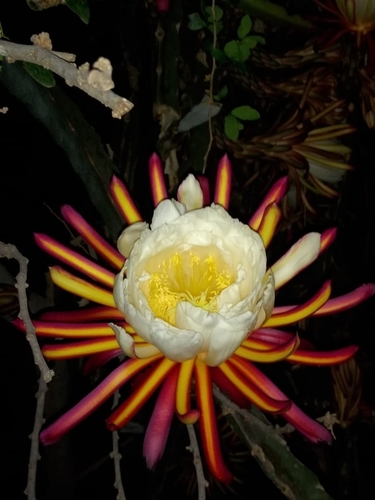
(c) gustavo_diaz_fce, some rights reserved (CC BY-NC), uploaded by gustavo_diaz_fce
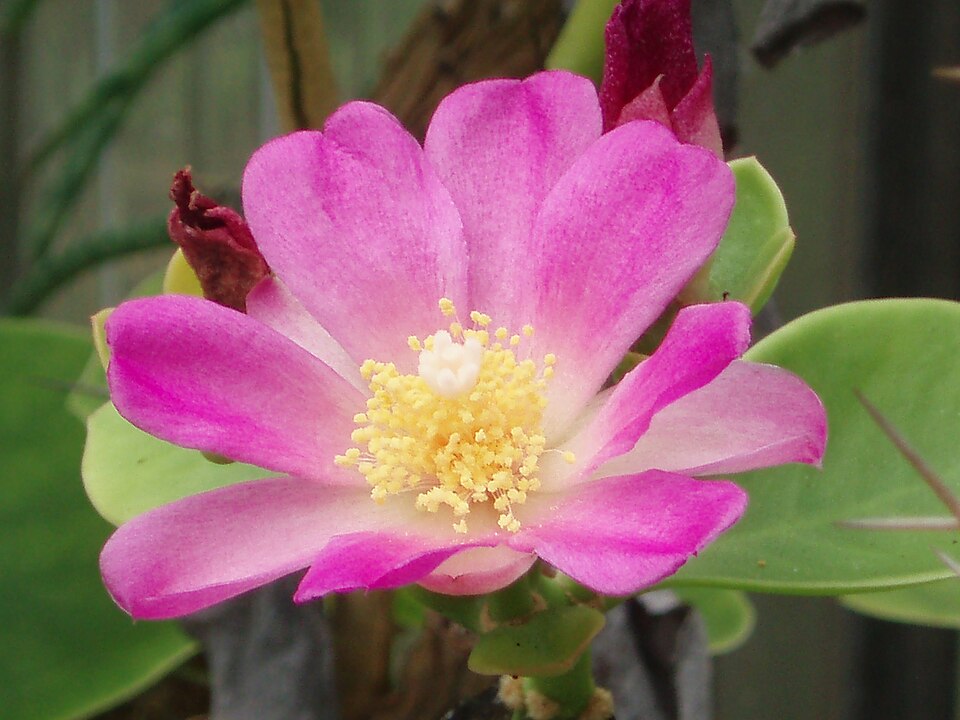
iNaturalist· cc-by-nc-sa
(c) Andreas Kay, some rights reserved (CC BY-NC-SA)
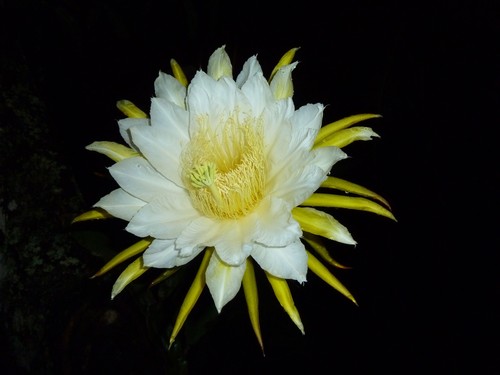
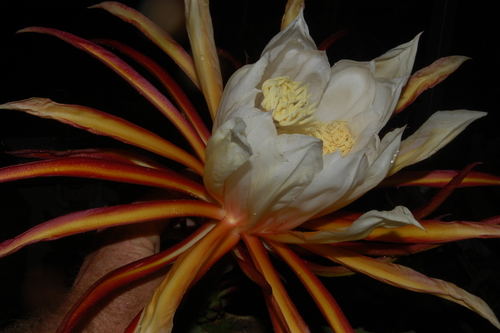
iNaturalist· cc-by-nc
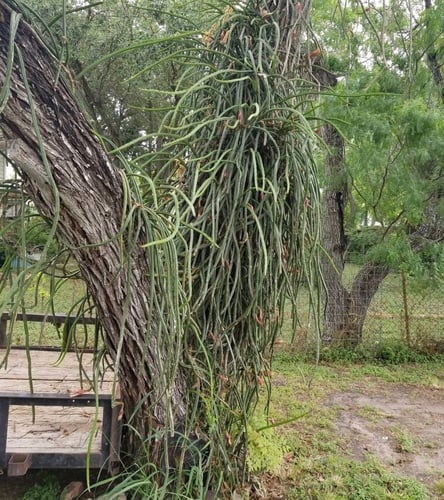
(c) Susan J. Hewitt, some rights reserved (CC BY-NC), uploaded by Susan J. Hewitt
Summary
Source: WikipediaSelenicereus megalanthus, synonym Hylocereus megalanthus, is a cactus species in the genus Selenicereus that is native to northern South America, where it is known, along with its fruit, by the name of pitahaya. The species is grown commercially for its yellow fruit, but is also an impressive ornamental climbing vine with perhaps the largest flowers of all cacti. The yellow skinned fruit of S. megalanthus has thorns, unlike the green, red or yellow skinned dragon fruits of S. undatus, S. monacanthus and their cultivated hybrids. S. megalanthus is commonly known as "yellow dragon fruit", "yellow pitahaya", "kirin fruit", or "yellow pitaya". This name leads at times to confusion, as unrelated cultivars of other dragonfruit species can also have yellow skinned fruit. One example of a yellow dragonfruit cultivar not related to S. megalanthus is 'Australian Gold'.
Description
A cactus. The plants grow attached to other plants. They hang down. There are many branches. They are 4 m long. The stems are dark green and 3 angled. The edges are slightly wavy. The stems are 1-2 m long and 3-6 cm wide. There are 1-3 spines. They are slightly curved and 3-5 mm long. The flowers are white and 30 cm long. They develop a sweet smell later. The fruit are oval and yellow. They are 11 cm long and have few spines. They are edible. There are several cultivated varieties.
Edible Uses
Fruit - raw. A succulent pulp with a sweet flavour. Some forms have a thin skin and an extremely delicious flavour. The fruit is around 12cm long and 7cm wide. Immature fruits have tufts of thin spines, but these fall off naturally as the fruit ripens.
Traditional Uses
The fruit are eaten raw.
This uses section is brief — help expand it
Distribution
It is a tropical plant.
Where It Grows
Amazon, Australia, Bolivia, Brazil, Colombia, Ecuador*, Israel, Mediterranean, Mexico, Middle East, Peru, South America, Venezuela,
Cultivation
Plants are grown from cuttings.
Propagation
Seed - Stem cuttings.
Other Information
It is a cultivated food plant. The fruit are sold in markets.
Synonyms
Also Known As
Tuna silvestre
References (11)
- Anderson, E.F., 2001, The Cactus Family, Timber Press p 634
- Facciola, S., 1998, Cornucopia 2: a Source Book of Edible Plants. Kampong Publications, p 66
- Gentes Herb. 8:325. 1953
- Kermath, B. M., et al, 2014, Food Plants in the Americas: A survey of the domesticated, cultivated and wild plants used for Human food in North, Central and South America and the Caribbean. On line draft. p 795
- Lorenzi, H., Bacher, L., Lacerda, M. & Sartori, S., 2006, Brazilian Fruits & Cultivated Exotics. Sao Paulo, Instituto Plantarum de Estuados da Flora Ltda. p 372
Show all 11 references Hide references
- Lyle, S., 2006, Discovering fruit and nuts. Land Links. p 250
- Mapes, C. & Basurto, F., 2016, Biodiversity and Edible Plants of Mexico. Chapter 5 in R. Lira, et al. (eds.), Ethnobotany of Mexico, Ethnobiology, Springer. p 96
- Recher, P, 2001, Fruit Spirit Botanical Gardens Plant Index. www.nrg.com.au/~recher/ seedlist.html p 3
- Torre, de la, L., et al, 2008, Enciclopedia de las Plantas Útiles del Ecuador. Herbario QCA. Pontificia Universidad Católica del Ecuador. p 269
- Van den Eynden, V., et al, 2003, Wild Foods from South Ecuador. Economic Botany 57(4): 576-603
- World Checklist of Useful Plant Species 2020. Royal Botanic Gardens, Kew