Brucea guineensis
G. Don
Gbabele
gbif· cc-by
Royal Botanic Gardens, Kew
gbif· cc-by-nc-nd
Ehoarn Bidault
gbif· cc-by-nc-nd
Ehoarn Bidault
Description
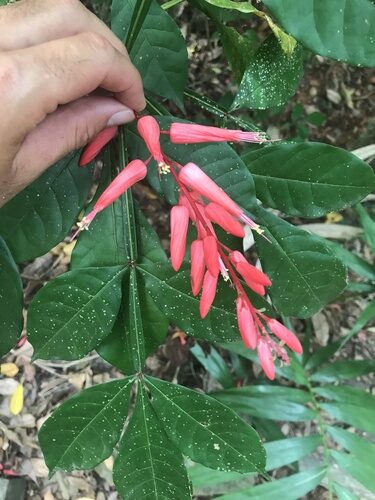
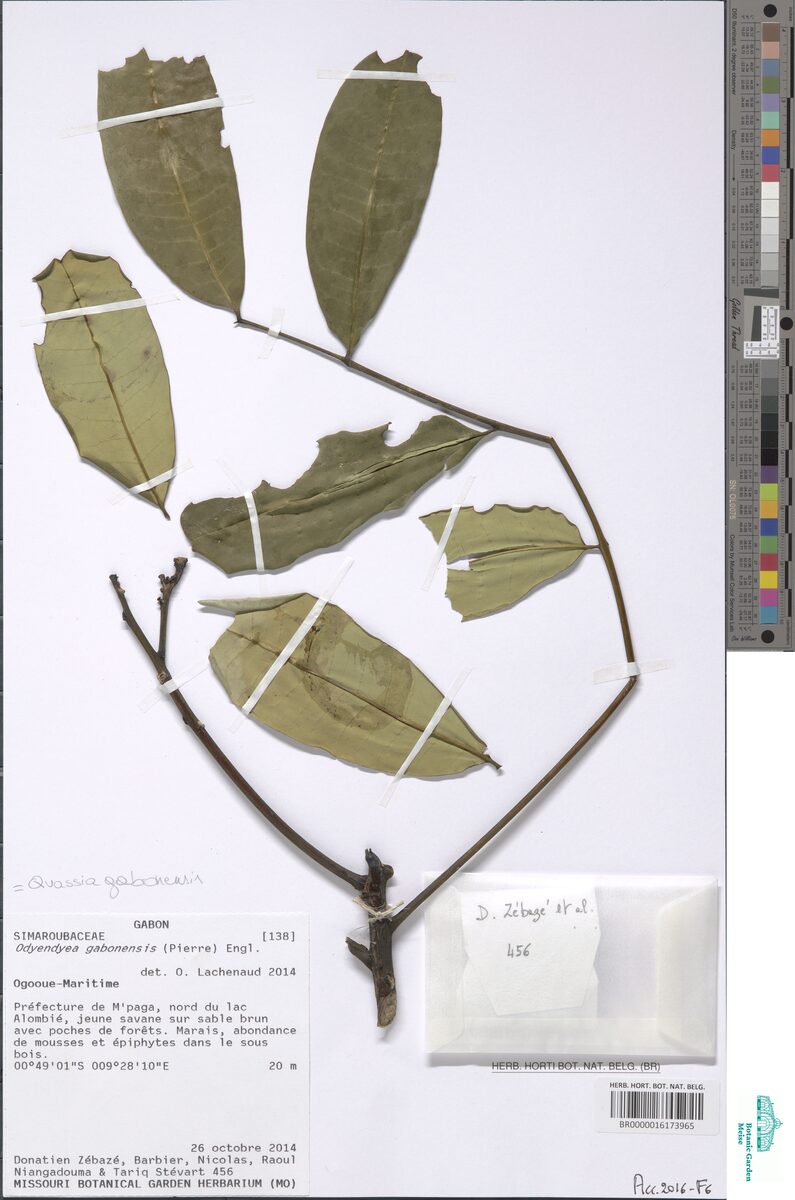
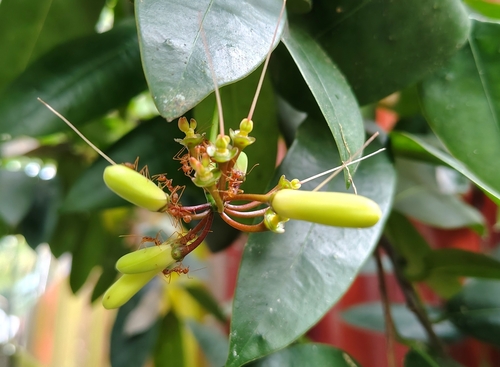
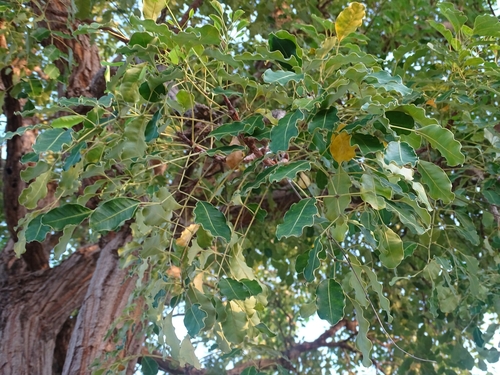
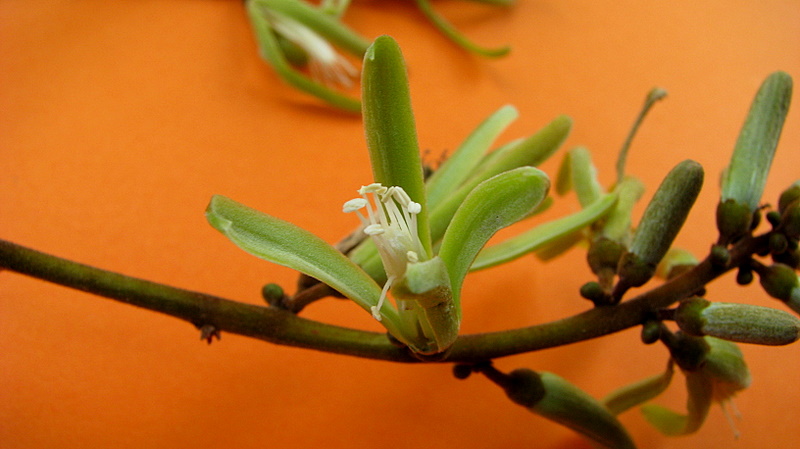
A shrub or small tree. It grows 5 m tall. The stem is about 10 cm across. The twigs have some hairs. The leaves have 4-6 pairs of leaflets. The leaves are 1 m long. The flowers are red and in long panicles 40 cm long. They are of one sex. The fruit is large. It is 40 cm long by 10 cm wide.
Edible Uses
The fruit is eaten.
Medicinal Uses
Used in traditional medicine.
Known Hazards
The plant is becoming at risk due to harvesting pressure.
Distribution
A tropical plant. It grows in clearings in the lowland rainforest. It suits humid locations. It is often near rivers. It grows from 1 m to 1,200 m above sea level.
Where It Grows
Africa, Cameroon, Central Africa, Central African Republic, CAR, Congo DR, Côte d'Ivoire, Equatorial Guinea, Gabon, Ghana, Ivory Coast, Liberia, West Africa,
Notes
It is used in medicine and is becoming a plant at risk.
Synonyms
References (2)
- Danforth, R.M., & Boren, P.D., 1997, Congo Native fruits. Twenty-five of the best. Privately published. p 70 (As Brucea macrophylla)
- Flora of West Tropical Africa, Vol 1 Part 2.