Quassia simarouba
L. f.
Bitterwood, Paradise-tree
wikimedia· cc-by
Wikimedia Commons - Geoff Gallice from Gainesville, FL, USA
wikimedia· cc-by-sa
Wikimedia Commons - Smartse
Description
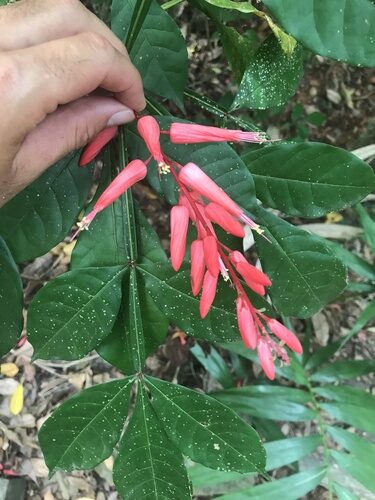
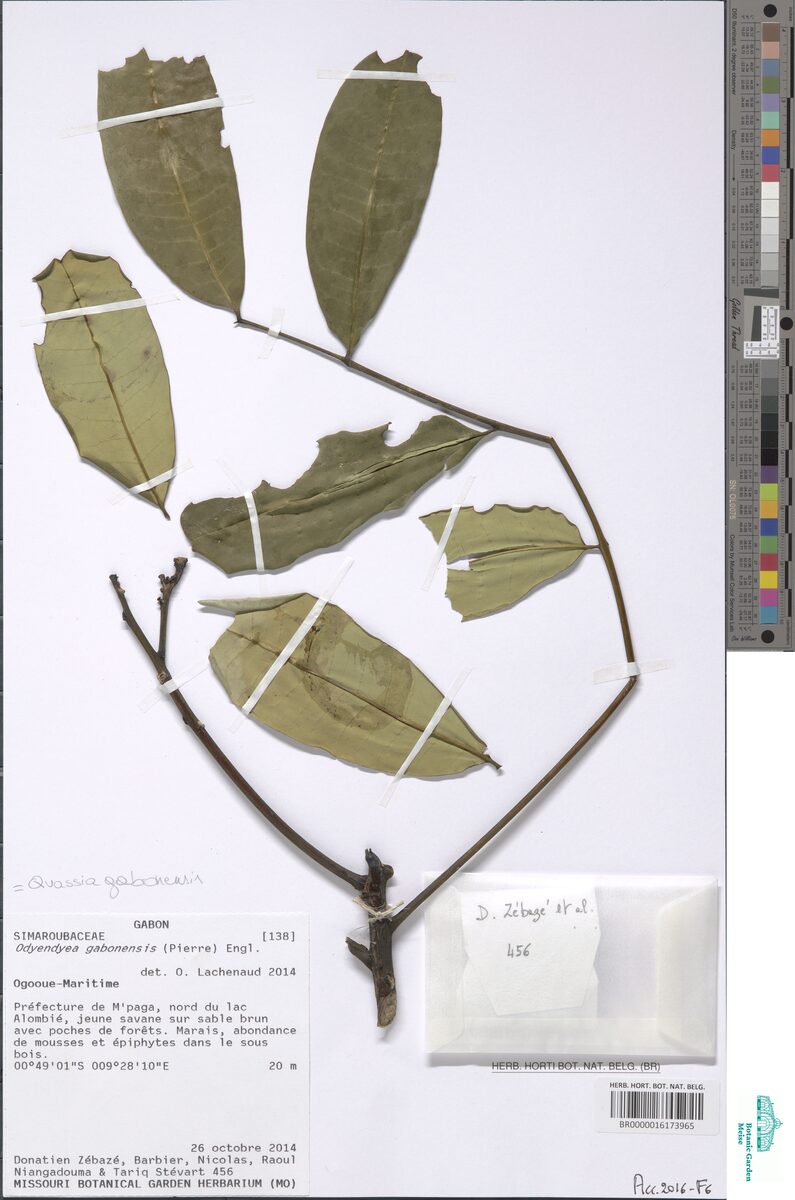
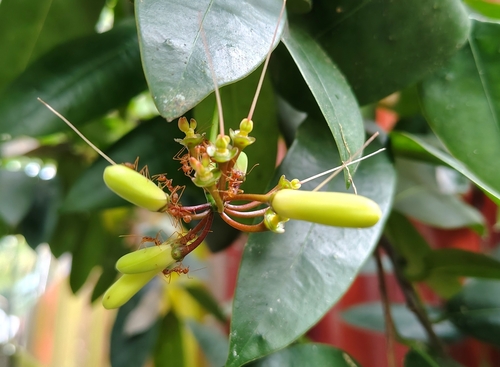
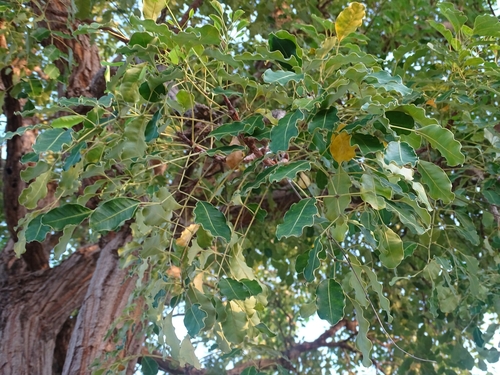
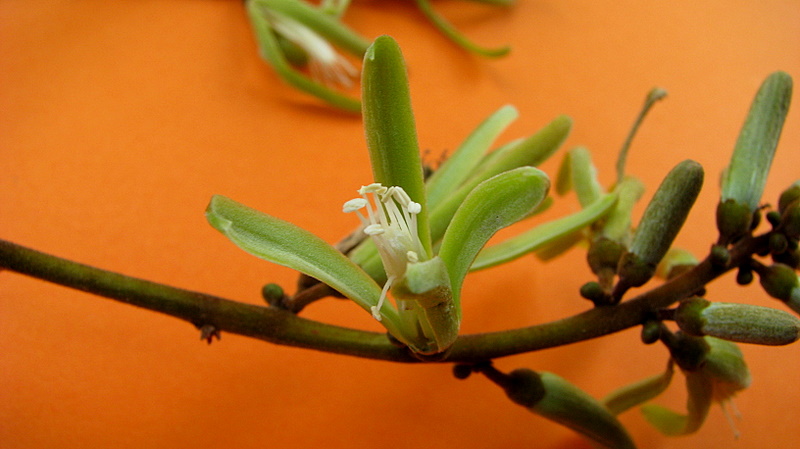
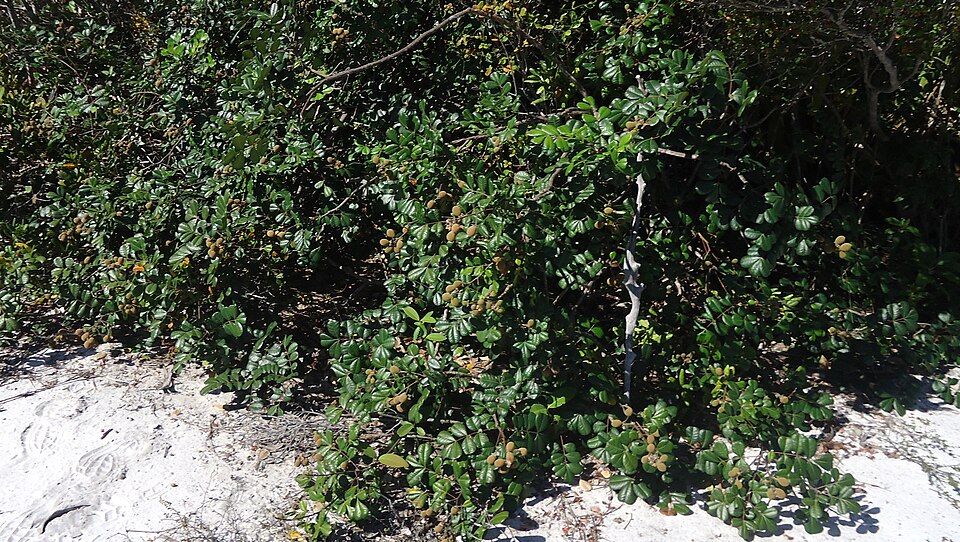
A tree. It grows 16 m tall. The young leaves are deep rosy red. The flowers are white and small. They hang in huge yellow stemmed panicles. The fruit has a white pulp. The fruit are bitter and edible.
Edible Uses
The fruit are eaten raw. The seeds are pressed for oil, which is used to make margarine and cooking oil.
Traditional Uses
The fruit are eaten raw. The oil is used to make margarine and coking oil.
This uses section is brief — help expand it
Medicinal Uses
According to the Oxford University Virtual Field Herbarium, the leaves and bark of S. amara have been used as an herbal medicine to treat dysentery, diarrhea, malaria and other illnesses in areas where it grows. WebMD say that there is "no good scientific evidence to support its use". In 1713, it was exported to France where it was used to treat dysentery, being an effective treatment during epidemics between 1718 and 1725. The main biologically active compounds found in S. amara are the quassinoids, a group of triterpenes including ailanthinone, glaucarubinone, and holacanthone. These have been reported to kill protozoa, amoeba, Plasmodium (the cause of malaria). The antimalarial properties were first investigated by scientists in 1947; they found that in chickens, 1 mg of bark extract per 1 kg of body weight had strong antimalarial activity.
Distribution
A tropical plant. It is native to C. America and the West Indies. It grows in tropical America. It can tolerate drought. It can tolerate salt.
Where It Grows
Bahamas, Belize, Central America, Costa Rica, Cuba, El Salvador, Guiana, Guatemala, Guianas, Guyana, Haiti, Hispaniola, Honduras, Jamaica, Mexico, Nicaragua, North America, Panama, Puerto Rico, Suriname USA, West Indies,
Other Information
Trees are grown commercially in El Salvador.
Notes
There are about 35-42 Quassia species. Some authorities have only one Quassia. They are in Asia and Africa. There is one in tropical America.
Synonyms
Also Known As
Aceituna, Olivo, Simarupa
References (7)
- Altschul, S.V.R., 1973, Drugs and Foods from Little-known Plants. Notes in Harvard University Herbaria. Harvard Univ. Press. Massachusetts. no. 1952
- Barwick, M., 2004, Tropical and Subtropical Trees. A Worldwide Encyclopedic Guide. Thames and Hudson p 354
- Heywood, V.H., Brummitt, R.K., Culham, A., and Seberg, O., 2007, Flowering Plant Families of the World. Royal Botanical Gardens, Kew. p 304 (Genus)
- Kiple, K.F. & Ornelas, K.C., (eds), 2000, The Cambridge World History of Food. CUP p 1713
- Schatz, G.E., 2001, Generic Tree Flora of Madagascar. Royal Botanical Gardens, Kew and Missouri Botanical Garden. p 388 (Genus)
Show all 7 references Hide references
- Suppl. pl. 234. 1782 ("1781")
- van Roosmalen, M.G.M., 1985, Fruits of the Guianan Flora. Utrecht Univ. & Wageningen Univ. p 414