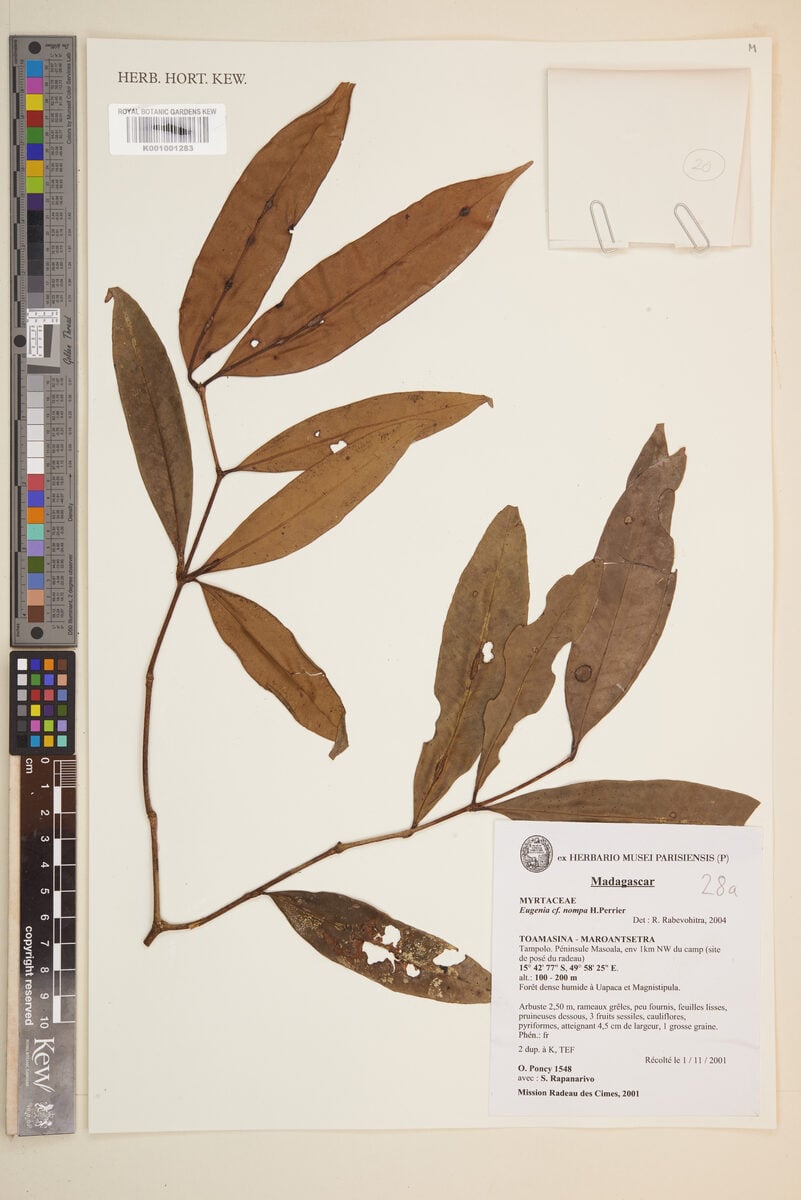
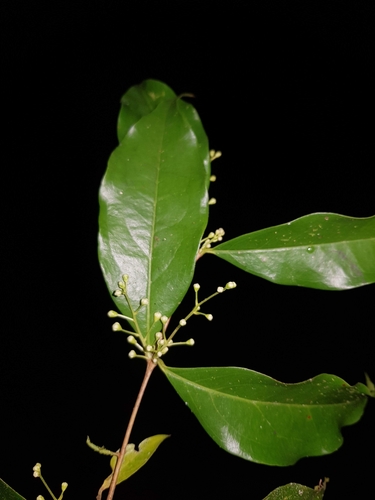
Myrcia selloi
(Spreng.) N. Silveira
Cambui
iNaturalist· cc0
no rights reserved, uploaded by ANDRÉS GONZÁLEZ
iNaturalist· cc0
no rights reserved, uploaded by ANDRÉS GONZÁLEZ
iNaturalist· cc-by-nc
(c) Mariano Ordano, some rights reserved (CC BY-NC), uploaded by Mariano Ordano
Description
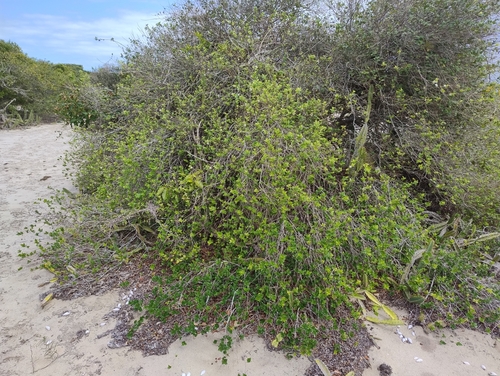
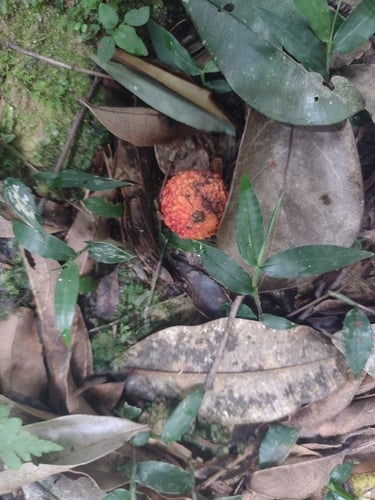
A tree. It grows 4-6 m high. The trunk is 20-30 cm across. The bark peels off and the trunk has shiny marks. The leaves are simple and shiny on both sides. They are 12-24 mm long and 5-10 mm wide. The flowers are in groups in the axils of leaves and at the ends of branches. They are small and white. The fruit is round and shiny. It is black and has a single soft seed.
Edible Uses
The ripe fruits are harvested and dried in the shade for consumption.
Distribution
It is a subtropical plant. In Brazil it grows in semi-deciduous forest at altitude. In Argentina it grows below 500 m above sea level.
Where It Grows
Argentina, Brazil, Paraguay, South America*, Uruguay,
Cultivation
The ripe fruit are harvested and dried in the shade. The seed only remian viable for a very short time. The dried fruit with seed inside can be planted while fresh. They germinate in 30-50 days. Seedlings should be kept in light shade. Seedlings can be transplanted into the field after 8 months.
Propagation
Seed - best sown as soon as it is ripe in a partially shaded position in a nursery seedbed or in individual containers. A low germination rate can be expected, with the seed sprouting within 30 - 50 days. Seedlings develop slowly and it will be another 8 months or more before they are ready to plant out.
Other Uses
The wood is compact, moderately heavy, very elastic, resistant to mechanical shock and durable. It is used for poles, tool handles and rafters. The wood is used for fuel.
Production
Plants grow slowly.
Synonyms
Also Known As
Cambuim, Camboi, Cambui-preto, Camboizinho, Murta-do-campo
References (2)
- Lorenzi, H., 2002, Brazilian Trees. A Guide to the Identification and Cultivation of Brazilian Native Trees. Vol. 01 Nova Odessa, SP, Instituto Plantarum p 280
- Scarpa, G. F., 2009, Wild food plants used by the indigenous peoples of South American Gran Chaco: A general synopsis and intercultural comparison. Journal of Applied Botany and Food Quality 83:90-101