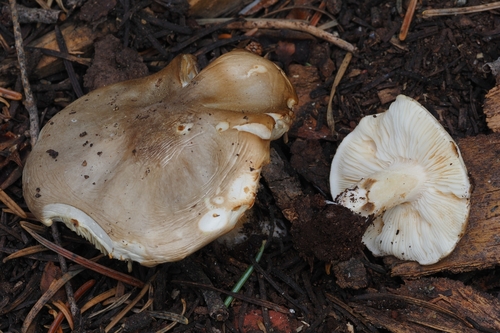
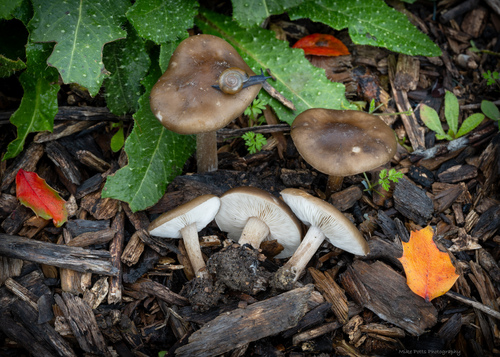
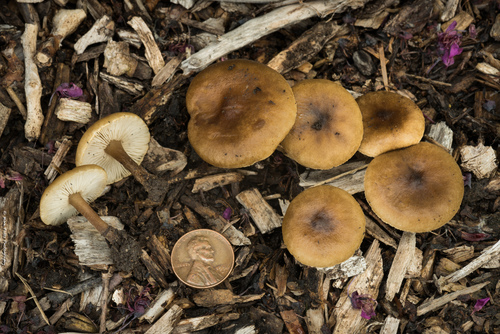
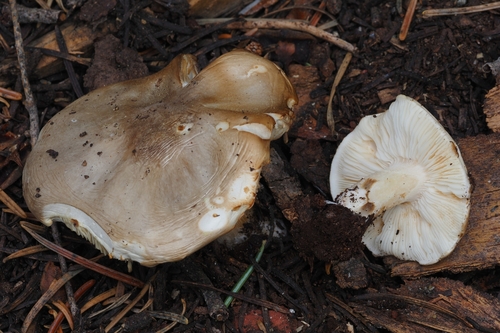
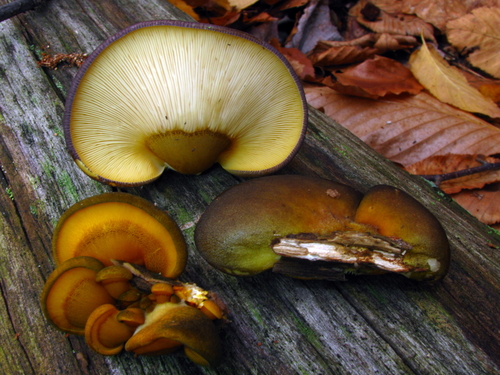
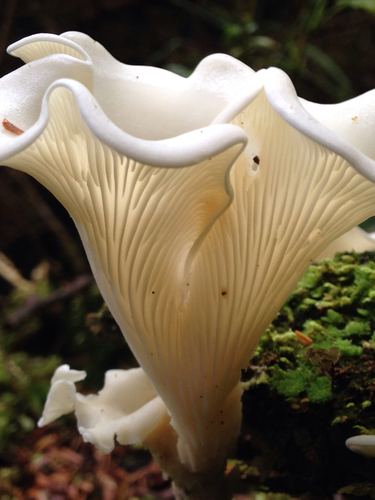
Hypsizygus ulmarius
(Bull.) Redhead
Elm mushroom
iNaturalist· cc-by-nc
(c) Jeff Steele, some rights reserved (CC BY-NC), uploaded by Jeff Steele
iNaturalist· cc-by-nc
(c) Ryan Shaw, some rights reserved (CC BY-NC), uploaded by Ryan Shaw
iNaturalist· cc-by-nc
(c) Иван Матершев, some rights reserved (CC BY-NC), uploaded by Иван Матершев
Summary
Source: WikipediaHypsizygus ulmarius, also known as the elm oyster mushroom, and less commonly as the elm leech. It has often been confused with oyster mushrooms in the Pleurotus genus but can be differentiated easily as the gills are either not decurrent or not deeply decurrent. While not quite as common as true oyster mushrooms, they have a wide range globally in temperate forests. It is an edible species. The mushrooms and vegetative hyphae of this species have been studied in recent years for their potential benefits to human health, and mycoremediation.
Description
A large white mushroom. It has a thick, almost central stalk.
This description is brief — help expand it
Edible Uses
Although many foragers feel that H. ulmarius mushrooms are tougher and do not taste as good as oyster mushrooms in the Pleurotus genus, they are still sought after in the wild. There are even commercially available kits to grow these mushrooms at home. Like most edible mushrooms, they are good sources of protein, fiber, and vitamin B.
Traditional Uses
The young fruiting bodies are used. It can be eaten providing it is completely unripe.
This uses section is brief — help expand it
Distribution
It grows on elm trees and elm logs.
Where It Grows
Europe, Italy, Mediterranean, North America, Sicily, USA,
Synonyms
Also Known As
Shiro-tamagi-take