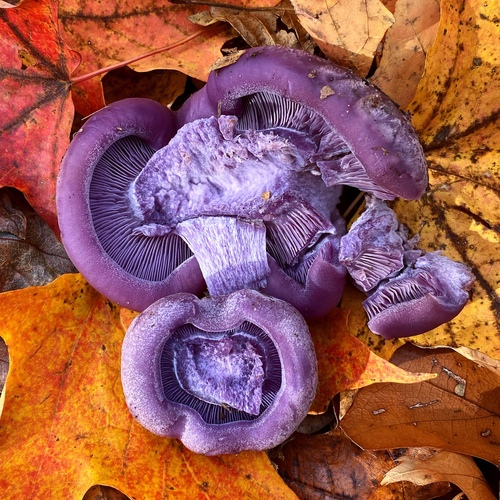
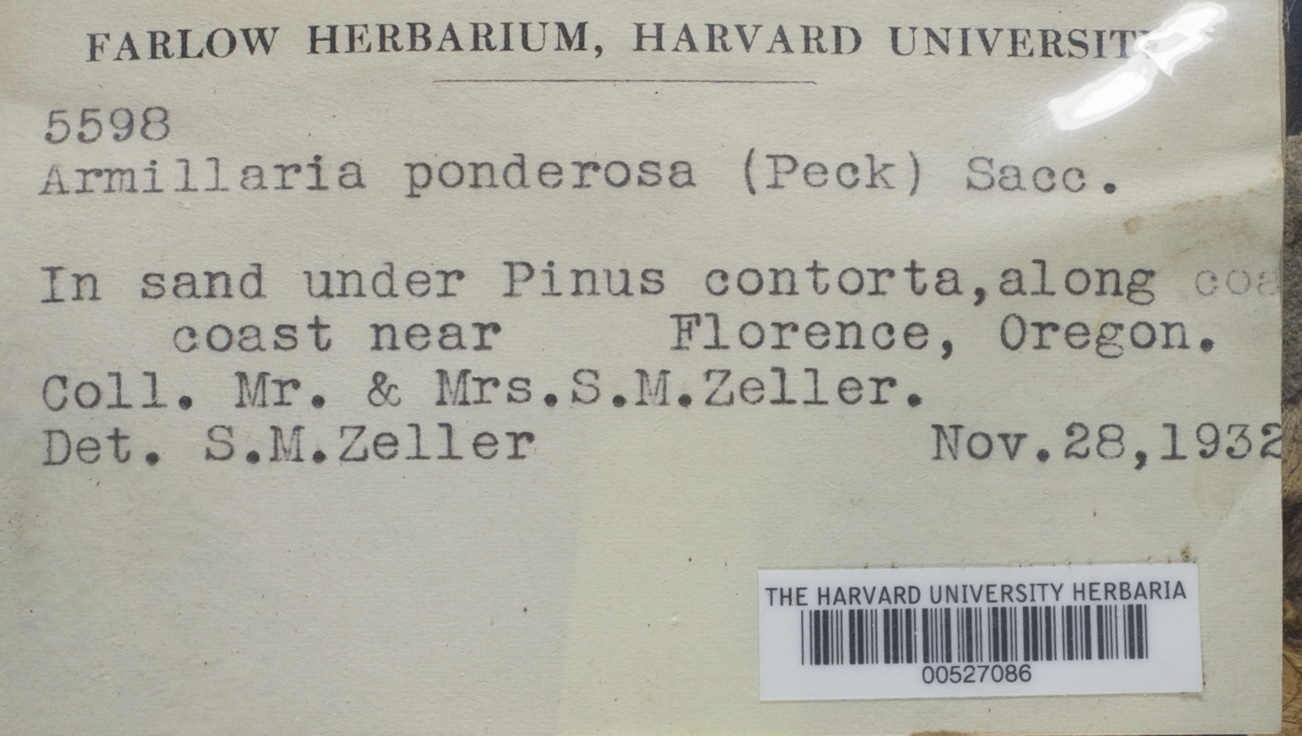
Armillaria ostoyae
(Romagnesi) Herink
Honey mushroom
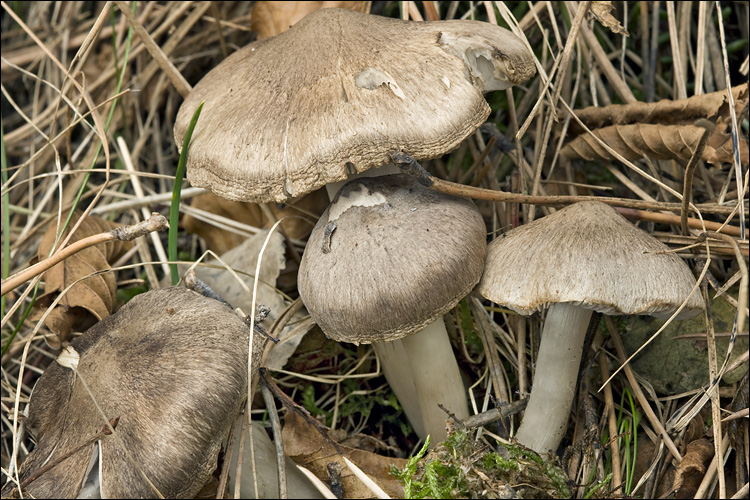
iNaturalist· cc-by-nc
(c) Marco Floriani, some rights reserved (CC BY-NC), uploaded by Marco Floriani
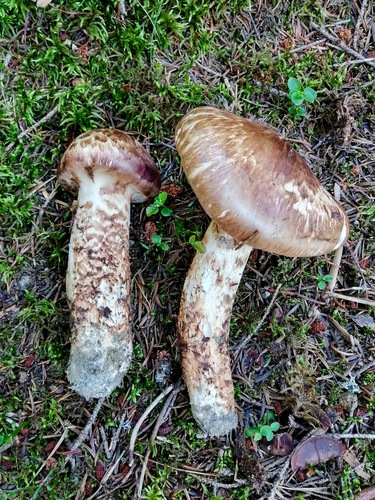
iNaturalist· cc-by-sa
(c) pinonbistro, some rights reserved (CC BY-SA), uploaded by pinonbistro
iNaturalist· cc-by-sa
(c) pinonbistro, some rights reserved (CC BY-SA), uploaded by pinonbistro
Summary
Source: WikipediaArmillaria ostoyae (synonym A. solidipes) is a pathogenic species of fungus in the family Physalacriaceae. It has decurrent gills and the stipe has a ring. The mycelium invades the sapwood of trees, and is able to disseminate over great distances under the bark or between trees in the form of black rhizomorphs ("shoestrings"). In most areas of North America, it can be distinguished from other Armillaria species by its cream-brown colors, prominent cap scales, and a well-developed ring. The species grows and spreads primarily underground, such that the bulk of the organism is not visible from the surface. In the autumn, the subterranean parts of the organism bloom "honey mushrooms" as surface fruits. Low competition for land and nutrients often allow this fungus to grow to huge proportions, and it possibly covers more total geographical area than any other single living organism. It is common on both hardwood and conifer wood in forests west of the Cascade Range in Oregon. A spatial genetic analysis estimated that an individual specimen growing over 91 acres (37 ha) in northern Michigan weighs 440 tons (4 x 10⁵ kg). Another specimen in northeastern Oregon's Malheur National Forest is possibly the largest living organism on Earth by mass, area, and volume; it covers 3.5 square miles (2,200 acres; 9.1 km2) and weighs as much as 35,000 tons (about 31,500 tonnes).
Description
A mushroom. The cap is golden yellow.
This description is brief — help expand it
Edible Uses
The species is considered a choice edible.
Distribution
It is a temperate plant.
Where It Grows
Africa, Canada, East Africa, Mexico, North America, Poland, Romania, Rwanda,
Dangerous Lookalikes
This plant can be confused with the following toxic species. Always verify identification carefully before consuming any wild plant.
Deadly Galerina (Funeral Bell)
Galerina marginata
Alan Rockefeller
Honey mushroom
Armillaria ostoyae
(c) Marco Floriani, some rights reserved (CC BY-NC), uploaded by Marco Floriani
Deadly Galerina (Funeral Bell): Rusty-brown spore print, smooth brown cap, thin fragile ring, grows in smaller clusters.
Honey mushroom: White spore print, brown-black scales on cap, prominent white ring on stem, grows in large clusters.
Synonyms
References (5)
- Boa, E. R., 2004, Wild edible fungi and their importance to people. FAO Non Wood Forest Products Booklet 17 (As Armillaria ostoyae)
- efta-online.org, Edible Fungi of Tropical Africa, Jardin botanique Meise (As Armillaria ostoyae)
- Lasper-Pakosz, R., et al, 2016, Wild and native plants and mushrooms sold in the open-air markets of south- eastern Poland. Journal of Ethnobiology and Ethnomedicine 12:45
- Luczaj, L., et al, 2015, Wild food plants and fungi used by Ukrainians in the western part of the Maramureş region in Romania. Acta Soc Bot Pol 84(3):339–346 (As Armillaria ostoyae)
- Ostry, M. E., et al, 2010, Field Guide to Common Macrofungi in Eastern Forests and Their Ecosystem Functions. USDA Forest Service General Technical Report NRS-79 p 53 (As Armillaria solidipes)