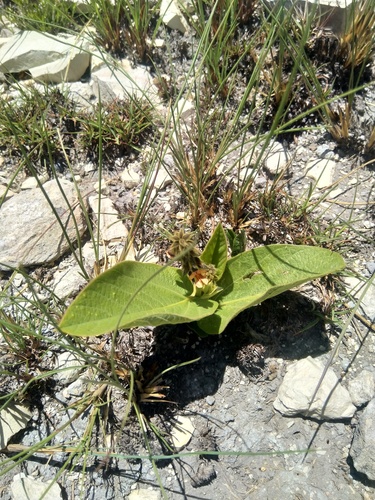
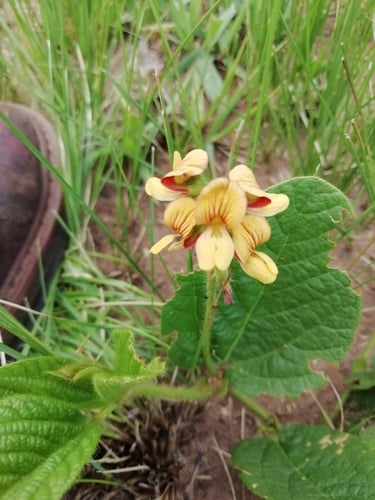
Medicago laciniata
(L.) Miller
Cut-leaved medick
iNaturalist· cc-by
(c) Mehdi Chetibi, some rights reserved (CC BY)
iNaturalist· cc-by
(c) Mehdi Chetibi, some rights reserved (CC BY)
iNaturalist· cc-by
(c) Mehdi Chetibi, some rights reserved (CC BY)
Summary
Source: WikipediaMedicago laciniata is a plant species of the genus Medicago. It is found primarily in the southern Mediterranean basin. It forms a symbiotic relationship with the bacterium Sinorhizobium meliloti, which is capable of nitrogen fixation. Common names include cutleaf medick and tattered medick. Grows in Sinai, Egypt.
Description
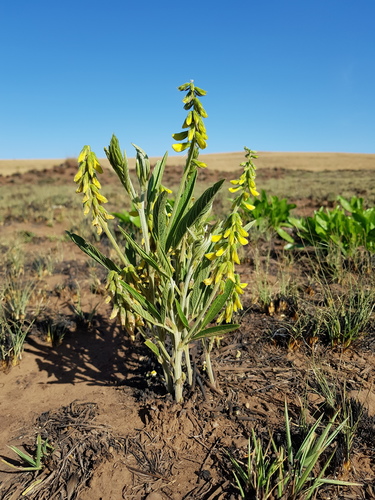
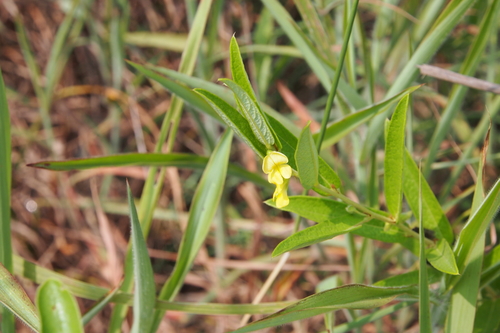
A small herb. It is an annual plant. The stems branch at the base. They lie along the ground. The leaves are compound with 3 toothed leaflets. These are hairy underneath. The leaflets are 6-12 mm long by 2-5 mm wide. The flowers are small and yellow. They are pea like. The fruit is a pod that is like a spiny ball. It has 5-7 coils. There are 8-10 seeds.
Edible Uses
The leaves are mixed with sugar and boiled water to make a tea-like drink.
Traditional Uses
The plant was mixed with sugar and boiled water to make a tea like drink.
This uses section is brief — help expand it
Medicinal Uses
Aqueous, ethanol and butanol crude extracts of the aerial parts of the plant were tested for antimicrobial activity. The butanol extract was the most effective, followed by the ethanol extract. The aqueous extract had low activity. The butanol extract at 2000 μg/disc had a superior antifungal activity compared with the standard treatments of chloramphenicol, tetracycline and nalidixic acid.
Distribution
It is a Mediterranean climate plant. It grows in sandy or gravelly soils. It grows in areas with an annual rainfall between 250-900 mm. It grows between sea level to 2,100 m above sea level. It can grow in alkaline and salty soils. It can grow in arid places.
Where It Grows
Afghanistan, Africa, Algeria, Asia, Australia, Bahrain, Belgium, Botswana, Britain, Canary Islands, Cyprus, East Africa, Egypt, Ethiopia, Europe, France, Germany, Hungary, India, Iran, Iraq, Israel, Italy, Jordan, Kenya, Kuwait, Lebanon, Libya, Mediterranean, Middle East, Morocco, North Africa, Oman, Pakistan, Palestine, Qatar, Saudi Arabia, Scandinavia, Sinai, Socotra, Somalia, South Africa, Sweden, Syria, Tanzania, Tunisia, United Arab Emirates, UAE, Yemen,
Cultivation
Medicago laciniata is a plant of arid and semi-arid areas from the warm temperate to the tropical zones, where it is found at elevations up to 400 metres. It grows best in areas where annual daytime temperatures are within the range 15 - 20°c, but can tolerate 4 - 25°c. It prefers a mean annual rainfall in the range 350 - 500mm, but tolerates 250 - 600mm. Requires a sunny position in a light, well-drained soil. Succeeds in soils of low to moderate fertility. Prefers a pH in the range 6.5 - 7.5, tolerating 6 - 8. Established plants are drought tolerant. This species has a symbiotic relationship with certain soil bacteria, these bacteria form nodules on the roots and fix atmospheric nitrogen. Some of this nitrogen is utilized by the growing plant but some can also be used by other plants growing nearby.
Propagation
Seed - sow in situ.
Synonyms
Also Known As
Handagug-hadhari, Hasak, Nafal
References (5)
- Bailey, C. and Danin, A., 1981, Bedouin Plant Utilization in Sinai and the Negev. Economic Botany 35(2): 145-162
- Facciola, S., 1998, Cornucopia 2: a Source Book of Edible Plants. Kampong Publications, p 108
- Gard. dict. ed. 8: Medicago no. 5. 1768
- Phillips, D.C., 1988, Wild Flowers of Bahrain. A Field Guide to Herbs, Shrubs, and Trees. Privately published. p 37
- Royal Botanic Gardens, Kew (1999). Survey of Economic Plants for Arid and Semi-Arid Lands (SEPASAL) database. Published on the Internet; http://www.rbgkew.org.uk/ceb/sepasal/internet [Accessed 29th April 2011]