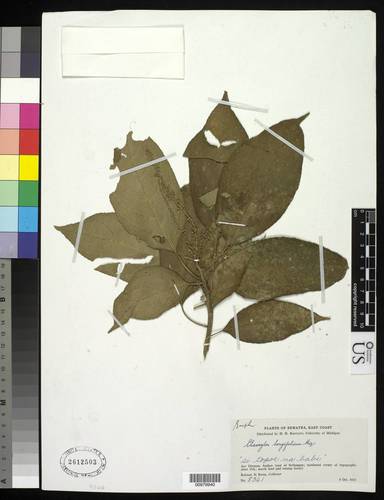
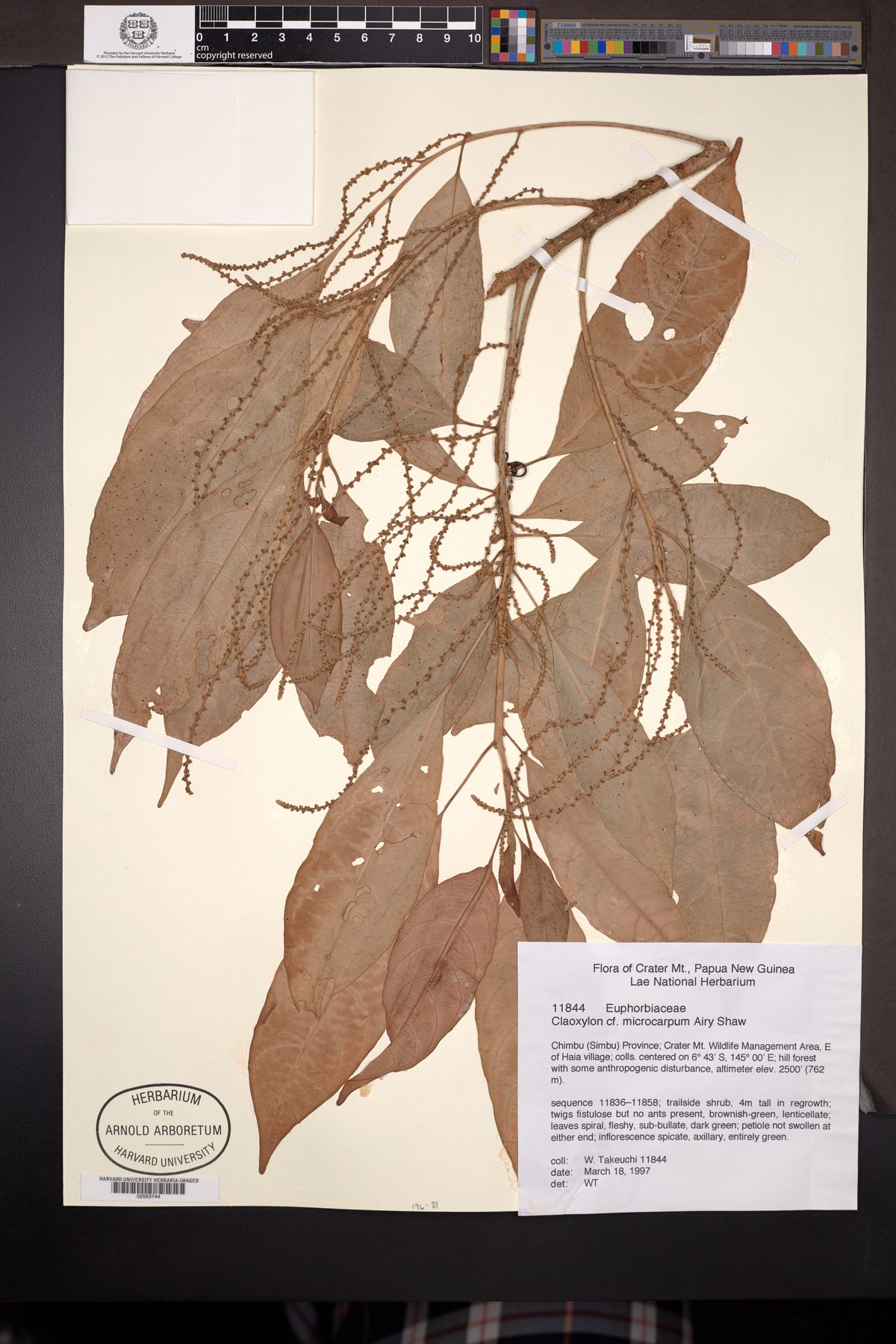
Chrozophora plicata
(Vahl) A. Juss. ex Spreng.
Giradol
iNaturalist· cc-by-nc
(c) Ron Frumkin, some rights reserved (CC BY-NC), uploaded by Ron Frumkin
iNaturalist· cc-by-nc
(c) Ron Frumkin, some rights reserved (CC BY-NC)
Description
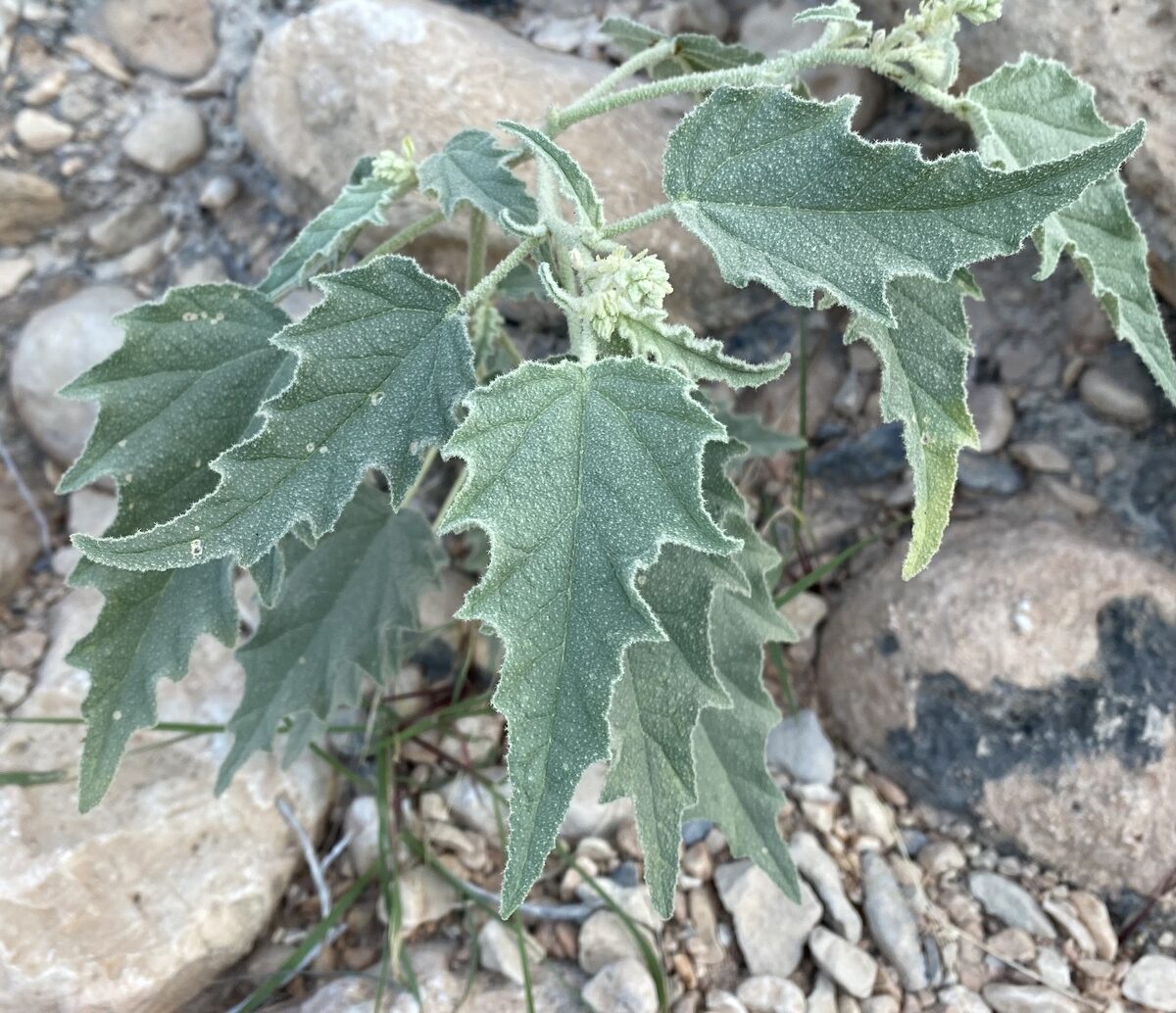
An annual herb. It can lie along the ground or curve upwards. It grows 50 cm high. It has white or grey hairs. The leaves are triangle shaped and 1-4 cm long by 1-3 cm wide. The flowers are opposite the leaves. Male and female flowers are separate. Male flowers are orange-yellow and female flowers are red. The fruit have 3 lobes and are 5 mm long by 9 mm wide. They are reddish-purple when ripe.
Edible Uses
The petals, fruit, and sap are used to produce red and blue dyes for colouring liqueurs, wine, pastries, and cheese.
Traditional Uses
The petals, fruit and sap are used to produce red and blue dyes for colouring liqueurs, wine, pastries and cheese.
This uses section is brief — help expand it
Medicinal Uses
The pounded stems or whole plants are applied to wounds to improve healing. The plant is also used in the treatment of jaundice and to purify the blood. An infusion of the seeds and leaves is taken as a laxative.
Known Hazards
Fresh shoots are toxic to many grazing mammals, though camels eat it.
Distribution
It is a subtropical or Mediterranean plant. It grows in drier areas but in water-logged areas on riverbanks. It grows up to 200 m altitude. In Zimbabwe it grows to 600 m above sea level.
Where It Grows
Africa, Arabia, Asia, Burkina Faso, East Africa, Egypt, Ethiopia, Mediterranean, Middle East, Mozambique, Myanmar, North Africa, Pakistan, Palestine, SE Asia, Senegal, South Africa, Southern Africa, Syria, West Africa, Zambia, Zimbabwe,
Other Uses
The fruits yield a purplish blue dye, which is used in East Africa to dye mats. The seed oil resembles cotton-seed oil in its proportions of linoleic, oleic and saturated acids. The total linolenic and linoleic acid content varied from 60 - 75%.
Synonyms
Also Known As
Gyo-sagauk
References (5)
- Facciola, S., 1998, Cornucopia 2: a Source Book of Edible Plants. Kampong Publications, p 100
- Flora of Pakistan. www.eFloras.org
- Grivetti, L. E., 1980, Agricultural development: present and potential role of edible wild plants. Part 2: Sub-Saharan Africa, Report to the Department of State Agency for International Development. p 70
- Syst. veg. 3:850. 1826
- Uphof,