Cordia alliodora
(Ruiz & Pav.) Oken
Ecuador laurel, Spanish elm
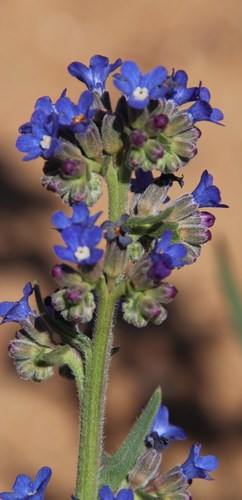
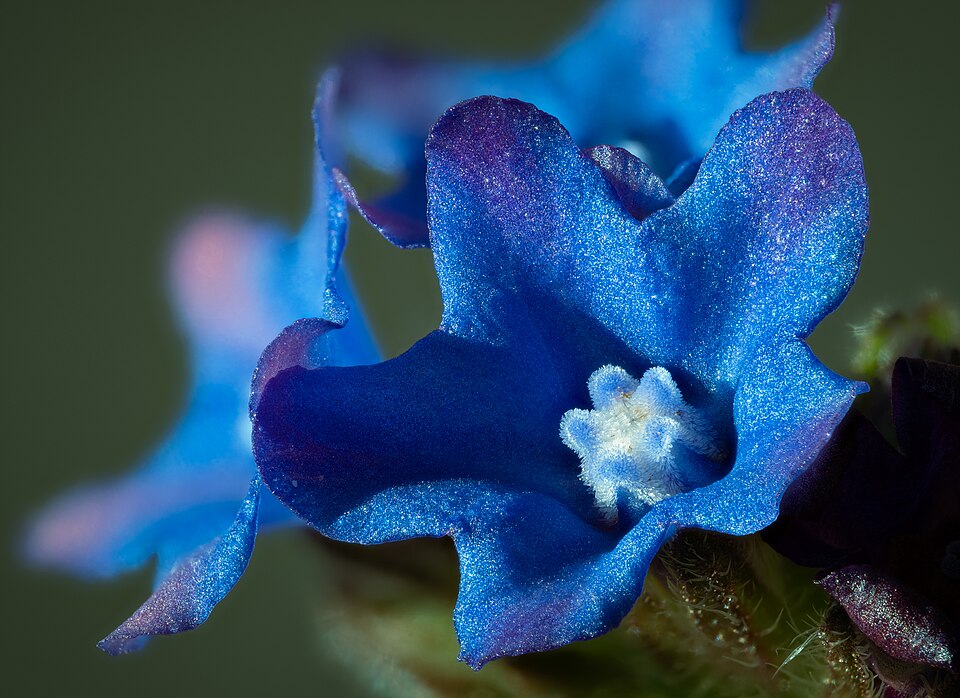
iNaturalist· cc-by-nc
(c) Pablo Carrillo-Reyes, some rights reserved (CC BY-NC), uploaded by Pablo Carrillo-Reyes
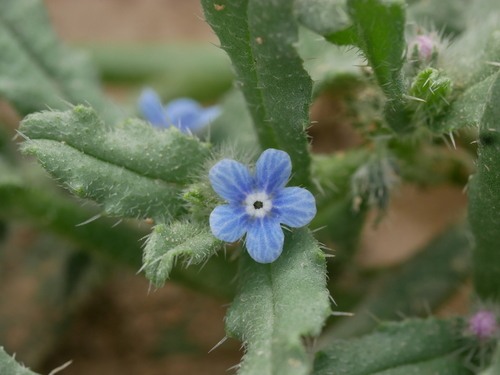
iNaturalist· cc-by-nc
(c) Pablo Carrillo-Reyes, some rights reserved (CC BY-NC), uploaded by Pablo Carrillo-Reyes
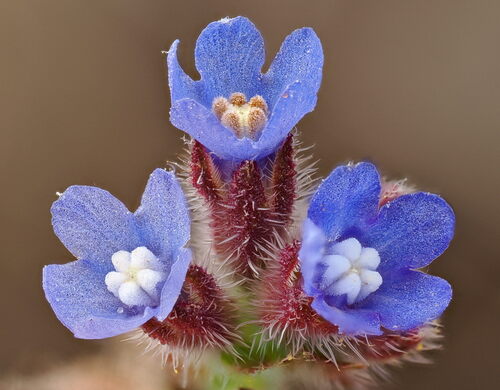
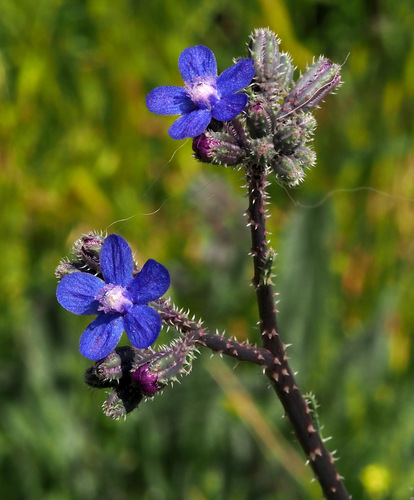
iNaturalist· cc-by-nc-sa
(c) Karen, some rights reserved (CC BY-NC-SA)
Summary
Source: WikipediaCordia alliodora is a species of flowering tree in the family Cordiaceae, that is native to the American tropics. It is commonly known as Spanish elm, Ecuador laurel, cypre or salmwood. It can reach 35 m in height.
Description
A tree. It grows 12 m high. The trunk is smooth and light coloured. There or four branches develop from a swelling on the stem. The leaf stalks are 1-3 cm long. The leaf blades are oblong and 10-20 cm long by 3-8 cm wide. The flowers are in a loosely branched arrangement. This is 10-30 cm across. The fruit is about 5 mm long.
Edible Uses
The ellipsoid fruit, measuring 5–7mm long and about 2mm wide, is edible, though not very tasty. The bark is used as a condiment.
Traditional Uses
The fruit are eaten. The bark is used as a spice. It has a garlic scent.
This uses section is brief — help expand it
Medicinal Uses
The leaves are stimulant, stomachic and tonic. A decoction is used to treat catarrh and lung conditions. An ointment made from pulverised seeds is used in the treatment of skin diseases.
Distribution
It is a tropical plant. In Fiji it is cultivated at low altitudes. In XTBG Yunnan.
Where It Grows
Africa, Amazonia, America, Antigua and Barbuda, Argentina, Asia, Barbados, Belize, Bolivia, Brazil, Caribbean, Central Africa, Central America, China, Columbia, Congo, Costa Rica, Côte d'Ivoire, Cuba, Dominica, Dominican Republic, East Africa, Ecuador, El Salvador, Fiji, French Guiana, Galapagos, Ghana, Grenada, Guadeloupe, Guatemala, Guianas, Guyana, Haiti, Hawaii, Himalayas, Honduras, Indonesia, Ivory Coast, Liberia, Malaysia, Martinique, Mauritius, Mexico*, Nepal, Netherlands Antilles, Nicaragua, Nigeria, North America, Pacific, Panama, Paraguay, Peru, Puerto Rico, SE Asia, Seychelles, Solomon Islands, South America*, Sri Lanka, St Kitts and Nevis, St Lucia, Suriname, Tanzania, Trinidad and Tobago, Uganda, USA, Vanuatu, Venezuela, Virgin Islands, West Africa, West Indies, Zimbabwe,
Cultivation
Plants can be grown from seed. Seed can be stored in a refrigerator for 3 years.
Propagation
The hard seed should be scarified by lightly abrading the seedcoat before sowing. Germination typically occurs within 5–20 days, with up to 80% of seed germinating. Seed can be sown in trays, with seedlings transplanted at about 3 weeks old to nursery beds and planted into permanent positions around 6 months later. Seed has short viability under natural conditions, but if dried to below 10% moisture it can be stored at 2°c for up to 10 years. The plant can also be propagated from cuttings.
Other Uses
Cypre is a pioneer species that is highly wind resistant and readily colonises bare soils. Its tall, straight stem, self-pruning habit, compact crown, ease of natural regeneration on cleared sites and positive effect on soil conditions make it suitable for use in agroforestry systems — commonly as a shade tree in coffee and cocoa plantations and in pastures, often alongside Erythrina poeppigiana. The heartwood is dark brown, not clearly demarcated from the slightly lighter sapwood. The texture is medium, the grain slightly interlocked, lustre medium, and odour and taste indistinct. The wood is moderately durable, resistant to fungal attack and termites, easy to season and work, and produces an attractive pale golden-brown to brown finish with darker streaks. It has good dimensional stability when dry. It is used in construction for doors, window frames, panelling and flooring, and also for furniture, cabinet work, turnery, carving, scientific instruments, boats including bridge decking, oars, sleepers and veneer. Smaller branches are used for barrel hoops. The wood is also used as fuel and for making charcoal.
Synonyms
Also Known As
Aguadientillo, Ajo, Ajo ajo, Alatrique, Bajon, Baria, Capa, Cypre, Hormiguillo, Laurel negro, Mkamasi, Mkodia, Nogal cafetero, Salmwood
References (19)
- Allg. Naturgesch. 2(2):1098. 1841
- Condit, R., et al, 2011, Trees of Panama and Costa Rica. Princeton Field Guides. p 96
- ECOCROP
- Ekman Herbarium records Haiti
- Facciola, S., 1998, Cornucopia 2: a Source Book of Edible Plants. Kampong Publications, p 92
Show all 19 references Hide references
- Grandtner, M. M. & Chevrette, J., 2013, Dictionary of Trees, Volume 2: South America: Nomenclature, Taxonomy and Ecology. Academic Press p 158
- GRIN
- Kermath, B. M., et al, 2014, Food Plants in the Americas: A survey of the domesticated, cultivated and wild plants used for Human food in North, Central and South America and the Caribbean. On line draft. p 260
- Kew Plants of the World Online
- Martin, F. W., et al, 1987, Perennial Edible Fruits of the Tropics. USDA Handbook 642 p 93
- Miguel, E., et al, 1989, A checklist of the cultivated plants of Cuba. Kulturpflanze 37. 1989, 211-357
- Piedra-Malagón, E. M. et al, 2022, Edible native plants of the Gulf of Mexico Province. Biodiversity Data Journal 10: e80565 p 14
- PROSEA (Plant Resources of South East Asia) handbook, Volume 11, 2001, Auxiliary plants
- Roa, J. A. G. & Boada, D. S. G., 2018, Fundación para el Fortalecimiento de la Fruticultura y Plantas Alimenticias no Convencionales en Colombia.
- Segura, S. et al, 2018, The edible fruit species in Mexico. Genet Resour Crop Evol (2018) 65:1767–1793
- Walsh, M., 2009, The Use of Wild and Cultivated Plants as famine Foods on Pemba Island, Zanzibar. Études océan Indien. 42-43
- World Checklist of Useful Plant Species 2020. Royal Botanic Gardens, Kew
- www.worldagroforestrycentre.org/sea/products/afdbases/af/asp/SpeciesInfo.asp?SpID=589
- Zuchowski W., 2007, Tropical Plants of Costa Rica. A Zona Tropical Publication, Comstock Publishing. p 218