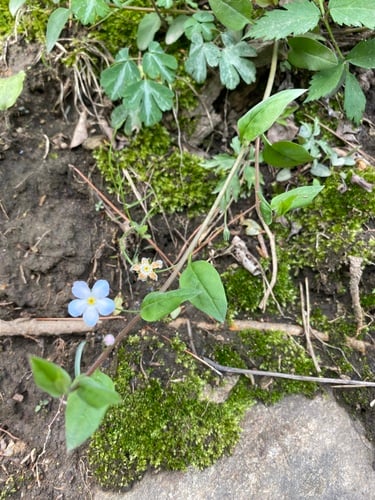
Arnebia hispidissima
(Sieber ex Lehm.) DC.
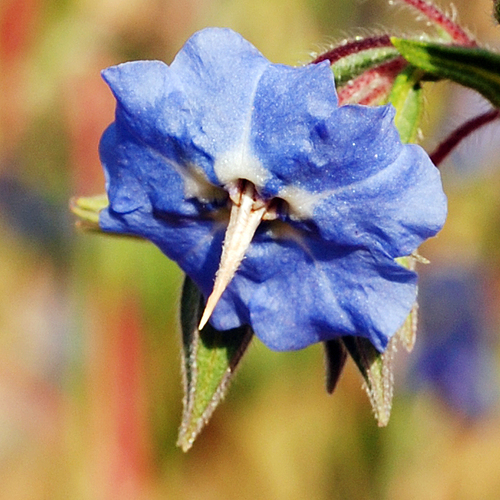
Arabian primrose
iNaturalist· cc-by-nc
(c) marinat17, some rights reserved (CC BY-NC), uploaded by marinat17
iNaturalist· cc-by-nc-sa
(c) Tamsin Carlisle, some rights reserved (CC BY-NC-SA)
iNaturalist· cc-by-nc
(c) John Pereira, some rights reserved (CC BY-NC), uploaded by John Pereira
Description
An annual herb. It grows 40 cm tall. It is branched from the base. The roots are red. The leaves are simple and alternate. They are narrowly sword shaped and 2-8 cm long by 1 cm wide. The flowers are like a spike.
Edible Uses
An edible dye is obtained from the roots and used to colour food.
Traditional Uses
An edible dye is obtained from the roots and used to colour food.
This uses section is brief — help expand it
Medicinal Uses
The roots have antibacterial properties and are used in medicine.
Distribution
It is a tropical and subtropical plant. It grows in dry sandy or stony soil. It can be in desert plains.
Where It Grows
Africa, Arabia, Cameroon, Chad, Egypt, India, Middle East, Nigeria, Pakistan, Sudan, United Arab Emirates, UAE,
Cultivation
A plant of the drier tropics and subtropics. Requires a well-drained soil and a position in full sun.
Other Uses
A purplish-red to purple dye is obtained from the roots. It is used to colour clothes and the body. In India the dye is included in the group of Boraginaceae species the roots of which are sold under the commercial name 'ratanjot', used to colour food and to dye silk. The red pigment in the roots is composed of a group of naphthoquinonic dyes including shikonin (and esters), its optical isomer alkannin (and derivatives) and their common racemic form shikalkin, as well as arnebifuranone which is another type of compound. They are poorly soluble in water but more easily so in alcohol and fats, which explains their uses as colourants in cosmetics.
Notes
The roots also have an antibacterial effect. They are used in medicine.
Also Known As
Kwhil
References (2)
- Fern, K., 2012, Tropical Species Database http://theferns.info/tropical/
- Karim, F. M. & Dakheel, A, J., 2006, Salt-tolerant plants of the United Arab Emirates. 2006. International Center for Biosaline Agriculture, Dubai, UAE.