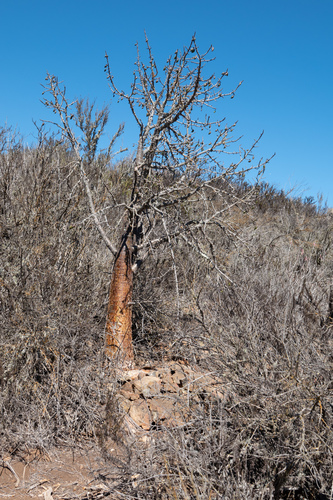
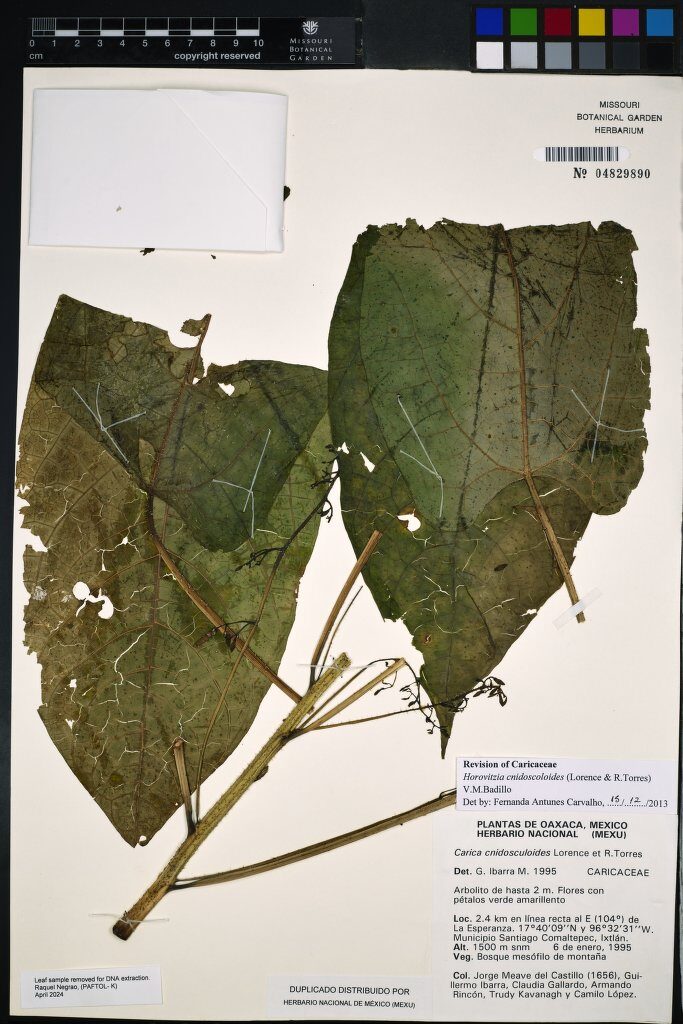
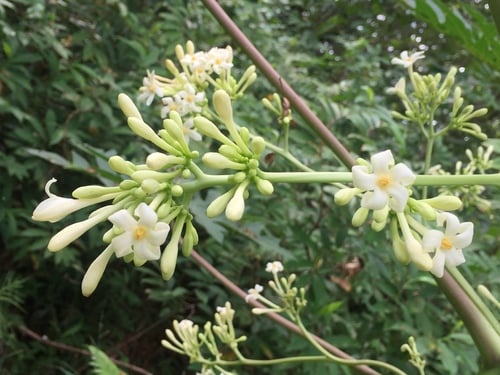
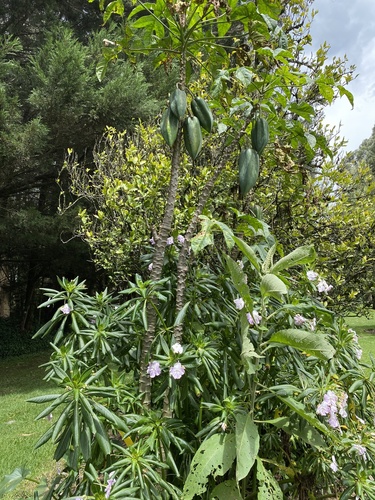
Vasconcellea candicans
(A. Gray) A. DC.
Mito
iNaturalist· cc0
no rights reserved, uploaded by Círculo de Investigación en Taxonomía, Florística y Ecología Vegetal
iNaturalist· cc0
no rights reserved
iNaturalist· cc-by-nc
(c) Luca Boscain, some rights reserved (CC BY-NC), uploaded by Luca Boscain
Summary
Source: WikipediaVasconcellea candicans is a small tree native to the western slopes of the Andes in southern Ecuador and Peru.
Description
A tropical tree in the Caricaceae family.
This description is brief — help expand it
Edible Uses
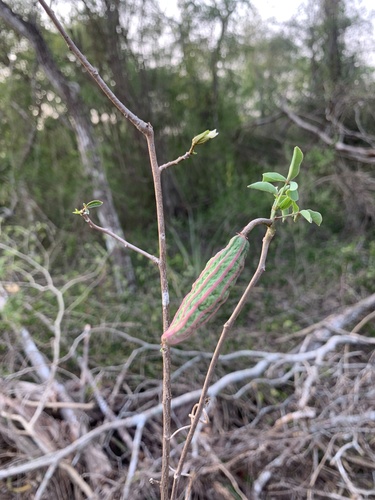
Fruit - raw, cooked or preserved. They can be roasted or cooked into a stew. The dry, fibrous fruits have a good odour and a pleasant taste. The fruit is cucumber-shaped; blunt at the smaller base and at tip; obscurely 5-angled; 10 - 13cm long x 3 - 4cm wide; the many seeds imbedded in the fleshy pulp.
Traditional Uses
The fruit are eaten raw and used in jellies and preserves. They are also used in vegetable and savoury dishes.
This uses section is brief — help expand it
Distribution
It is a tropical plant.
Where It Grows
Andes, Ecuador, Peru, South America,
Propagation
Seed - sow in individual containers or in a nursery seedbed in light shade. Germination can be slow and difficult, taking about 30 days. Seedlings can be planted out when 4 - 6 months old.
Notes
There are 22 (45) Carica species.
References (8)
- Badillo, V. M. 2000. Carica L. vs. Vasconcella St. Hil. (Caricaceae) con la rehabilitacion de este ultimo. Ernstia 10:76
- GRIN
- Heywood, V.H., Brummitt, R.K., Culham, A., and Seberg, O. 2007, Flowering Plant Families of the World. Royal Botanical Gardens, Kew. p 88
- Kermath, B. M., et al, 2014, Food Plants in the Americas: A survey of the domesticated, cultivated and wild plants used for Human food in North, Central and South America and the Caribbean. On line draft. p 900
- Martin, F. W., et al, 1987, Perennial Edible Fruits of the Tropics. USDA Handbook 642 p 90 (As Carica candicans)
Show all 8 references Hide references
- Torre, de la, L., et al, 2008, Enciclopedia de las Plantas Útiles del Ecuador. Herbario QCA. Pontificia Universidad Católica del Ecuador. p 275
- C. Wilkes, U.S. Expl. Exped., Phan. 15:640. 1854
- Van den Eynden, V., et al, 2003, Wild Foods from South Ecuador. Economic Botany 57(4): 576-603