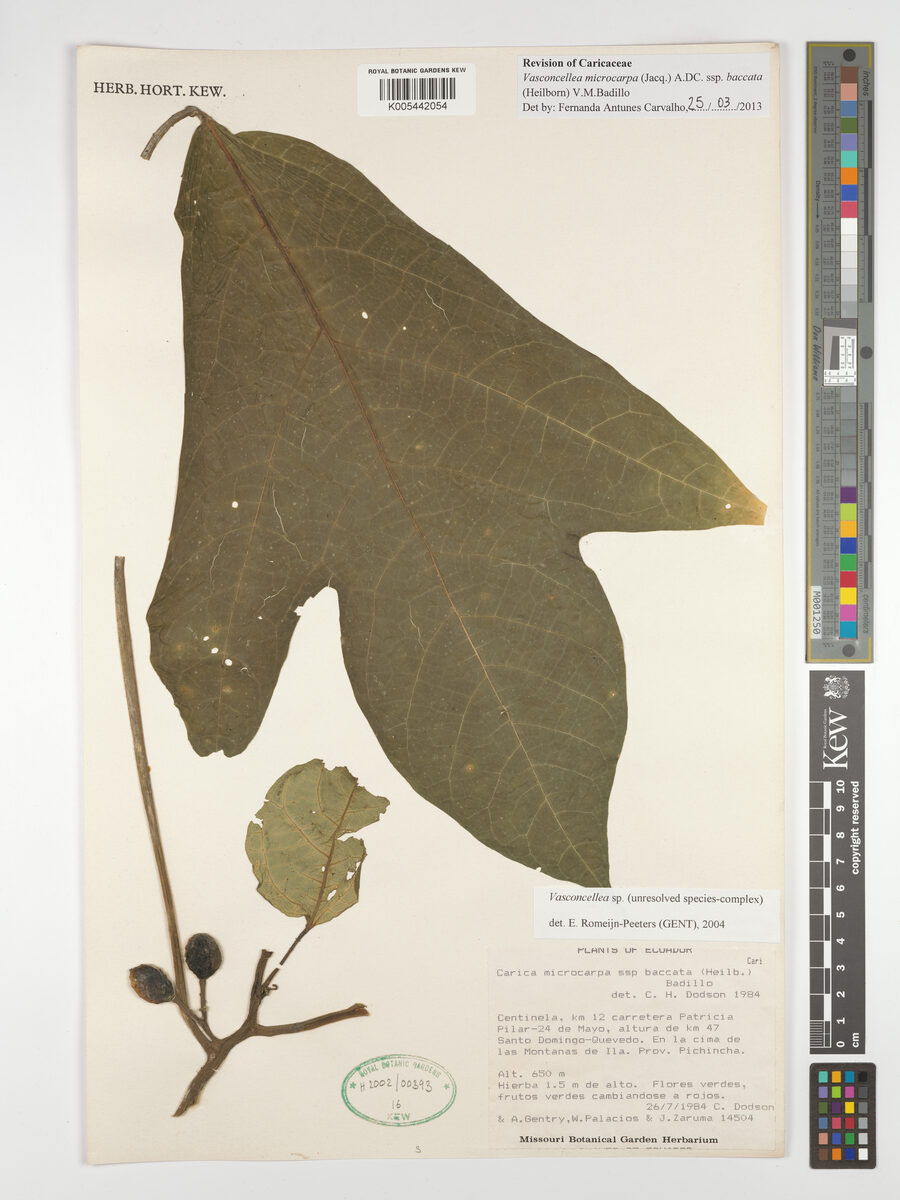
Vasconcellea parviflora
A. DC.
Papaya de monte
iNaturalist· cc-by-nc
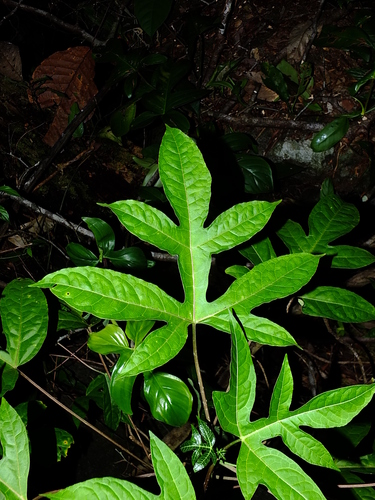
(c) Jorge Abad Lozano, some rights reserved (CC BY-NC), uploaded by Jorge Abad Lozano
iNaturalist· cc-by
(c) Daniel Velasco C., some rights reserved (CC BY), uploaded by Daniel Velasco C.
Summary
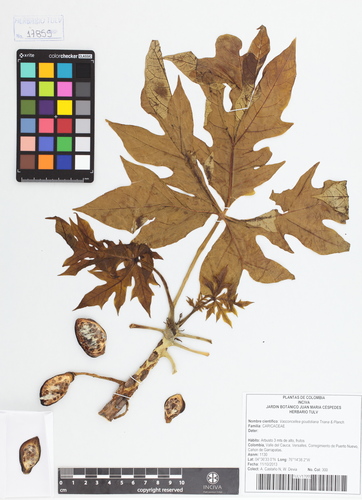
Source: WikipediaVasconcellea parviflora is a species of shrub in the family Caricaceae. It is native to SW Ecuador and NW Peru. It is polygamous, i.e. it can be dioecious or monoecious, showing either or both pistillate and staminate flowers (Badillo, 1993).
Description
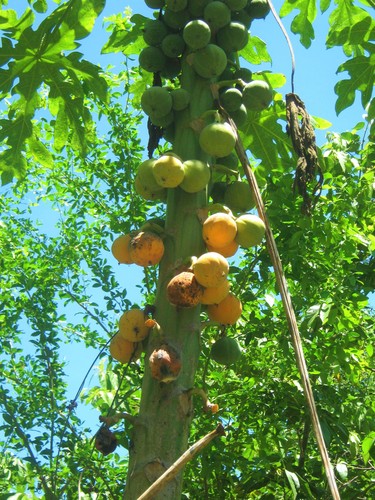
A small plant. It grows 3 m tall and spreads 1.8 m wide. The flowers are purple. The fruit are orange or nearly red when ripe. They are small.
This description is brief — help expand it
Edible Uses
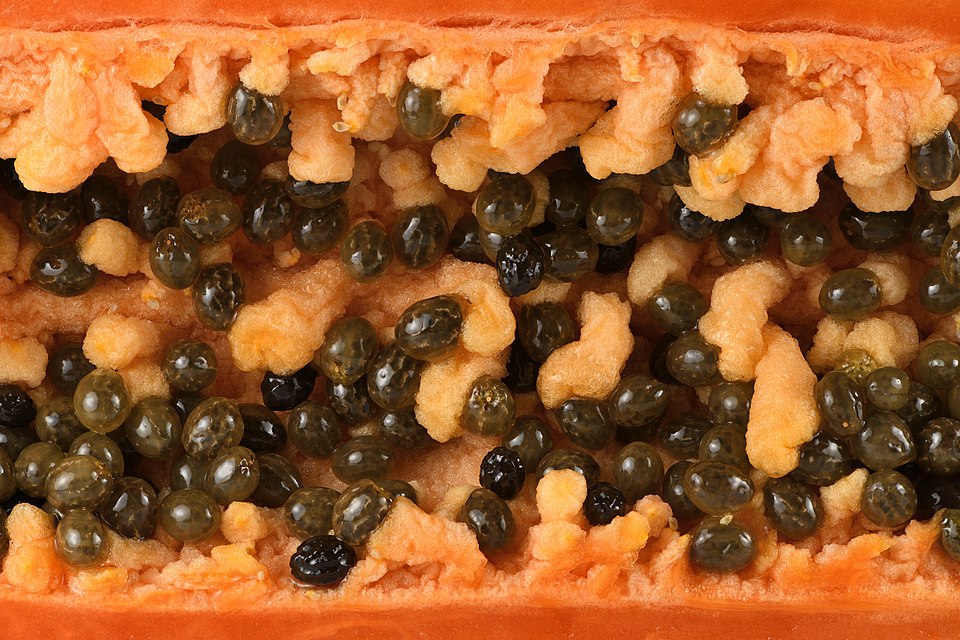
Fruit - raw. Said to have the fragrance and flavour of a mombin (Spondias spp.). The fruit is the size of a small melon with a taste somewhat similar, but to improve it longitudinal incisions must be made in it some days before eating so that the milky sap, which is somewhat bitter, may drain away. The orange fruit is about 20 - 30mm long and 10 - 15mm wide.
Traditional Uses
The fruit are eaten raw The root are cooked.
This uses section is brief — help expand it
Distribution
It is a tropical plant. It grows in arid regions. It suits hardiness zones 10-12.
Where It Grows
Andes, Australia, Central America, Colombia, Ecuador, Peru, South America,
Cultivation
A plant of the tropics, where it is found at elevations from sea level to over 2,000 metres. Prefers a sunny position in a well-drained soil. A dioecious species, both male and female forms need to be grown if fruit and seed are required.
Propagation
Seed - sow in individual containers or in a nursery seedbed in light shade. Germination can be slow and difficult, taking about 30 days. Seedlings can be planted out when 4 - 6 months old.
Notes
There are at least 22-40 species of Carica. It has disease resistance being used for breeding.
Synonyms
Also Known As
Col de monte, Papaya del monte, Papayillo, Papayo, Pinon silvestre, Yuca del campo
References (12)
- Badillo, V.M., V.Van den Eynden and P. Van Damme. 2000. Carica palandesis (Caricaceae), a new species from Ecuador. Novon, 10: 4-6.
- Badillo, V.M. 2000. Carica L. vs. Vasconcella St.-Hil. (Caricaceae) con la rehabilitación de este último. Ernstia, 10 (2): 74-79.
- Cundall, P., (ed.), 2004, Gardening Australia: flora: the gardener's bible. ABC Books. p 330
- Facciola, S., 1998, Cornucopia 2: a Source Book of Edible Plants. Kampong Publications, p 73
- Kermath, B. M., et al, 2014, Food Plants in the Americas: A survey of the domesticated, cultivated and wild plants used for Human food in North, Central and South America and the Caribbean. On line draft. p 902
Show all 12 references Hide references
- Lyle, S., 2006, Discovering fruit and nuts. Land Links. p 105
- C. F. P. Martius, Fl. bras. 13(3):177. 1889
- Roa, J. A. G. & Boada, D. S. G., 2018, Fundación para el Fortalecimiento de la Fruticultura y Plantas Alimenticias no Convencionales en Colombia.
- Smith, N., Mori, S.A., et al, 2004, Flowering Plants of the Neotropics. Princeton. p 85
- Torre, de la, L., et al, 2008, Enciclopedia de las Plantas Útiles del Ecuador. Herbario QCA. Pontificia Universidad Católica del Ecuador. p 276
- Van den Eynden, V., E. Cueva and O. Cabrera. 1999. Plantas silvestres comestibles del sur del Ecuador – Wild edible plants of southern Ecuador. Ediciones Abya-Yala, Quito, Ecuador.
- Van den Eynden, V., et al, 2003, Wild Foods from South Ecuador. Economic Botany 57(4): 576-603