Amorphophallus bulbifer
(Roxb.) Blume
Bulbifer corpse flower
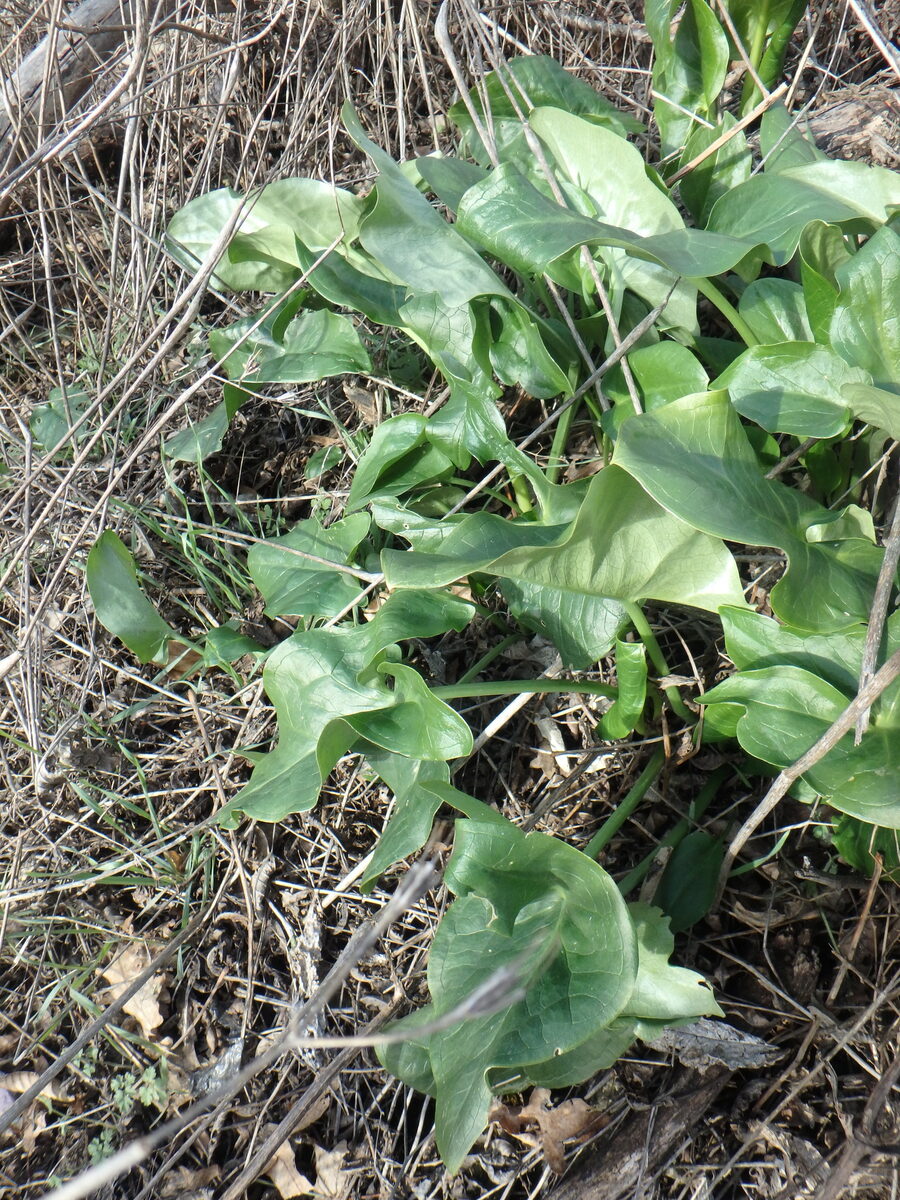
iNaturalist· cc-by-nc-sa
(c) Vijay Anand Ismavel, some rights reserved (CC BY-NC-SA)
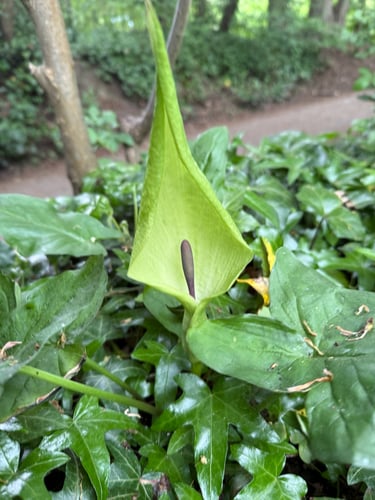
iNaturalist· cc-by
(c) Rejoice Gassah, some rights reserved (CC BY), uploaded by Rejoice Gassah
Summary
Source: WikipediaAmorphophallus bulbifer is a species of subtropical tuberous herbaceous plant found in Assam; Bangladesh; China South-Central; East Himalaya; India; Myanmar; Nepal.
Description
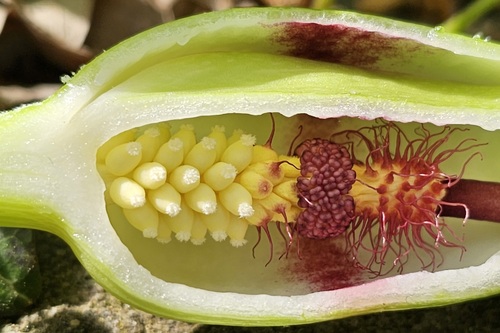
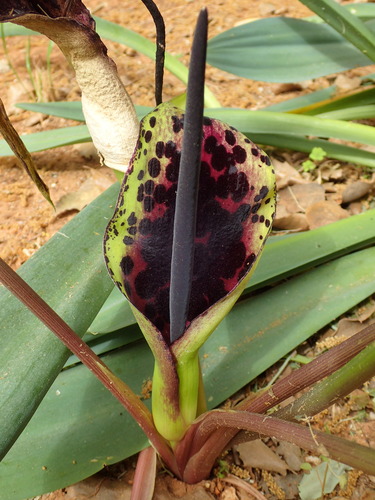
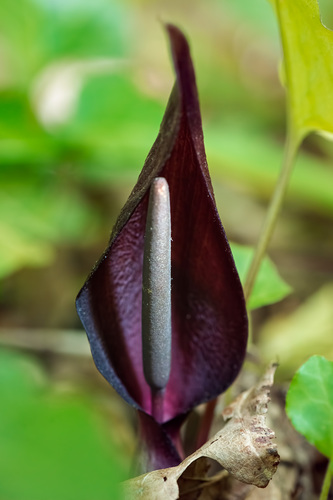
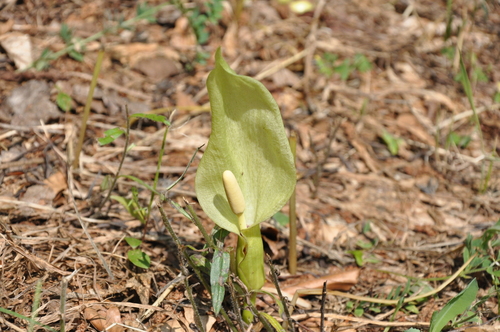
A herb. It has round corms. They are 16 cm by 7-8 cm. The leaves are large and 1.5 m across. They are divided into leaflets. The stem is dark grey to green. They have white spots. The bulbils develop on the leaves. The flower spathe is 30 cm long by 20 cm wide and is pink inside. The flower group is a long tight bundle or spadix. This is 8-25 cm long and is pink. The flower emerges before the leaves.
Edible Uses
The leaf stalks, shoots, tubers (corms), stems, buds, and bulbils are cooked and eaten; the stalks are cooked as a vegetable, shoots are boiled, and tubers are often cooked with meat.
Traditional Uses
The leaf stalks are cooked and eaten. The shoots are boiled and eaten. The tubers (corms) are cooked and eaten. They are often cooked with meat.
This uses section is brief — help expand it
Medicinal Uses
The plant is used in traditional medicine.
Distribution
A subtropical and tropical plant. It grows in monsoon forests up to 1,100 m above sea level. It grows in shady and moist areas in Bangladesh. Cairns Botanical Gardens.
Where It Grows
Asia, Australia, Bangladesh, Himalayas, India, Indonesia, Myanmar, Nepal, Northeastern India, SE Asia,
Cultivation
Plants are grown from tubers. The top section should be planted below ground. They can also be grown from leaf cuttings, bulbils and seed.
Other Information
It is a cultivated food plant.
Synonyms
Also Known As
Batema, Batet, Bunga bangkai bulbil, Buru ol, Devil's tongue, Dhara-oal, Hen salku, Hen sarilong, Hensarku, Jongli ool, Kadu suvaragedde, Kabei, Loregochha, Narikel, Olkochupata, Saldong, Songru, Taa, Telcong, Teldon, Thabema, Voodoo lily
References (22)
- Ara, R. I. T., 2015, Leafy Vegetables in Bangladesh. Photon eBooks. p 83
- Behera, K. K. et al, 2008, Wild Edible Plants of Mayurbhanj District, Orissa, India. J. Econ. Taxon. Bot. Vol. 32 (Suppl,) pp 305-314
- Deb, D., et al, 2013, Wild Edible Plants and Their Utilization in Traditional Recipes of Tripura, Northeast India. Advances in Biological Research 7(5):203-211
- Dobriyal, M. J. R. & Dobriyal, R., 2014, Non Wood Forest Produce an Option for Ethnic Food and Nutritional Security in India. Int. J. of Usuf. Mngt. 15(1):17-37
- Ethnobotany of Karbis. Chapter 4 in p 82
Show all 22 references Hide references
- Hossain, U. & Rahman, A., 2018, Study and quantitative analysis of wild vegetable floral diversity available in Barisal district, Bangladesh. Asian J. Med. Biol. Res. 2018, 4 (4), 362-371
- Kar, A., & Borthakur, S. K., 2008, Wild vegetables of Karbi - Anglong district, Assam, Natural Product Radiance, Vol. 7(5), pp 448-460
- Kumar, G.M., & Shiddamallayya, N., 2014, Documentation of Wild Plant Tubers as Food Resources in Hassan District, Karnataka, International Journal of Applied Biology and Pharmaceutical Technology. 5(2) p 90
- Lim, T. K., 2015, Edible Medicinal and Non Medicinal Plants. Volume 9, Modified Stems, Roots, Bulbs. Springer p 8
- Medhi, P. and Borthakur, S. K., 2011, Genetic Resources of Root and Tuber Crops from North Cachar Hills of Assam. Journal of Root Crops, Vol. 37No.2 pp. 131-143
- Medhi, P. & Borthakur, S. K., 2012, Phytoresources from North Cachur Hills of Assam -3: Edible plants sold at Hflong market. Indian Journal of Natural Products and Resources. 3(1) pp 84-109
- Medhi, P. & Borthakur, S. K., 2013, Wild edible plants sold by the Zeme Nagas at the makeshift market of Mahur, Dima Hasao district of Assam. Pleione 7(1): 84 - 93. 2013.
- Medhi, P., Sarma, A and Borthakur, S. K., 2014, Wild edible plants from the Dima Hasao district of Assam, India. Pleione 8(1): 133-148
- Misra, R. C., et al, 2013, Genetic resources of wild tuberous food plants traditionally used in Similipal Biosphere Reserve, Odisha, India. Genetic Resources and Crop Evolution. Vol. 60 No. 2. Springer
- Partha, P., 2014, Ethnobotany of the Laleng (Patra) Community in Bangladesh. Journal of Pharmacognosy and Phtochemistry. 2(6) 173-184
- Rashid, H. E., 1977, Geography of Bangladesh. Westview. p 264
- Rumphia 1:148. 1837
- Sangma, A. j. T., 2018, Non-timber forest products (NTFPs) used by Garo tribe of Rongram block in West Garo Hills, Meghalaya. Indian Journal of Traditional Knowledge Vol 18 (1), pp 151-161
- Singh, B. et al, 2012, Wild edible plants used by Garo tribes of Nokrek Biosphere Reserve in Meghalaya, India. Indian Journal of Traditional Knowledge. 11(1) pp 166-171
- Sukarya, D. G., (Ed.) 2013, 3,500 Plant Species of the Botanic Gardens of Indonesia. LIPI p 1061
- Teron, R. & Borthakur, S. K., 2016, Edible Medicines: An Exploration of Medicinal Plants in Dietary Practices of Karbi Tribal Population of Assam, Northeast India. In Mondal, N. & Sen, J.(Ed.) Nutrition and Health among tribal populations of India. p 148 (As Alocasia bulbifer)
- Tutul, E et al, 2009, Angiospermic Flora of Runctia Sal Forest, Bangladesh. Bangladesh J. Plant Taxon. 16(1): 83-90. p 84