Arisaema serratum
(Thunb.) Schott.
iNaturalist· cc-by-sa
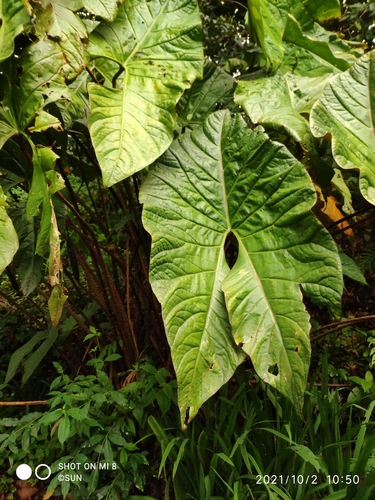
(c) harum.koh, some rights reserved (CC BY-SA), uploaded by harum.koh
iNaturalist· cc-by-nc-nd
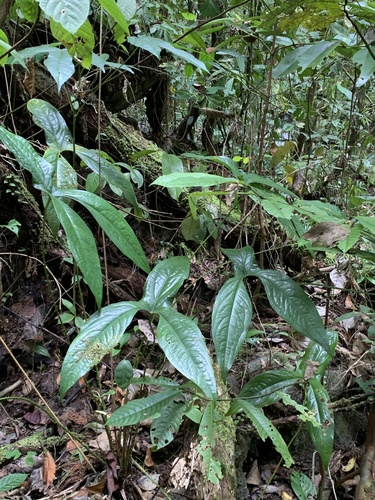
(c) James Gaither, some rights reserved (CC BY-NC-ND)
Summary
Source: WikipediaArisaema serratum is a species of flowering plant in the arum family (Araceae). It is native to Japan, where it is found from the Kansai region north to the island of Hokkaido. Its natural habitat is damp forests. Arisaema serratum is a perennial. It produces two leaves, with 7-13 leaflets each. The color of the flowering bract is variable, being either purple or green. It blooms from May to June. It is similar to Arisaema mayebarae, which is restricted to Kyushu (an island where Arisaema serratum is not present). Arisaema serratum can be distinguished by its shorter spathe blade, which declines over the tip of the mouth (as opposed to being held at a horizontal angle).
Description
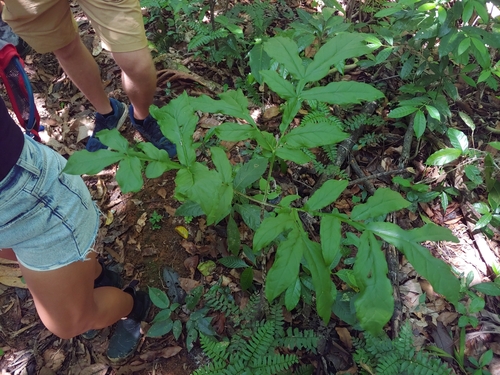
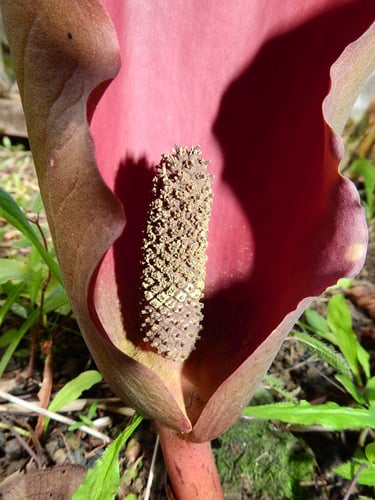
A tuber plant. It keeps growing from year to year. It is 1-1.5 m high. The leaf stalk is pale green with red spots. There are two leaves with leaflets that radiate. There are 5-11 sword shaped leaflets. The edges can be wavy or toothed. The bract around the flower is hooded and green or red. It can sometimes be striped or spotted. It is 8-13 cm long. The flower stalk is fleshy. It can be club shaped. It is 4-5 cm long.
Edible Uses
Edible Parts: Leaves Root Edible Uses: Tuber - must be thoroughly dried or cooked. The tubers are 15 - 55mm in diameter. Use with caution, see the notes above on toxicity. Leaves - cooked. Use with caution, see the notes above on toxicity.
Medicinal Uses
Alterative Deobstruent Diuretic Expectorant Vulnerary The root is alterative, deobstruent, discutient, diuretic, expectorant, vulnerary. Use with caution.
Known Hazards
All parts of A. serratum contain needle-like calcium oxalate crystals, saponins, and coniine. Toxicity is especially concentrated in the underground bulb; touching the juice causes inflammation. Ingestion results in intense pain from the mouth to the throat, making it impossible to swallow. Symptoms include diarrhea, vomiting, and respiratory paralysis; severe cases can be fatal.
Distribution
It is a temperate plant. It grows in forests, below 500 m altitude in northern China. It suits hardiness zones 5-9.
Where It Grows
Asia, Australia, China, Japan, Korea,
Propagation
Seed - best sown as soon as it is ripe in a shady position in a cold frame. Stored seed remains viable for at least a year and can be sown in spring in the greenhouse but it will probably require a period of cold stratification. Germination usually takes place in 1 - 6 months at 15°c. When large enough to handle, prick the seedlings out into individual pots and grow them on in light shade in the greenhouse for at least a coupe of years until the corms are more than 20mm in diameter. Plant out into their permanent positions whilst they are dormant. Division of tubers when the plant dies down in late summer.
Other Uses
None known Special Uses
Notes
There are about 150-170 Arisaema species.
Synonyms
Also Known As
Cheollamsae-i, Cheonnamseong, Namseong
References (6)
- Brown, D., 2000, Aroids. Plants of the Arum family. Timber Press. (Second edition) p 315
- Cundall, P., (ed.), 2004, Gardening Australia: flora: the gardener's bible. ABC Books. p 184
- Li Heng, Araceae, Flora of China,
- Ong, H. G., et al, 2015, Ethnobotany of the wild edible plants gathered in Ulleung Island, South Korea. Genet Resourc Crop Evol. Springer (As Arisaema takesimense)
- Plants for a Future database, The Field, Penpol, Lostwithiel, Cornwall, PL22 0NG, UK. http://www.scs.leeds.ac.uk/pfaf/
Show all 6 references Hide references
- H. Schott & S. L. Endlicher, Melet. bot. 17. 1832