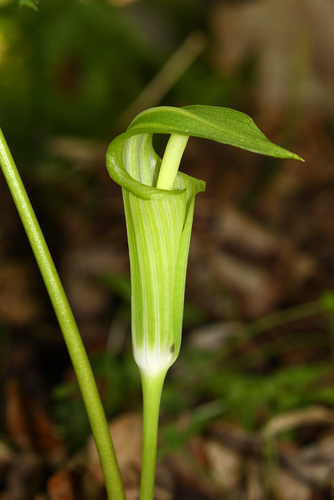
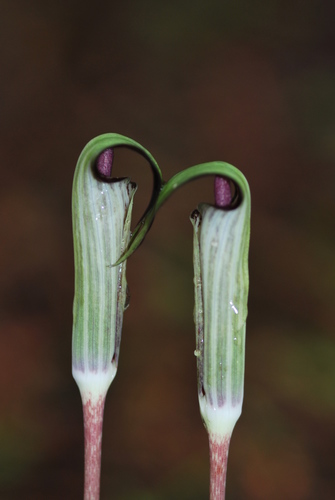
Arisaema quinatum
(Nutt.) Schott.
Five-leafed Jack-in-the-pulpit, Indian turnip
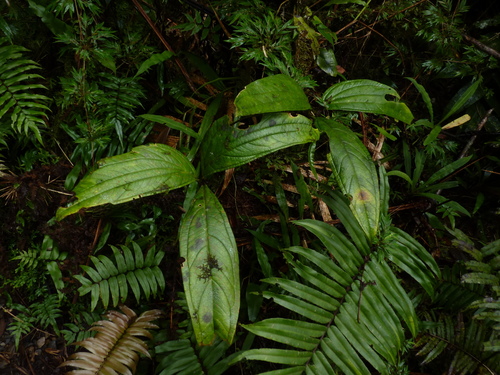
iNaturalist· cc-by-nc
(c) Rich Stevenson, some rights reserved (CC BY-NC), uploaded by Rich Stevenson
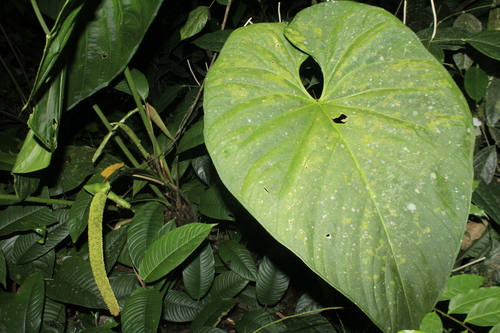
iNaturalist· cc-by
(c) Michael J. Papay, some rights reserved (CC BY), uploaded by Michael J. Papay
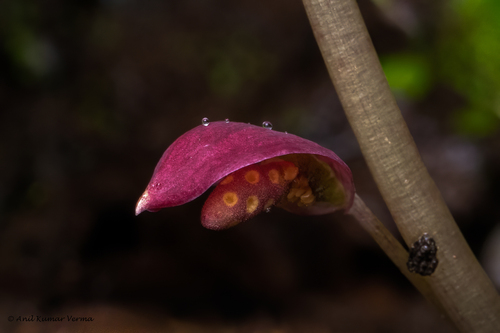
iNaturalist· cc-by-nc-sa
(c) Open minded in Alabama, some rights reserved (CC BY-NC-SA)
Summary
Source: WikipediaArisaema quinatum is a species of flowering plant in the arum family Araceae. It is a member of the Arisaema triphyllum complex, a group of closely related taxa in eastern North America. The specific name quinatum means "divided into five lobes", a reference to its characteristic leaves. It is commonly known as the southern Jack-in-the-pulpit (or southern Jack) but some refer to it as Preacher John.
Description
A taro family plant. It grows 25-50 cm high. The leaf is made up of 5 leaflets. The flowers grow on a long, thick spike. This has a fleshy bract around it. The flap curves over the top. The many tiny flowers are off-white in colour.
Edible Uses
Edible Parts: Root Edible Uses: Root - cooked. It must be well dried or thoroughly cooked before being eaten, see the notes above on toxicity.
Medicinal Uses
None known
Distribution
It is a temperate plant.
Where It Grows
North America, USA,
Propagation
Seed - best sown as soon as it is ripe in a shady position in a cold frame. Stored seed remains viable for at least a year and can be sown in spring in the greenhouse but it will probably require a period of cold stratification. Germination usually takes place in 1 - 6 months at 15°c. When large enough to handle, prick the seedlings out into individual pots and grow them on in light shade in the greenhouse for at least a coupe of years until the corms are more than 20mm in diameter. Plant out into their permanent positions whilst they are dormant. Division of tubers when the plant dies down in late summer.
Other Uses
None known Special Uses
Notes
There are about 150-170 Arisaema species.
References (2)
- Loughmiller, C & L., 1985, Texas Wildflowers. A Field Guide. University of Texas, Austin. p 14
- Plants for a Future database, The Field, Penpol, Lostwithiel, Cornwall, PL22 0NG, UK. http://www.scs.leeds.ac.uk/pfaf/