Arisaema triphyllum
(L.) Schott.
Jack in the pulpit, Indian turnip
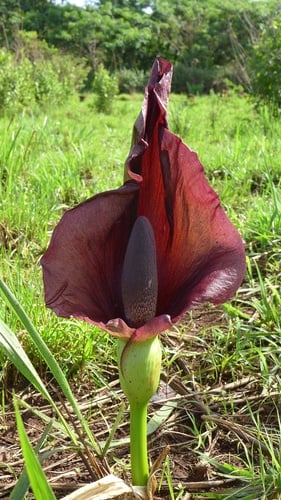
iNaturalist· cc-by-nc
(c) heckmarr, some rights reserved (CC BY-NC), uploaded by heckmarr
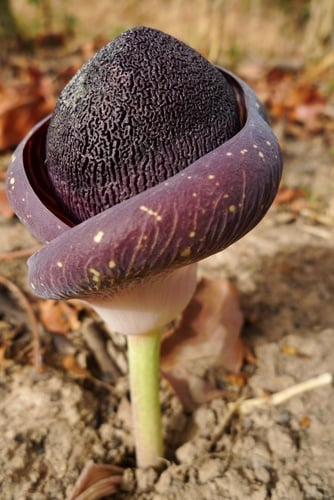
iNaturalist· cc-by-nc
(c) Susan Elliott, some rights reserved (CC BY-NC)
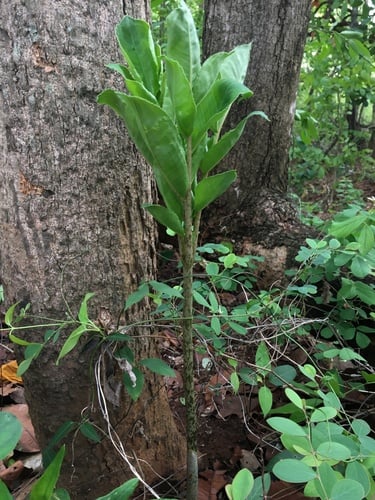
iNaturalist· cc-by-nc
(c) Susan Elliott, some rights reserved (CC BY-NC)
Summary
Source: WikipediaArisaema triphyllum, the Jack-in-the-pulpit, is a species of flowering plant in the arum family Araceae. It is a member of the Arisaema triphyllum complex, a group of four or five closely related taxa in eastern North America. The specific name triphyllum means "three-leaved", a characteristic feature of the species, which is also referred to as Indian turnip, bog onion, and brown dragon. Used without qualification, the name Arisaema triphyllum is ambiguous. For clarity, the qualified name Arisaema triphyllum sensu stricto (abbreviated s.s.) refers to the species while Arisaema triphyllum sensu lato refers to the species complex. The latter includes the species (Arisaema triphyllum) among its members. Arisaema triphyllum sensu lato is wide-ranging across eastern North America, from Nova Scotia to Manitoba in eastern Canada, and from Texas to Florida in the southern United States. It is common throughout most of its range.
Description
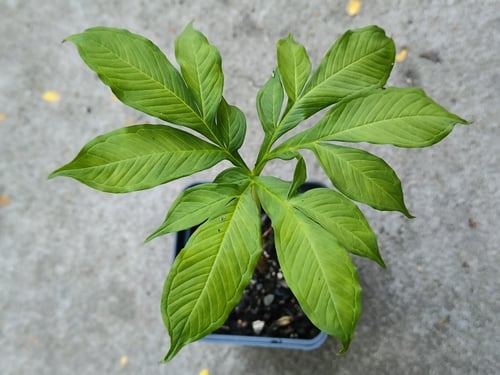
A tuber plant. It grows 15-60 cm high. It has round tubers. There can be 1-3 leaves. These have 3 leaflets. The leaflets are pointed and 8-15 cm long. The flowers appear below the leaves. The bract around the flower is green or dark red and it can be striped. It is 10-15 cm long. It is hooded and curves inwards at the edges. The fleshy fruit stalk is club shaped. it can be 7 cm long. The fruit are berries which show up distinctly.
Edible Uses
Edible Parts: Root Edible Uses: Tuber - it must be thoroughly dried or cooked before being eaten. The roots can be cut into very thin slices and allowed to dry for several months, after which they are eaten like potato chips, crumbled to make a cereal or ground into a cocoa-flavoured powder for making biscuits, cakes etc. They can also be pounded into a powder, this is thern left to dry for several weeks when it becomes safe to use. The root is up to 5cm long and 2cm wide. Caution is advised, see the notes above on toxicity.
Traditional Uses
The tubers (corms) are used to produce a very fine flour like arrowroot. They are sliced, dried and stored to reduce the acridity then made into flour. Caution: Like all Araceae family the plant contains calcium oxalate and needs special processing.
Medicinal Uses
Acrid Antirheumatic Antiseptic Contraceptive Diaphoretic Expectorant Irritant Poultice Stimulant The root is acrid, antiseptic, diaphoretic, expectorant, irritant and stimulant. It is harvested in early spring and dried for later use. The fresh root is considered to be too dangerous and intensely acrid to use, whilst the dried roots become inactive, so fresh, partially dried roots are used. Due to the potentially toxic nature of this plant, it should only be used internally under the supervision of a qualified practitioner. The root was applied as a poultice on headaches, scrofulous sores, rheumatism, boils, abscesses and ringworm. A decoction of the root has been used as a wash for sore eyes. The root was used as a contraceptive by the N. American Indians. One teaspoonful of the dried powdered root in cold water was said to prevent conception for a week whilst two teaspoonfuls in hot water was said to induce permanent sterility.
Known Hazards
The oxalic acid in jack-in-the-pulpit is poisonous if ingested. The plant contains calcium oxalate crystals as raphides in all parts, and because of this, consumption of the raw plant material results in a powerful burning sensation. It can cause irritation of the mouth and digestive system and (on rare occasions) intense swelling of the mouth and throat, potentially being severe enough to affect breathing. Arisaemas are in the same plant family as the anthuriums, aglaonemas, alocasias, colocasias, dieffenbachias, monsteras and philodendrons (among numerous others)— all known as "dumb-canes"—and carry the shared side-effect of an inflamed upper respiratory/digestive system upon ingestion.
Distribution
It is a temperate plant. It grows in light shade. They can tolerate cold. It suits hardiness zones 4-9.
Where It Grows
Australia, Canada, Europe, France, Germany, North America, Tasmania, USA,
Cultivation
It is grown from corms. These are dormant in the winter. Plants can be grown from fresh seed.
Propagation
Seed - best sown as soon as it is ripe in a shady position in a cold frame. Stored seed remains viable for at least a year and can be sown in spring in the greenhouse but it will probably require a period of cold stratification. Germination usually takes place in 1 - 6 months at 15°c. When large enough to handle, prick the seedlings out into individual pots and grow them on in light shade in the greenhouse for at least a coupe of years until the corms are more than 20mm in diameter. Plant out into their permanent positions whilst they are dormant. Division of tubers when the plant dies down in late summer.
Other Uses
Musical Starch A starch obtained from the roots is used as a stiffener for clothes. It is very harsh to the hands, causing blisters and swellings. The seeds have been used in rattles. Special Uses
Notes
There are about 150-170 Arisaema species.
Synonyms
References (18)
- Beckstrom-Sternberg, Stephen M., and James A. Duke. "The Foodplant Database." http://probe.nalusda.gov:8300/cgi-bin/browse/foodplantdb.(ACEDB version 4.0 - data version July 1994)
- Bircher, A. G. & Bircher, W. H., 2000, Encyclopedia of Fruit Trees and Edible Flowering Plants in Egypt and the Subtropics. AUC Press. p 41
- Bodkin, F., 1991, Encyclopedia Botanica. Cornstalk publishing, p 101
- Brown, D., 2000, Aroids. Plants of the Arum family. Timber Press. (Second edition) p 270, 316,
- Brickell, C. (Ed.), 1999, The Royal Horticultural Society A-Z Encyclopedia of Garden Plants. Convent Garden Books. p 137
Show all 18 references Hide references
- Brown, D., 2002, The Royal Horticultural Society encyclopedia of Herbs and their uses. DK Books. p 127
- Cundall, P., (ed.), 2004, Gardening Australia: flora: the gardener's bible. ABC Books. p 185
- Hibbert, M., 2002, The Aussie Plant Finder 2002, Florilegium. p 32
- Kermath, B. M., et al, 2014, Food Plants in the Americas: A survey of the domesticated, cultivated and wild plants used for Human food in North, Central and South America and the Caribbean. On line draft. p 87
- Kiple, K.F. & Ornelas, K.C., (eds), 2000, The Cambridge World History of Food. CUP p 1790
- Lim, T. K., 2015, Edible Medicinal and Non Medicinal Plants. Volume 9, Modified Stems, Roots, Bulbs. Springer p 11
- MacKinnon, A., et al, 2009, Edible & Medicinal Plants of Canada. Lone Pine. p 163
- Plants for a Future database, The Field, Penpol, Lostwithiel, Cornwall, PL22 0NG, UK. http://www.scs.leeds.ac.uk/pfaf/
- Romanowski, N., 2007, Edible Water Gardens. Hyland House. p 104
- Saunders, C.F., 1948, Edible and Useful Wild Plants. Dover. New York. p 37
- H. Schott & S. L. Endlicher, Melet. bot. 17. 1832
- Slocum, P.D. & Robinson, P., 1999, Water Gardening. Water Lilies and Lotuses. Timber Press. p 108
- Tozer, F., 2007, The Uses of Wild Plants. Green Man Publishing. p 34