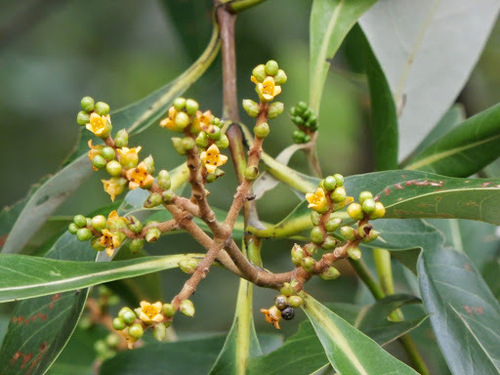
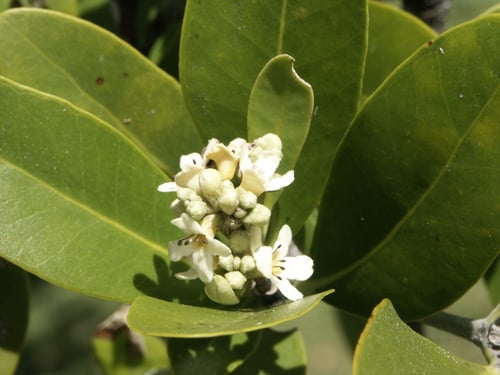
Blepharis edulis
(Forssk.) Pers.
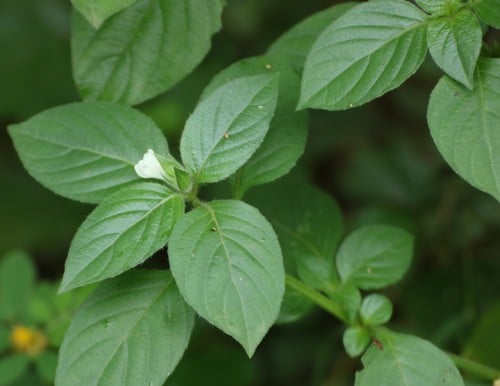
iNaturalist· cc-by-nc
(c) Marco Grandis, some rights reserved (CC BY-NC), uploaded by Marco Grandis
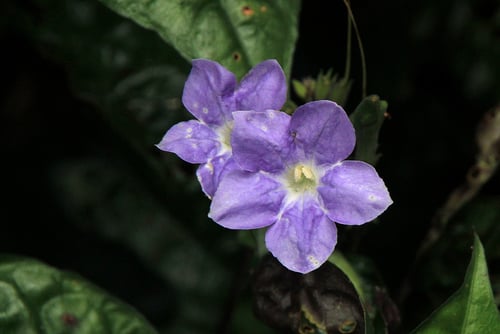
iNaturalist· cc-by-nc
(c) Deon van Eeden, some rights reserved (CC BY-NC)
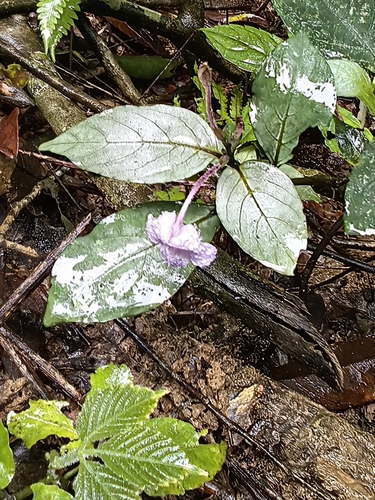
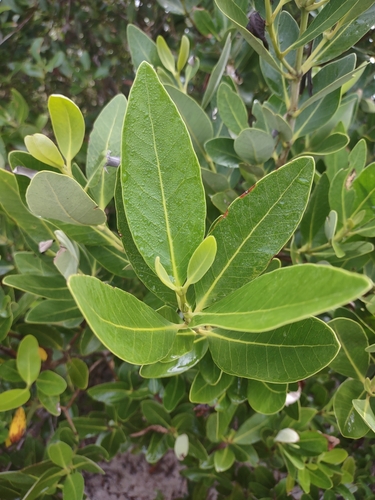
iNaturalist· cc-by
(c) M Rutherford, some rights reserved (CC BY)
Summary
Source: WikipediaBlepharis edulis (Hindi : uttanjan) is a species of plant in the family Acanthaceae. It is found in India, Pakistan and Iran as well as Egypt (including the Sinai Peninsula). It is a small plant, covered in soft, grey hairs. It has many serrated leaves, that have prickles attached to them. The flowers are a yellowish color. Its capsules contain two seeds, that are heart-shaped, smooth, shining, and brownish in color. In India, it is commonly known as Dakhni chappar or Utangan.
Description
A spiny herb. It can be erect or lie along the ground. It grows 50 cm tall. It has soft, grey hairs. The leaves have teeth along the edge and they have prickles attached to them. The flowers have long spiny bracts. The flowers are yellow. The fruit capsules have 2 heart shaped seeds. They are brown and shiny.
Edible Uses
The leaves and seeds are eaten as a vegetable.
Traditional Uses
The leaves and seeds are eaten as a vegetable.
This uses section is brief — help expand it
Distribution
It grows in Mediterranean and tropical places. It suits arid and semi-arid locations. It can grow in sands and gravels. It can grow in arid places.
Where It Grows
Africa, East Africa, Egypt, Ethiopia, India, Iran, Israel, Jordan, Kenya, Mauritania, Mediterranean, Middle East, North Africa, Oman, Pakistan, Qatar, Sahara, Saudi Arabia, Sinai, Socotra, Somalia, Sudan, Syria, Tanzania, Uganda, Yemen,
Notes
It is also used to clarify water. It is also used for medicine.
Synonyms
Also Known As
Chaupatia, Dakhni-chappar, Karadu, Keilewa, Khadakatira, Otigana, Shauk-el-jemel, Shikhi, Shushanu, Uttangan, Yamaarug
References (8)
- Ambasta S.P. (Ed.), 2000, The Useful Plants of India. CSIR India. p 75 (As Blepharis persica)
- Bircher, A. G. & Bircher, W. H., 2000, Encyclopedia of Fruit Trees and Edible Flowering Plants in Egypt and the Subtropics. AUC Press. p 59
- Dobriyal, M. J. R. & Dobriyal, R., 2014, Non Wood Forest Produce an Option for Ethnic Food and Nutritional Security in India. Int. J. of Usuf. Mngt. 15(1):17-37 (As Blepharis persica)
- Hedrick, U.P., 1919, (Ed.), Sturtevant's edible plants of the world. p 107
- Jardin, C., 1970, List of Foods Used In Africa, FAO Nutrition Information Document Series No 2.p 39 (As Blepharis persica)
Show all 8 references Hide references
- Royal Botanic Gardens, Kew (1999). Survey of Economic Plants for Arid and Semi-Arid Lands (SEPASAL) database. Published on the Internet; http://www.rbgkew.org.uk/ceb/sepasal/internat [Accessed 24th March 2011]
- Revis. gen. pl. 2:483. 1891
- World Checklist of Useful Plant Species 2020. Royal Botanic Gardens, Kew