Asystasia gangetica
(L.) T. Anderson
Chinese violet
iNaturalist· cc0
no rights reserved, uploaded by 葉子
iNaturalist· cc-by-nc-sa
(c) 106611639464075912591, some rights reserved (CC BY-NC-SA), uploaded by 106611639464075912591
iNaturalist· cc-by-nc
(c) suchihfen, some rights reserved (CC BY-NC)
Summary
Source: WikipediaAsystasia gangetica is a species of plant in the family Acanthaceae. It is commonly known as the Chinese violet, coromandel or creeping foxglove. In South Africa this plant may simply be called asystasia.
Description
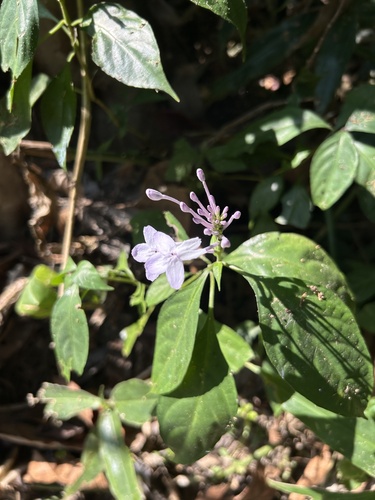
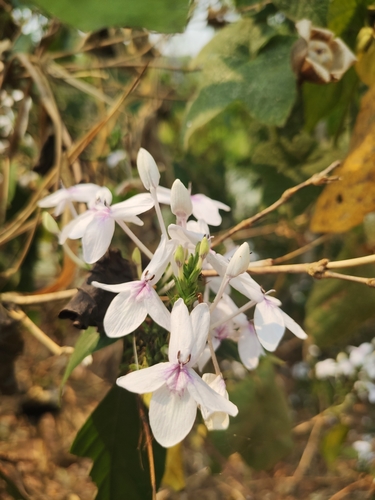
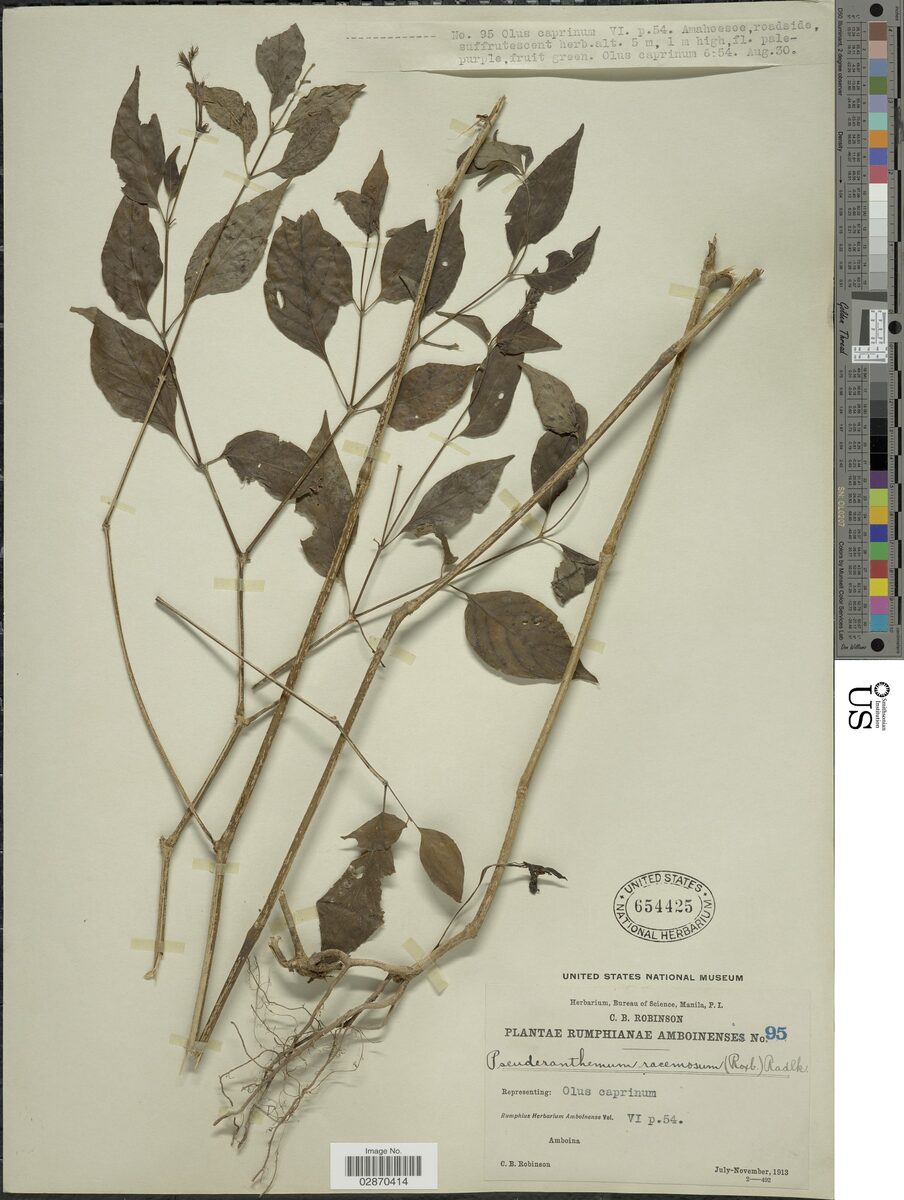
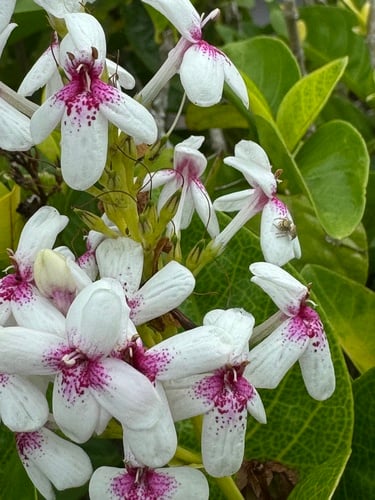
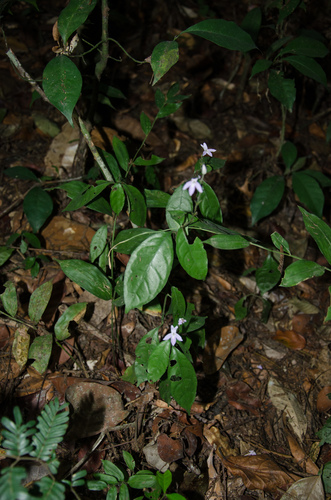
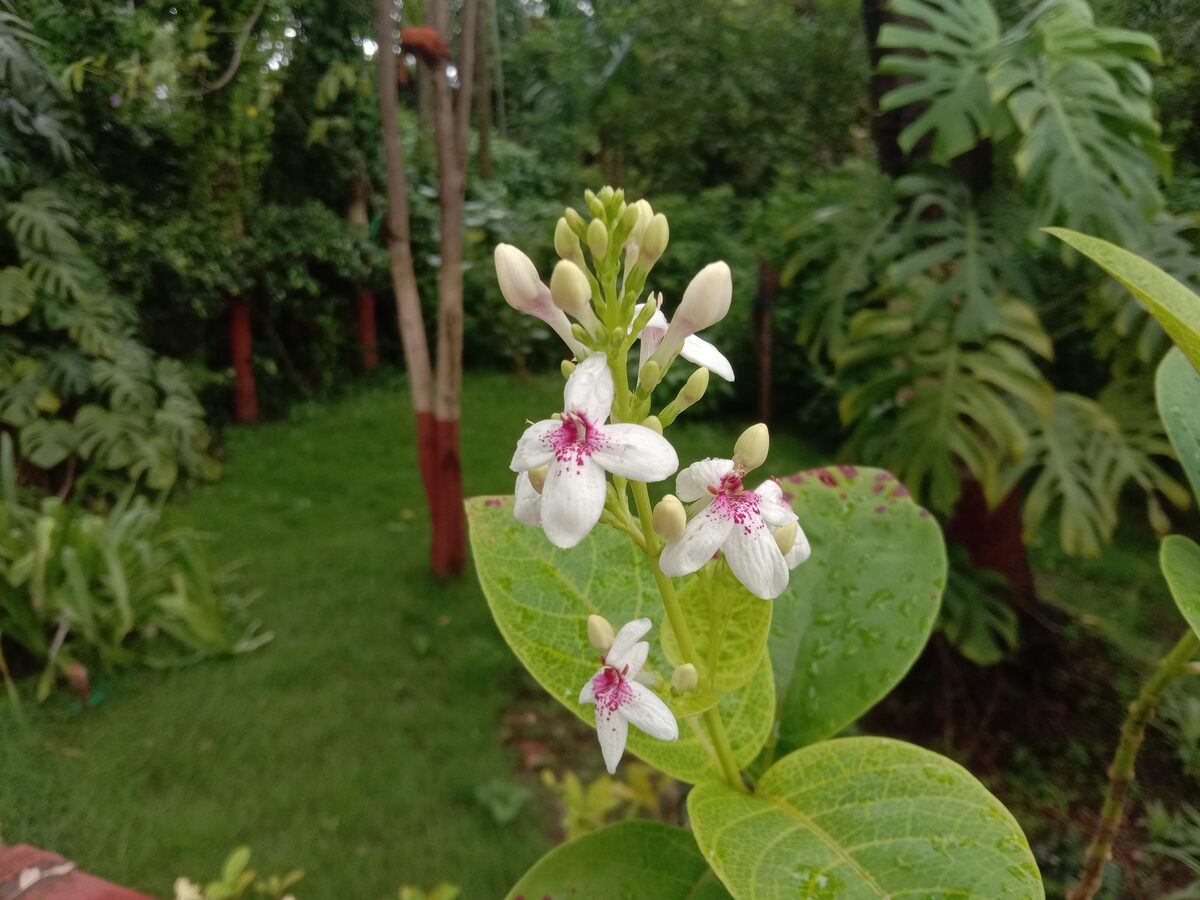
An erect herb. It can clamber over other objects. It can keep growing from year to year. It can also be grown each year from seed. It grows 60-100 cm high. The leaves are oval or heart shaped. They are 3-6 cm long. The flowers are bell shaped. They have lobes which flare out. They are light violet with a light yellow throat. They can be all yellow. They occur in spikes. The flowers are 3-5 cm wide. The fruit is a capsule that splits open. It is cylinder shaped and 2.5 cm long.
Edible Uses
The leaves are used as a pot-herb, stir-fried, or added to fish and meat stews. Leaves are also dried and stored. Stems and flowers are edible.
Traditional Uses
The leaves are used as a pot-herb or stir-fried. They are added to fish and meat stews. The leaves are also dried and stored.
This uses section is brief — help expand it
Medicinal Uses
In some parts of Africa, the leaves are eaten as a vegetable and used as an herbal remedy in traditional African medicine. The leaves are used in many parts of Nigeria as a traditional African medicine for the management of asthma. It is also used as an ornamental plant.
Distribution
It is a tropical plant. It grows near Chennai in India. It grows naturally in India and Malaysia and probably East Africa. It prefers moderate moisture but can tolerate dry periods. It can grow in full sun or light shade. It grows in the lowlands. It suits hardiness zones 9-12. In Yunnan.
Where It Grows
Africa, American Samoa, Angola, Asia, Australia, Benin, Botswana, Burkina Faso, Cameroon, Central Africa, Central African Republic, CAR, Chad, China, Congo DR, Côte d'Ivoire, Dominica, Dominican Republic, East Africa, Eritrea, Eswatini, Ethiopia, Fiji, Gabon, Gambia, Ghana, Guianas, Guinea, Guinée, Guinea-Bissau, Guyana, Haiti, Hawaii, India, Indochina, Ivory Coast, Kenya, Kiribati, Liberia, Madagascar, Malawi, Malaysia, Mali, Marquesas, Mozambique, Myanmar, Namibia, Niger, Nigeria, Niue, Pacific, Philippines, Puerto Rico, Rwanda, Sahel, Sao Tome and Principe, SE Asia, Senegal, Sierra Leone, Singapore, Somalia, South Africa, South America, Southern Africa, South Sudan, Sri Lanka, Sudan, Swaziland, Taiwan, Tanzania, Thailand, Togo, Tonga, Uganda, USA, Venezuela, Vietnam, Virgin Islands, West Africa, West Indies, Zambia, Zimbabwe,
Cultivation
It can be grown from seed, layering of the stems or cuttings.
Propagation
Seed - Cuttings with 1 - 3 nodes. Single-node cuttings, buried in the soil, can produce flowers and fruit within 6 weeks. Division of rooted stems
Other Uses
The plant is used as a soap-substitute. It froths in water, suggesting the presence of saponins. The plant has weak stems which sprawl along the ground unless they find something to support them. They make a dense mat and so form a good, weed-excluding ground cover. The plant can be especially useful on slopes where it can help prevent soil erosion. The plant is not generally regarded as useful in plantations of crops such as cocoa, oil palm or rubber, nor amongst vegetables or field crops, even though its ground cover checks erosion and prevents the infestation by other, more noxious weeds such as Mimosa pigra and Imperata cylindrica. It is liked as a naturally occurring plantation cover in some orchards, however, because the bees which pollinate the flowers of fruit trees such as starfruit or durian, are attracted to the orchard by the flowers of this plant.
Production
It is fast growing. The leaves are harvested by plucking.
Other Information
It is a popular leafy green in Kenya and Uganda. Leaves are sold in local markets.
Notes
There are about 40-70 Asystasia species. It can become a serious weed.
Nutrition
| Part | Moisture | kJ | kcal | Protein | Vit A | Vit C | Iron | Zinc |
|---|---|---|---|---|---|---|---|---|
| Leaves | 82.6 | 234 | 56 | 3.7 | — | 42 | 4.7 | — |
Synonyms
Also Known As
Aconge, Acongwe wang-gweno, Acwe, Anamala, Akoussimekpe, Atchelekman, Atolleta, Azeman, Avokombiby, Candindjaon, Coromandel, Degnuman, Ecoto, Enkosida, Futsure, Futswe, Ganges primrose, Ganges-violet, Hedul, Huyet bo, Isihobo, Kianjoro, Lanjokobi, Lavana-valli, Liman, Lobiri, Mampody vady, Medday keerai, Mella, Midchy keeray, Mungera tappeta, Namu, Nasubgwi, Odipa ikong, Oak oumsrab, Omigalin, Owuru, Pobunga, Redampa, Tala-kushe, Temba, Tikini, Torbol, Tropical primrose, Tropical violet, Umegarin, Upputhali, Yefe
References (68)
- Acevedo-Rodriguez, P., 2005, Vine and Climbing Plants of Puerto Rico and the Virgin islands. Contributions to the United States National Herbarium. Volume 51:1-483 p 25
- Achigan-Dako, E, et al (Eds), 2009, Catalogue of Traditional Vegetables in Benin. International Foundation for Science.
- Achigan-Dako, E. G., et al, (Eds.), 2010. Traditional vegetables in Benin. Institut National des Recherches Agricoles du Bénin. Imprimeries du CENAP, Cotonou. p 88
- Acipa, A. et al, 2013, Nutritional Profile of some Selected Food Plants of Otwal and Ngai Counties, Oyam District, Northern Uganda. African Journal or Food, Agriculture, Nutrition and Development. 13(2)
- Addis, G., Asfaw, Z & Woldu, Z., 2013, Ethnobotany of Wild and Semi-wild Edible Plants of Konso Ethnic Community, South Ethiopia. Ethnobotany Research and Applications. 11:121-141.
Show all 68 references Hide references
- Addis, G., et al, 2013, The Role of Wild and Semi-wild Edible Plants in Household Food Sovereignty in Hamer and Konso Communities, South Ethiopia. Ethnobotany Research & Applications. 11:251-271
- Adetula, O.A., 2004. Asystasia gangetica (L.) T.Anderson. [Internet] Record from Protabase. Grubben, G.J.H. & Denton, O.A. (Editors). PROTA (Plant Resources of Tropical Africa / Ressources végétales de l’Afrique tropicale), Wageningen, Netherlands. < http://database.prota.org/search.htm>. Accessed 13 October 2009.
- Agea, J. G., et al 2011, Wild and Semi-wild Food Plants of Bunyoro-Kitara Kingdom of Uganda: etc. Environmental Research Journal 5(2) 74-86
- Ambasta S.P. (Ed.), 2000, The Useful Plants of India. CSIR India. p 61
- Anywar, G., et al, 2014, Wild Plants Used as Nutraceuticals from Nebbi District, Uganda. European Journal of Medicinal Plants 4(6): 641-660, 2014
- AVRDC files
- Awas, T., 1997, A Study on the Ecology and Ethnobotany of Non-cultivated Food Plants and Wild Relatives of Cultivated crops in Gambella Region, Southwestern Ethiopia. Addis Ababa University. p 44
- Bircher, A. G. & Bircher, W. H., 2000, Encyclopedia of Fruit Trees and Edible Flowering Plants in Egypt and the Subtropics. AUC Press. p 47
- Burkill, H. M., 1985, The useful plants of west tropical Africa, Vol. 1. Kew.
- Codjia, J. T. C., et al, 2003, Diversity and local valorisation of vegetal edible products in Benin. Cahiers Agricultures 12:1-12
- Cundall, P., (ed.), 2004, Gardening Australia: flora: the gardener's bible. ABC Books. p 204
- Dansi, A., et al, 2008, Traditional leafy vegetables and their use in the Benin Republic. Genet Resour Crop Evol (2008) 55:1239–1256
- Food Composition Tables for use in Africa FAO http://www.fao.org/infoods/directory No. 508
- Fowler, D. G., 2007, Zambian Plants: Their Vernacular Names and Uses. Kew. p 75
- Global Plants JSTOR
- Godfrey, J. et al, 2013, Harvesting, preparationand preservation of commonly consumed wild and semi-wild food plants in Bunyoro-Kitara Kingdom, Uganda. Int. J. Med. Arom. Plants. Vol.3 No.2 pp 262-282
- Goode, P., 1989, Edible Plants of Uganda. FAO p 41
- Grivetti, L. E., 1980, Agricultural development: present and potential role of edible wild plants. Part 2: Sub-Saharan Africa, Report to the Department of State Agency for International Development. p 42, 48
- Grubben, G. J. H. and Denton, O. A. (eds), 2004, Plant Resources of Tropical Africa 2. Vegetables. PROTA, Wageningen, Netherlands. p 100
- Harkonen, M. & Vainio-Mattila, K., 1998, Some examples of Natural Products in the Eastern Arc Mountains. Journal of East African Natural History 87:265-278
- Jackes, B.R., 2001, Plants of the Tropics. Rainforest to Heath. An Identification Guide. James Cook University. p 38
- Jardin, C., 1970, List of Foods Used In Africa, FAO Nutrition Information Document Series No 2.p 57
- Joffe, P., 2007, Creative Gardening with Indigenous Plants. A South African Guide. Briza. p 286
- Llamas, K.A., 2003, Tropical Flowering Plants. Timber Press. p 29
- Long, C., 2005, Swaziland's Flora - siSwati names and Uses http://www.sntc.org.sz/flora/
- Lugod, G.C. and de Padua L.S., 1979, Wild Food Plants in the Philippines. Vol. 1. Univ. of Philippines Los Banos. p 8
- Lulekal, E., et al, 2011, Wild edible plants in Ethiopia: a review on their potential to combat food insecurity. Afrika Focus - Vol. 24, No 2. pp 71-121
- Malaisse, F., 1997, Se nourrir en floret claire africaine. Approche ecologique et nutritionnelle. CTA., p 91.
- Martin, F.W. & Ruberte, R.M., 1979, Edible Leaves of the Tropics. Antillian College Press, Mayaguez, Puerto Rico. p 171
- Masters, T., 2021, Traditional food plants of the upper Aswa River catchment of northern Uganda—a cultural crossroads. Journal of Ethnobiology and Ethnomedicine (2021) 17:24
- Maundu, P. et al, 1999, Traditional Food Plants of Kenya. National Museum of Kenya. p 66
- McMakin, P.D., 2000, Flowering Plants of Thailand. A Field Guide. White Lotus. p 87
- Mutie, F. M., et al, 2023, Important Medicinal and Food Taxa (Orders and Families) in Kenya, Based on Three Quantitative Approaches. Plants 2023, 12, 1145
- Ngugi, G., 2000, Case Study from Kenya on Indigenous Wild Vegetables. Paper 4 Workshop in Kenya 1999. p 30
- Ogle, B. M., et al, 2003, Food, Feed or Medicine: The Multiple Functions of Edible Wild Plants in Vietnam. Economic Botany 57(1): 103-117
- Paczkowska, G. & Chapman, A.R., 2000, The Western Australian Flora. A Descriptive Catalogue. Western Australian Herbarium. p 132
- Peters, C. R., O'Brien, E. M., and Drummond, R.B., 1992, Edible Wild plants of Sub-saharan Africa. Kew. p 43
- Pickering, H., & Roe, E., 2009, Wild Flowers of the Victoria Falls Area. Helen Pickering, London. p 12
- Plants of Haiti Smithsonian Institute http://botany.si.edu
- Razanameharizaka, J., et al, 2022, Catalogue Legumes Traditionnels de Madagascar. Université d’Antananarivo, Antananarivo (101), Madagascar. Vol. 1. p 8
- Rubaihayo, E. B., Conservation and use of traditional vegetables in Uganda. Bioversity International.
- Ruffo, C. K., Birnie, A. & Tengnas, B., 2002, Edible Wild Plants of Tanzania. RELMA p 146
- Ruiters-Welcome, A. K., 2019, Food plants of southern Africa. Ph.D. thesis. Univ. of Johannesburg p 5
- Seidemann J., 2005, World Spice Plants. Economic Usage, Botany, Taxonomy. Springer. p 58
- SHORTT (As Asystasia coromandeliana)
- Singh, H.B., Arora R.K.,1978, Wild edible Plants of India. Indian Council of Agricultural Research, New Delhi. p 39 (As Asystasia coromandeliana)
- Smith, A.C., 1991, Flora Vitiensis Nova, Lawaii, Kuai, Hawaii, Volume 5 p 124
- Srichaiwong, P., et al, 2014, A Study of the Biodiversity of Natural Food Production to Support Community Upstream of Chi Basin, Thailand. Asian Social Science 10 (2): (As Justicia gangetica)
- Staples, G.W. and Herbst, D.R., 2005, A tropical Garden Flora. Bishop Museum Press, Honolulu, Hawaii. p 82
- Tamil herbs, 2007, Edible Plants of the Tropical Dry Evergreen Forest.
- Terra, G.J.A., 1973, Tropical Vegetables. Communication 54e Royal Tropical Institute, Amsterdam, p 27
- G. H. K. Thwaites & J. D. Hooker, Enum. pl. zeyl. 235. 1860
- Vainio-Mattila, K., 2000, Wild vegetables used by the Sambaa in the Usumbara Mountains, NE Tanzania. Ann. Bot. Fennici 37:57-67
- von Katja Rembold, 2011, Conservation status of the vascular plants in East African rain forests. Dissertation Universitat Koblenz-Landau p 157
- WATT
- Welcome, A. K. & Van Wyk, B.-E., 2019, An inventory and analysis of the food plants of southern Africa. South African Journal of Botany 122 (2019) 136–179
- Williamson, J., 2005, Useful Plants of Malawi. 3rd. Edition. Mdadzi Book Trust. p 33
- World Checklist of Useful Plant Species 2020. Royal Botanic Gardens, Kew
- Yang, R., et al, 2008, Content and distribution of flavonoids among 91 edible plant species. Asia Pac. J. Clin. Nutru. 17(S1): 275-279
- Yeoh, H. and Wong, P. F., 1993, Food value of lesser utilised tropical plants. Food Chemistry 46:239-241
- Yimer, A., et al, 2021, Ethnobotanical study of wild edible plants used by Meinit Ethnic Community at Bench-Maji Zone, Southwest Ethiopia. Research Square. p 5
- Yuncker, T.G., 1959, Plants of Tonga, Bernice P. Bishop Museum, Hawaii, Bulletin 220. p 243
- Zon, A.P.M. van der, Grubben, G.J.H., 1976, Les legumes-feuilles spontanes et cultives du Sud-Dahomey, Communication 65, Royal Tropical Institute, Amsterdam, p 34