Bentinckia nicobarica
(Kurz) Becc.
Bentinck palm
iNaturalist· cc-by-nc
(c) Arun N, some rights reserved (CC BY-NC), uploaded by Arun N
iNaturalist· cc-by-nc
(c) Arun N, some rights reserved (CC BY-NC)
Summary
Source: WikipediaBentinckia nicobarica is a species of flowering plant in the palm family Arecaceae. It is native to lowland tropical forests of the Andaman and Nicobar Islands in the Bay of Bengal, where it occurs mainly in the Nicobar Islands and in parts of the southern Andaman Islands. Owing to its restricted range, small and fragmented populations and continuing habitat loss it is assessed as an Endangered species on the IUCN Red List. The species is sometimes known in English as the Nicobar palm.
Description
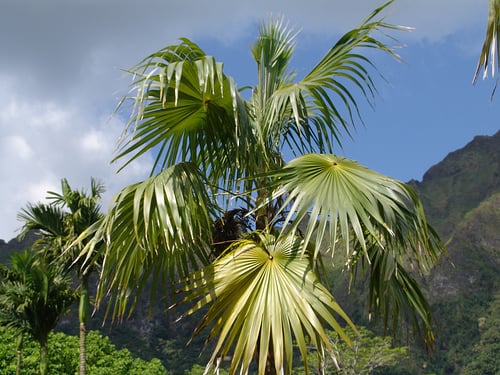
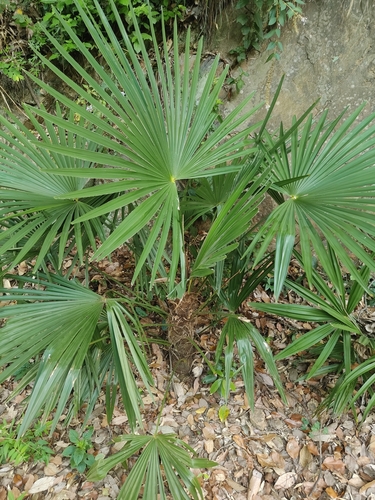
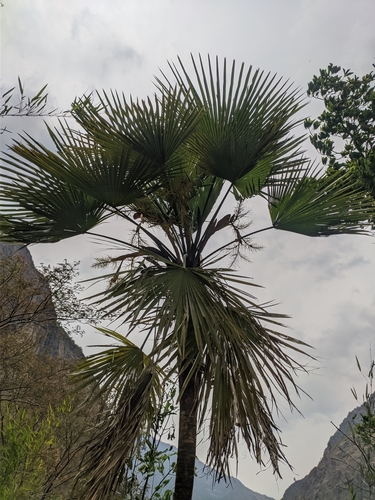
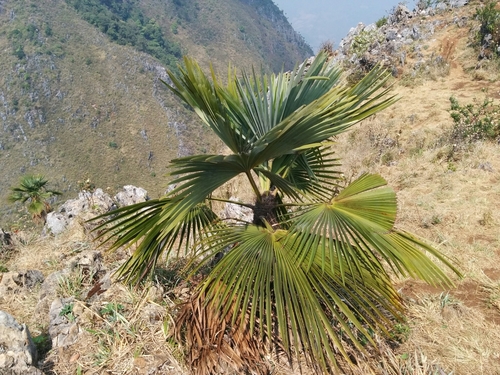
A palm. It grows about 15 m high. The trunk is narrow and ribbed. The trunk is 25 cm across. The crown shaft is pale green. The fronds arch over. The large flowering stalk is held beneath the leaves. The fruit are bright red.
Edible Uses
Palm heart and cabbage are eaten.
Distribution
A tropical plant. It is native to Nicobar islands. It is sensitive to cold. It does well in a consistently moist but well-drained soil. It needs a sheltered position in sun or light shade. Cairns Botanical Gardens. In Townsville palmetum.
Where It Grows
Asia, Australia, India, Nicobar Islands, USA,
Production
It is fast growing.
Synonyms
Also Known As
Nicobar palm
References (3)
- Ann. Jard. Bot. Buitenzorg 2:165. 1885
- Kumari, P., et al, 2017, Conservation and reintroduction of Bentinckia nicobarica in Nicobar Islands- a case study, China Botanical Congress.
- Marinelli, J. (Ed), 2004, Plant. DK. p 360